Transcript:
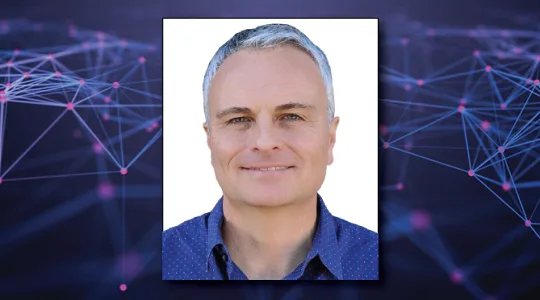
John Gilroy: Welcome to Constellations, the podcast from Kratos. My name is John Gilroy and I’ll be your moderator. Our guest today is Beau Jarvis, CEO at Phase Four. Now, small satellites have been in the news a lot lately, mostly about launch issues and earth observation applications. What you may not have heard about is propulsion systems that enable small satellites to maneuver on orbit. Today we have Beau Jarvis with us who will bring us up to date on the emergence of new propulsion technologies that can significantly extend the useful lives of small satellites. Beau Jarvis, chief executive officer, is an early veteran of the new space era who brings more than 20 years of geospatial air and space experience to Phase Four. Beau, 20 years, that’s like 20 decades in this business, huh?
Beau Jarvis: Yeah, yeah. I feel a little old at times. I’m working with a lot of 20 year olds, which keep things energetic and keeps me feeling alive.
John Gilroy: Keeps you humble, doesn’t it? Yeah, it’s changed so much.
Beau Jarvis: It does that as well too, yes.
John Gilroy: Yeah, I’m in the classroom all the time. Boy, I got to check myself constantly. To focus on the topic of discussion today, from my understanding, we want to talk about plasma, but before we talk about plasma, I understand that there are multiple forms of propulsion, electric and chemical. Maybe you can expand that for some of our listeners who are not that familiar with the systems out there.
Beau Jarvis: Yeah, yeah, exactly as you said, there are two major types of propulsion. One is chemical. I think chemical is what most of us are used to seeing on TV when we watch a rocket launch. So it’s basically the fiery end of the rocket is a chemical propulsion system. So typically that’s a hot gas forced out of a physical nozzle that allows a rocket to escape the gravitational pull of the earth and launch things into space. So I think that’s what most folks have seen. Probably what most folks have not seen or maybe not have heard of is electric propulsion, which is primarily used on satellites. And what electric propulsion is, is rather than using a chemical reaction, it uses an electric or a magnetic reaction or magnetic fields to heat or electrify a gas and turn that into a plasma. That’s, that’s actually where our name comes from, Phase Four. So plasma is the fourth state of matter. So plasma becomes a very excited, much like when you’re microwaving something. If you microwave something, it gets hot very, very quickly. That’s kind of similar to what happens with plasma. It wants to escape as it becomes very active and very charged. And rather than using a physical nozzle to force the plasma out of the thruster, you can actually use electric fields, magnetic fields to force the plasma out and create thrust. So that’s kind of the major difference there between chemical propulsion and electric propulsion.
John Gilroy: So it’s like a 21st century steam then isn’t it? It’s trying to escape and it’s controlled.
Beau Jarvis: Yeah. And it actually has a pretty … It looks quite cool. If you’ve ever, I’m sure most of your listeners have seen that Star Trek or Star Wars. Oftentimes you see on the back of the spacecraft you see kind of that blue glow. That’s actually what a plasma looks like with certain types of propelling. So it doesn’t look like fire coming out of the back of the thruster, it actually looks kind of like this neon type of light coming out of the thruster, which is physically creating a trust for the spacecraft.
John Gilroy: So most people walking down the street in the grocery store or something, they think plasma is something kind of a liquid. But this isn’t liquid at all, is it?
Beau Jarvis: No. In fact, I think a lot of folks think of plasma with the medical connotation related to blood. And I actually remember one of the first interviews I did, I was talking about our plasma propulsion system. And the interviewer got a very shocked look on their face thinking that we were referring to a using plasma, as in blood, as the fuel for our systems.
John Gilroy: Powered by humans.
Beau Jarvis: Yeah. Not something that most of us think of. So yeah, so plasma is basically one of the states of matter, right? You’ve got liquid, solid, gas and plasma. And I guess the way to understand it is the plasma is basically a highly ionized gas. So you get something to a gas and then you make it extremely charged and then it becomes a plasma. So that is the plasma that we’re referring to here.
John Gilroy: So when you do some research on plasma propulsion, I guess you use electricity to turn gasses into plasma, is that the sequence?
Beau Jarvis: Yeah, the traditional way, so this technology’s actually been around since the middle of the Cold War, the mid 50s is when some of the earliest electric propulsion systems were developed. And basically, what you do with the legacy technology is you use electricity to create charges in the gas that convert that to a plasma, then that becomes your fuel for your thruster. We do something slightly different at Phase Four. We actually use radio frequency waves to excite the gas and turn it into a plasma. So the result is the same, meaning we’re using plasma as our thrust mechanism, but the way we turn the gas into a plasma it a little bit different.
John Gilroy: So it uses less energy? It’s easier to control? What’s the advantage?
Beau Jarvis: Yeah, yeah. I think the unique things about what we’ve developed is that we use far less electrical current. So we typically, with the legacy electric propulsion system, you have to use high voltage electronics. We’re actually using much lower voltages and the overall system components are much simpler. There’s actually physically fewer components that you have to use. So in terms of why it would be interesting and applicable to some of these larger small satellite constellations that will be coming online here over the next few years, is that from a manufacturing and a supply chain standpoint, it’s a much simpler system to build at scale. Now if you’re talking about a one off system, you can take as much time as you want it to get the ideal, best, highest performing electric propulsion system you can get. But once you get beyond a quantity of let’s say 10 to 20 a month, then you’re faced with the supply chain challenges. And that’s why I think what Phase Four is doing is perfectly suited for kind of that movement that we’re seeing to smallsats in lower orbit right now.
John Gilroy: I just wrote down the words more reliable. So longer term missions, more reliable with this technology. Does that make sense?
Beau Jarvis: A bit more reliable in a sense of reliability from a manufacturing standpoint. So I think our system works just in a very similar fashion to the legacy technology. It was just the way we go about creating that thrust is a little bit different. So if you’re manufacturing something, you have an easier supply chain to deal with. You typically would have a more reliable supply chain to deal with from that respect.
John Gilroy: So the theory here, or the the technology has been around since the 1950s, which is 50, 60 years here. But recently I guess people took a look at it and re- engineered it and make it more efficient. Is that what’s happened? Is this just been a cumulative effect of years and years of research?
Beau Jarvis: Yeah, well, the folks in propulsion, in various labs around the country, at places like University of Michigan and Georgia Tech, which is where a lot of this propulsion research is done, the pain point for the traditional electric propulsion system has been known for years. And what’s gone on in some of these labs is, “What if we omitted some of the problematic components of this technology that allow us to build it more efficiently or basically at a lower cost?” So this concept has been out there for many years. And more recently, I think what you’re seeing throughout the space ecosystems is advancements in things like consumer electronics have just made it more likely that we can do something a little bit different because access to different types of technologies from the consumer electronics field is something that really didn’t exist 20, 30, 40 years ago. So really one of the technologies that’s really benefited us is the inductive charging. So if you’ve ever seen those charging mats, you basically set your phone down on the mat rather than plug it in. That’s actually a similar technology that we use to generate the radio frequency that turns the gas into a plasma. So we’ve really benefited from kind of the advent of smartphones, more powerful computers. Similar to what’s happened in the cube sat and smallsat industries, right? You can build a space craft much more capable now than you ever could before. And a lot of that comes from what’s gone on in consumer electronics.
John Gilroy: So the basic business problem is that spend all this time and effort to get this satellite in orbit and you can extend its life, so that’s the value proposition you bring. Is that right?
Beau Jarvis: Yeah. I mean, there’s actually three phases of a satellite’s operational life where propulsion, in my view, is critical. And I think most space craft operators view as critical as well. So really, if you’re a commercial mission, as soon as you launch your satellite, you want it to be commissioned or be activated, as it were, so that you can start recouping that investment so it can generate revenue for you. So the first phase of a satellite’s life is getting the satellite to the optimal orbit. Now oftentimes this is done with a launch vehicle, like a rocket, but when you’re talking about small satellites and even cube sats, they typically are secondary payload on a launch, a large launch vehicle, like a SpaceX Falcon Nine. Oftentimes they don’t get exactly to the optimal orbit, so what a propulsion system on board a satellite can do is actually raise the satellite to an optimal orbit or transfer it to an optimal orbit. And then of course once it there, the satellite in that optimal orbit, if it’s operating in low earth orbit, obviously it’s still has the … The earth still has some gravitational pull to that space craft. So rather than getting the spacecraft pulled down before it’s at the end of its operational life, you can use that propulsion system to keep it in the orbit. That’s often referred to as station keeping. And then of course, to mitigate the a pretty severe debris problem that we’re seeing in the earth orbit is at the end of the satellite’s life. You can actually use your propulsion system to actively de- orbit it so that you, as the satellite operator do not contribute to that debris issue that we have.
John Gilroy: To backup a little bit with radio frequency. So I guess one method is radio frequency and that’s usually contrast with electrodes. And so what you’re saying is your systems will be more reliable. Anything else besides that that makes them different?
Beau Jarvis: Yeah. Yeah, I would say it’s less a question of reliability, more question of simplicity. And then I think the other thing that is unique to what we do is that because we omit a lot of the traditional components in an electric propulsion system, like cathodes, like hollow cathodes, we can use actually any neutral gas as fuel. So typically electric propulsion systems today all use the aerospace grade xenon, which is very efficient, works very well, but it’s also extremely expensive. And then of course, now that you’re seeing a number of larger companies starting to build these small satellite constellations, like SpaceX, like OneWeb, like LeoSat, like Telesat, the cost of xenon will only get higher. So what we can open up with our technology is alternative fuels. The other gases that are either less expensive but still perform well. Or, if you look out ahead 5, 10, 15 years, when you’ve got more infrastructure requirements in and around the moon, or the activities that will take place on the moon, or in and around Mars, where the activities that will take place there on Mars, you’re going to have to have some level of orbital infrastructure like communication satellites right around the moon that can relay messages and information back and forth to earth than other spacecraft. So rather than trying to transport all of your fuel from Earth, that could be a concept where you could actually use a locally available fuel in our propulsion system, something as simple as water vapor or atmospheric nitrogen or methane or really, like I said, any neutral gas could work as a propellant for our system.
John Gilroy: Sounds like something out of a sci-fi novel from 1970 or something. I mean, really. I mean, you just making this up?
Beau Jarvis: No, no, no. It’s true. So we’ve actually, we’ve already tested on a number of alternative fuels. We, we’ve done air, but basically lab air, we’ve made plasma from air. We’ve made plasma from water vapor. We’ve made plasma from nitrogen and argon, which is another noble gas. So it works. And I think that is the pretty interesting thing. Like I said, in terms of the long horizon view of the types of activities that will be occurring in space over the next decade, I think our technology plays a very central role in moving things around in space because of that advantage that we have, frankly.
John Gilroy: You mentioned Leo earlier. So is your propulsion system limited to cube sats?
Beau Jarvis: No. In fact, we’re not actively targeting the cube sat market. We’re targeting right now, our first product, which is called Maxwell, is actually aimed directly at the small sat market. So the first version of Maxwell is specifically designed for satellites that are between 20 kilograms and 200 kilograms, which is kind of the bulk of where you see most of these new companies, or existing companies that are building small satellite constellations, that is the form factor that they’re building towards.
John Gilroy: You know, Beau, thousands of people from all the world have listened to this Constellations podcast. If you’re listening and wanting to get alerts when new episodes are available, go to Google and type in, “Constellations podcast,” and click Kratos and sign up. And then people down the road can listen to this interview. You’re making a fuel from air. I mean this is really kind of cutting edge technology I would say, isn’t it?
Beau Jarvis: Yeah. No, like I said, I mean I think that’s not something that a lot of people really realize, the potential applications that you have when you’re not tied to a specific fuel input for moving something around in space. That could extend, like I said before, outwards, around the moon and around Mars. But actually, even if you come back to earth, one of the things that a lot of people have been interested in is flying satellites at very, very low altitudes. Because the closer you are to Earth, let’s say you’re doing an earth observation mission, the higher detail or the higher resolution your images could be. The problem is when you’re flying too close to Earth, often times, you get pulled down after a few months or a couple of years. So one kind of theoretical, but I don’t think it’s purely theoretical at this point, I think it’s something that is of interest to a number of folks is having a satellite that actually takes in atmospheric air and pulls the nitrogen out of the air and converts that to fuel for the thruster. So a satellite can operate at a very, very low orbital altitude, like 1 to 200 kilometers. Those sorts of applications are actually possible with our technology.
John Gilroy: Oh, that’s incredible. A lot of companies redesign websites. And what, I’ve been involved in a lot of them, normally happens is, “Oh, we never thought about this. There’s unresolved issues.” So let’s apply this to propulsion technology. Are there unresolved issues here that maybe we’re not bringing up? Or what’s on your to-do list?
Beau Jarvis: Yeah, I mean I think like I said, the traditional electric propulsion technology has been around since the 50s. So you have 50 plus years of development and improvement on it. Our technology hasn’t been around nearly as long. We’ve really been actively working on it over the past three or so years. So we’re still actually in an early stage and obviously we want to improve the capability so that as different applications become available to us, perhaps larger spacecraft or different types of missions that require higher performance levels, but higher power levels, that’s something that we want to take our technology towards. So I’m actually talking to you from like the one office in our office space that is not actually an active lab. We’ve got our R and D team here working and that’s exactly what they’re doing every day. They’re testing the technology, trying to improve the performance so that we have a broader range of applications we can use it for.
John Gilroy: Your company, Phase Four, was recently selected by Capella Space to provide on orbit propulsion for the initial phases of their constellation deployments. So one of those satellites scheduled to launch.
Beau Jarvis: Yeah. So the folks at Capella that we’ve been working with for quite some time, and we’re actually really excited about their mission, what their doing, I think is really groundbreaking. Being able to operate a SAR platform on a 60 kilogram satellite is something I think most people never thought of as possible, even two or three years ago. And now we’re seeing that it’s actually possible. So we got an order from them for six units that will be delivered during the third quarter of this year. Most likely, those will go up on part of their constellation in the first half of 2020. Of course, launches change frequently, as many of us who have been in space know, but that is the plan today.
John Gilroy: Earlier in the interview, you mentioned Georgia Tech, and there’s a company there called Made In Space, and we had him on the podcast earlier. Kind of interesting, Atlanta, Georgia, Center For Aerospace Research. But when you talk about on-orbit additive manufacturing, you think of Made In Space and you think of … I don’t want to be too science fiction-ish here, but there’s future propulsion systems that could use newer propellants and maybe these could be sourced from space. I mean this is going to get undergraduate students interested in math and science and physics. And if you combine all these too, additive manufacturing in space, sourcing from space, it almost can borderline an unlimited, I don’t want to use that word, but unlimited propulsion for really deep space exploration. Or am I just too fanciful in my thinking?
Beau Jarvis: No. I think you’re actually fairly spot on. Just a quick side note on Made In Space. I think that’s one of the companies that we actually admire significantly because what they’re doing, again, is something that I don’t think gets enough publicity. I mean, they’re building the capability to do this additive manufacturing on-orbit. Again, like you said, that does sound like something out of a science fiction film, but it is reality here that they’re building. And I think that’s the exciting thing. So assuming at some point in the near future you’ve got this capability in space, not only could you harness fuels that are readily available in whatever system you’re at. Let’s say you’re around Mars, theoretically, you could use some of the methane in the atmosphere of Mars as a fuel for our electric propulsion system on a satellite that is manufactured through additive techniques orbiting around the planet or based on the planet. So it does sound a little bit far out, especially those of us who are perhaps a bit older. But I think it’s the reality that will actually be here sooner than many people realize.
John Gilroy: Beau, I spend a lot of time in data centers and many times there’s aspects of a data center that have newer technology and very innovative, but they can only work if they’re coordinated with other aspects, size of hard drives, speed, security, everything else. Looking at your business, it looks like there’s a lot of advances in propulsion technology. Now, will that have an impact on the launch technology? I mean, you’re in LA, there’s a lot of launch capability down there too. Are they seeing what you’re doing? Are they trying to coordinate? Or what impact do you have on the launch world?
Beau Jarvis: Yeah. You know, I think there’s a hundred plus launch companies around the world already. That tells me that a lot of people that are exciting about launching things into space. But I think I guess from a market standpoint, the more companies that are basically trying to sell the launch services, that’s going to be a very competitive market more so than it already is. So I think one of the things that some of these new newer launch companies and potentially even some of the legacy launch companies are looking at is how can they differentiate themselves to the customer? I think there’s a couple of applications that could incorporate our technology and in fact, we’re actually talking to a few of these companies about that already. One at one of the applications is if you had an electric propulsion system on a satellite deployer that could carry efficiently with a smaller amount of fuel, then your chemical rocket engine could carry the satellite payloads to their optimal orbit, that would be a differentiator. Then of course, one of the requirements that a launch operator has is they have to de-orbit their upper stage after they shot everything up into space. They have to bring that upper stage back down so it’s not a large chunk of orbital debris. We’ll rather than carrying enough rocket fuel to get that thing down out of space and back into the atmosphere, it could actually use an electric propulsion system, which doesn’t have as much thrust as a chemical rocket engine, but it’s a far more efficient system. So could use actually less fuel to get that down and then that cost savings could be transferred to your customers. So you bet your launch costs that you would be selling to customers could actually be less expensive. So I think those types of things where some of these up and coming launch providers are trying to differentiate themselves in this increasingly crowded market. I mean, those are the types of applications where we can play quite well.
John Gilroy: Yeah, they have to. In fact, when you did your one, two, three analysis earlier, it fits in with getting the launch up there and activating, get it online as soon as possible. Well, we are running out of time here, but I got a crystal ball here in the east coast. I’m going to toss it to you in the west coast there. So, you’re already giving me my Star Wars, my science fiction stuff. But what’s it going to look like in five years? The technology and the players, where’s it all headed?
Beau Jarvis: Yeah, I mean, I think what we’re seeing, and I would say Airbus is probably one of the first companies that have thought of this with respect to mass manufacturing small satellites. So rather than every satellite is a bespoke kind of one off project, which was the way space operated for many decades up until just the last few years, you’ll see large satellite manufacturing lines where a satellite can be built in a few hours. And then any number of payloads types could be integrated into that satellite. So it could be an earth observation payload, it could be a communications payload, another type of payload. Basically, the exciting thing there is that if you have a business idea or a concept that would require you using a satellite, your cost to get a very functional satellite, it’s going to be much lower, and your time to get that thing built and launched will be much lower. But I think what we’ll see is large satellite manufacturing facilities, really frequent launches, and a number of kind of new and novel approaches to using space for both research and commercial purposes.
John Gilroy: Going to be any more novel than this approach is going to be hard to beat. Beau, unfortunately, we are running out of time. I’d like to thank our guest, Beau Jarvis, CEO at Phase Four.
Beau Jarvis: Thank you, John. It’s been a pleasure.