Transcript:
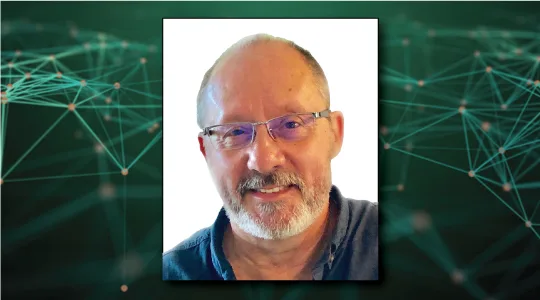
John Gilroy: Welcome to Constellations, the podcast from Kratos. My name is John Gilroy and I’ll be your moderator. Today our guest is Robert Zitz, a well-known national security consultant who has had leadership roles in the federal government and commercial organizations as well. During this episode, we’ll talk about the increasingly contested space environment and the role small satellite constellations might play in the identification and mitigation of threats to our space assets.
John Gilroy: Rob has held senior executive positions in SAIC, Leidos and Maxar and in the government, another 30 years in the government. He’s had leadership roles in army intelligence, the CIA, National Geospatial Intelligence Agency, the NSA, Homeland Security, and the National Reconnaissance Office. You’re a young guy to have all that background, isn’t it?
Robert Zitz: Well, I don’t know about young, but it’s been an experience.
John Gilroy: Yeah, I’ll bet. You’re a perfect guest to have on the show because you have the perspective. You’ve got the yin and yang, the government perspective and the commercial perspective. All kinds of issues here. Let’s start off. Now, Rob, you’ve been in the Defense and Intelligence industry for a long time. What has changed in the last several years to draw all this attention to need to transform how the government even does space?
Robert Zitz: Well, first, John, thanks for inviting me to come in. I’m really glad to be here. I think you have to go back a few years, and I’ll do this quickly and hopefully not bore your listeners. I mean, you really can go back pre-9/11 and start there then come forward quickly. This is about how do we build persistent capability and resilience and why do we need persistence? Why do we need resilience?
Robert Zitz: Well, prior to 9/11, back in the Cold War days even, we had built very exquisite capabilities, very extraordinary, actually, satellite capabilities to monitor adversary nations in order to provide strategic indications and warning and also to be able to do very precise and detailed reports on potential weapons systems that we may have to face in the future. Remember the old Soviet Union as we were facing down that threat? We really needed to understand where they were, what they were up to, what they were going to do, and so we built systems that could help us to do that. But that was an adversary who really recognized that this needed to be like a chess match. There were no miscalculations, could not miscalculate because of the potential that could go wrong.
Robert Zitz: You flash forward then, and we had those capabilities to do that kind a mission, particularly supportive intelligence and military operators, but you come forward to 9/11, and the world had changed around us. Our adversaries around the world were not necessarily large armies or large formations of tanks or ships, but more individuals or small groups of people who are using asymmetrical warfare and could cause a great damage on us and our allies.
Robert Zitz: Well, the constellation of satellites that we were using to monitor the Soviet Empire was not well suited to be able to go after this new threat. We saw that during 9/11, and during 9/11 was the rise of the need for persistence, to be able to keep eyes on and to follow events as they unfolded. People used to talk about how bad guys and bad things run, hide and hide underground. And so if something’s running and hiding, obviously if you’re only doing periodic looks at it, even at really super qualities, that’s not sufficient. So that’s why you started to see things like video on manned aircraft and then the rise of unmanned aircraft drones that were carrying capabilities to be able to look and listen and then help somebody who’s an action taker.
Robert Zitz: So 9/11 drove us into what we now call persistence. Well, as we come out of 9/11, the warfighters, the military as well as intelligence analysts, understand that there’s a lot to be said for being able to connect the dots and do it in virtually real-time. And the only way to be able to do that would be to have more capability to be able to look more often, listen more often. And that’s where persistence came from, but what about resilience?
Robert Zitz: During that same timeframe, we started to see that other nations were working on anti-satellite weaponry. And in fact, 2007 was a seminal event when China launched an anti-satellite missile and destroyed one of their own satellites and demonstrated what they could do. That was a real wake up call for us in the national intelligence community and also in the military community. Then rapid succession over the next few years, we saw more and more indicators that that was going to be the case amongst our adversaries, that they would be able to threaten our satellites, and remember, these exquisite satellites are extraordinary, but they’re also extraordinarily costly.
John Gilroy: So to summarize, so we’ve gone from a monolithic threat to a dispersed threat. And so the correct response from a security perspective is to have a more dispersed approach. And maybe this introduces a topic of more satellites, doesn’t it? So John, the answer is not just having one big refrigerator floating around the earth. You’ve got to have maybe 250 college dorm refrigerators floating around on earth to see what’s going on. Is that why the whole idea of more satellites is?
Robert Zitz: Well, more satellites gives you more looks even in a peacetime environment, so that gives you persistence, which they had enjoyed from unmanned aerial reconnaissance vehicles. And then it also does, as you suggested, it helps with reducing the vulnerability of our assets. So if you’ve got more, it changes the calculus of the adversary. Instead of potentially taking out a large percentage of our assets, they would have to go after many more targets in space in order to really degrade and deny our ability to use space. And that’s the resilience. You’re right. That helps with overcoming the vulnerabilities.
John Gilroy: So when we look up in the sky, we shouldn’t see constellations of different stars out there. We should see chess pieces, kings and queens and pawns. And so what’s going on now is a chess game of they make a move, we make a move and it’s very dynamic and moving all the time, isn’t it?
Robert Zitz: It is dynamic. And you used the chess match as an analogy. I would think of our exquisite capabilities as the kings and queens on the chess board. And then think of these smaller, and I don’t say small satellites because many people jump right to cube size satellites, smaller satellites are the rooks and the bishops and the knights on that chess board because there are also very capable and they’re a part of an overall strategy.
John Gilroy: Well, here we are in Washington, DC talking about technology and defense. We got to talk about DARPA. I mean, that’s where it all started, isn’t it? Right now, DARPA created the Blackjack program, and I think what that does, it tries to develop a satellite constellation in low earth orbit to offer persistent- there’s your word- global coverage for military operations. Is there success with this? How’s this progressing?
Robert Zitz: I think it’s doing very well. If you talk to DARPA, they’ll say they looked back at the fact that the crown jewels, if you will, the exquisite satellites come with an extraordinary expense, and therefore we can only have a few of them. If you can only have a few of them, that makes them more vulnerable. And so as they watched and saw the technology improvements- these are consumer technologies- miniaturization of electronics, improvement of optics, processing speeds, communication speeds, and then modular manufacturing. They saw that coming together in a way that could then be used to support this persistence.
Robert Zitz: So Blackjack, of course, is under DARPA, which is R&D, and they are going to fly demonstration satellites to show how a constellation of smaller satellites can talk to each other and provide augmentation to not only intelligence, surveillance and reconnaissance, but position navigation and targeting, communications, other things that we rely on as a nation. They will then, once they’ve proven that, their partner, who will then take it and turn it into larger constellations, is now the Space Force. It had been Air Force Space and Missile Center, but now Space Force will turn that into a program.
John Gilroy: In the satellite community, this whole newly established U.S. Space Development Agency is kind of a big deal. And they’re talking about an architecture that includes transport layer, custody layer and tracking layer. Sounds like the early days of TCPIP and Vint Cerf, doesn’t it? A lot of parallels here. So what is the relationship between DARPA’s Blackjack and this SDA program?
Robert Zitz: So Blackjack, again, under DARPA, is an R&D organization whereas the Space Development Agency is an acquisition organization. And so as technologies are proven, remember, DARPA starts with things that they call DARPA hard. Is it even possible to do it? And then once it’s proven, then the mission partner, whether it’s in the intelligence world or the military world, takes that and then migrates it into their overall what’s called program of record. So SDA is responsible for orchestrating and integrating multiple constellations from different players.
John Gilroy: In federal information technology, one of the troubles they have is different agencies select technology to accomplish the same task. So there’s identical software development out there. So if you look at all the organizations in town here, there’s SDA, Missile Defense Agency, Air Force SMC, Defense Innovation Unit. So how does a listener to this podcast keep all those separate?
Robert Zitz: It is a long list of organizations, and I think first, the headline for me is that you’ve now got a group of organizations that are leaning forward and trying to do rapid acquisition and to transform as quickly but also as smartly as possible. So that’s the good news. SDA, you just talked about SDA, and I mentioned it’s an acquisition arm, that is going to migrate over time into this new Space Force. So it will have a role working as part of- This will be probably three years before they’re part of the Space Force.
Robert Zitz: Their job will be much like an orchestrator or conductor of a band. They’ll be looking to the National Reconnaissance Office and the Army as examples to provide what’s known as the custody layer, where you’re looking at objects and following them to understand their behavior. They’ll take those constellations and make sure that they’re interfacing and working well with what the Missile Defense Agency’s going to do, which is the tracking layer of small satellites, to look at high velocity maneuvering targets that have been launched for … These are advanced missile systems.
Robert Zitz: They themselves, SDA, will work to put together what’s called the transport layer. You could also look at that as the satellites that are the command and control, the brains that really take data flow from the other layers and then transport that both to other satellites so that they’re communicating with each other and operating smartly and synergistically, and also push that data down to the end users, whether they’re military or intelligence.
John Gilroy: And standard technology TCIP parallels with these different types of layers. But there’s a sensor layer here, too. And that’s different from information technology. And so is that part of the constellation or a separate layer completely of satellites?
Robert Zitz: Well, there’s sensor in the broadest term that would also include the custody layer. And so as you’re looking at events as they unfold or you’re looking at a potential combatants, or they are obviously civilian and peacetime uses of sensors as well, but we’re talking national security here today, those use sensors. Those sensors are both various geospatial intelligence phenomenologies, but also other sensors. But more specifically, when people say space sensor layer, they’re often talking about a particular project. And that project is a Missile Defense Agency project. It’s been renamed now to be more precise about what it’s doing. It’s called the Hypersonic and Ballistic Missile Tracking Satellite Sensor. Some people call it Hobbit. But that sensor layer is designed to work with other sensors and various orbital regimes and to be able to track an adversary’s advanced missile system that may be coming in at extraordinary velocities and also maneuvering. So to be able to stop something, you have to be able to detect it, see it, know what it is, and then calculate quickly enough so that people can try to do something about it. And this space sensor layer now called Hobbit will help to do that.
John Gilroy: The term hypersonic was really relegated to the aerospace engineers and the physicists until about three, four weeks ago. We see news of different countries coming up with faster devices. All of a sudden now it’s top of mind and, “Oh, you thought of that too.” So it’s a pretty good idea to understand that.
John Gilroy: Rob, thousands of people from all over the world have listened to this podcast, Constellations. If you’re listening now and wanting to get email alerts when new episodes are available, go to Google, type in Constellations Podcast, go to Kratos and give us your email and we’ll send you updates on who’s coming up next. Maybe we’ll have an update on the Space Force. This is breaking news in Washington DC. It is kind of a big deal. So how does the Space Force play in all this distribution, these different agencies?
Robert Zitz: Well, there’s one thing you’ve already referred to was there seemed like there were a lot of organizations and who’s doing what and how do they relate to each other. One of the most important roles of a Space Force is we’re now going to have an organization whose full-time job it is, is to be thinking through not only strategy, developing concepts, developing doctrine, making sure that we have the right people who are trained in place, that the acquisition strategies of multiple organizations are integrated and synergistic. That’s how Space Force is going to help pull it all together, but they also have the responsibility then to use those tools and those capabilities to operate both in peace time, but also, God forbid, we go into heightened conflict, they’re going to be right there making sure we protect assets in space, but also use them in military operations.
John Gilroy: Well, Rob, in Washington DC here, we can go downtown, there’s probably six conferences going on right now about artificial intelligence. Everyone’s talking about it. It can be applied to marketing, it can be applied to data centers, and guess what? It can be applied to our own satellites, too. And so is this just a trending term that’s going to go away, or what impact is this going to have on military satellite constellations?
Robert Zitz: Artificial intelligence is absolutely crucial to the future. You’ve heard me refer many times to persistence and people running, hiding, hiding underground. What’s underneath and what underlies all of that is the need for speed. Humans are great at certain tasks, but one of the things they’re not tremendous at is being able to do complicated computations, calculations at tremendous velocity, and that’s required when you’re talking about satellites whizzing around the earth and needing to be able to talk to each other in real time.
Robert Zitz: So artificial intelligence onboard processing on these satellites is something that DARPA is pushing forward with a program called Pit Boss. And the idea would be you would have very, very, fast computations and then the satellites would push information back and forth to each other and make decisions. “We see this. This is different. This is new. Let’s take another look at it. Let’s discern if it’s a change of enough significance that we need to task other satellites.” All of that kind of thing will be happening in almost virtual speeds, and that’s going to be happening both on the ground but also onboard satellites. So artificial intelligence is crucial to all of that.
John Gilroy: Pit Boss, Blackjack. You got to wonder what the avocation is for many of these satellite technologies. Maybe something to do with Las Vegas.
Robert Zitz: Hopefully it’s not a big gamble.
John Gilroy: You look at small sats or small sat conferences popping up all over the place. From just an observer’s perspective, you’d have to think that the DOD is developing small sat constellations or it may be cooperating with the commercial world with these small sats. So how is that development? Do you have any examples of successes with this whole world of small sats and DOD?
Robert Zitz: Yes. In fact, one of the earliest examples of DOD working with the commercial world is actually in the remote sensing area. Many years ago, contracts were provided to companies such as GOI and Digital Globe. Obviously they merged, and they took on many of the requirements that the national security community had been levying on highly classified satellites. They did that to augment and to offload some of the requirements so that those commercial satellites could do what I’ll call pick and shovel work, things that are very important but maybe not as important as some of the more exquisite tasks that classified satellites must continue to do.
Robert Zitz: That has grown by leaps and bounds, and now we’re at a point where the National Reconnaissance Office is not only continuing that work with companies like Maxar, who owns Digitalglobe, but have recently let several contracts to other companies, small radar companies, Hyperspectral, RF, various commercial firms that are building out really interesting capabilities, and those will be able to do two things, help persist because they’ll augment capability to be able to look and listen with more persistence, but they’ll also be able to help with the resilience piece so that God forbid we go into a combat situation, we’ve got even more assets to be able to do the remote sensing and that in itself adds resilience.
John Gilroy: Well, Robert, if we were playing baseball, we’re going to go from fly balls to ground balls. Let’s talk about the ground. My guess is that this launch business is another factor that’s changing quickly. So we have so many moving parts here. So how is this impacting the world?
Robert Zitz: Well, that’s a great question, because oftentimes, people forget about launch and launch, no pun intended, is a long pole in the tent. Think about the fact that resilience means being able to have an ability to operate through a contested environment. Well, you want to be able to repopulate a constellation as quickly as possible. And so people have been thinking more and more about having on demand launch.
Robert Zitz: Well, very large rockets come with a long lead time in order to build them, get them ready, test them, launch them. They’re also very expensive. So if we have an ability to build smaller rockets to be able to do on demand and more tailored approach where smaller satellites are put in just the right orbit, just the right inclination, that’s something that the military in particular is asking for now, on demand capability. There are commercial companies that have come forward and are providing that kind of capability, and it’s interesting to watch this develop.
John Gilroy: I learned years ago about the squeaky wheel gets the most oil and some wheels don’t get any oil at all. And looking at it, you had this wide range, Maxar included and CIA, and so where do you see a need for more investment attention that maybe people aren’t considering yet?
Robert Zitz: I think a couple jump to mind. One is as great as the electro optical visible satellite capability is, and there’s a lot of the remote sensing world is to be able to think about what you see with your eyes, that’s visual data, unfortunately, the Earth is cloud-covered a lot of the time, some people would say upwards of 60% global daily cloud cover. We need an ability, particularly for the military and intelligence applications, to see all day, all night, all weather. And that means that we’ve got to invest more in radar capabilities, particularly in the commercial world. And so you do see some companies starting to come to the fore now. Capella is one example of that. There’s a small company startup called EOS SAR, which has also got great ideas, Trident Space, another commercial capability, and many others, but these could provide low cost, high quality radar capability. That’s one.
Robert Zitz: The other is I do think that there’s going to be a move towards on orbit servicing, and so we are not going to walk away from the exquisite satellites. These are large. They have to be large because of physics for some of the things that they do. There’s some cost, national treasury there. We want to try to make sure and extend their life as much as we can. And so it just makes sense that if we can have robotics onboard satellites that can go service satellites that are expensive satellites, we should do that. And again, there are different companies that are pursuing that approach.
John Gilroy: I can imagine a headline in a tread publication, something to do with NRO, SAR and some other three letter terming. Who knows what it’s going to be? But this is what seems to be happening, isn’t it?
Robert Zitz: Yes. And just to give you one other thing that comes to mind is the need for a space-based, high-quality LIDAR. I’m sure you’ve heard about LIDAR and your audience has. The ability to, from space, do very high definition terrain mapping, three dimensional visualization is absolutely critical, particularly to the military. There are companies that are exploring that. An example of that is Hexagon Federal and their Sigma Space entity. Other companies are working on that, but that’s another exciting area that I think we’ll see in the next couple of years.
John Gilroy: Rob, unfortunately, here we are running out of time. I’d like to thank our guest, Robert Zitz, a well-known national security consultant who has had leadership positions in the federal government and the commercial world as well.
Robert Zitz: Thanks for having me.