Transcript:
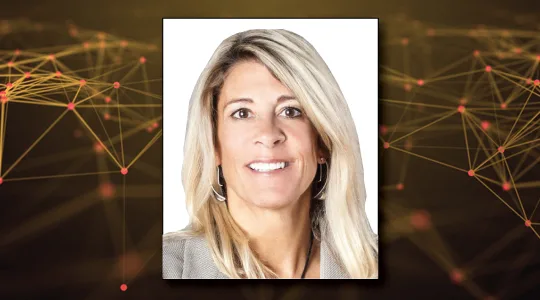
John Gilroy: Welcome to Constellations, the podcast with Kratos. My name is John Gilroy, and I’ll be your moderator. Today, we welcome Carol Craig, Founder and CEO of Sidus Space. We will discuss the concept of space-as-a-service, the technology of 3D printed satellites and the process and challenges of spectrum licensing. Our guest today was one of the first women eligible to fly combat aircraft in the U.S. Navy, and the first female aviator on the squadron serving as an active duty P-3C Orion Naval flight officer. So, it’s with no surprise that she later and more recently became the first female founder and owner of a space based company to go public.
John Gilroy: Carol Craig is the Founder and CEO of Sidus Space, a company that has expertise and rapidly scalable low cost satellite services, space based solutions and testing alternatives. Carol, doing my research for this interview and I go to Google and type in space-as-a-service and I get all these pages of real estate stuff like Airbnb space-as-a-service, what’s going on here. So, what does space-as-a-service mean in the world of satellite networking?
Carol Craig: I think there’s tons of buzzwords now that are out there, just like you said space-as-a-service, there’s also like satellite as a service. And I think that satellite service, if you hear that it’s similar to software as a service, then they provide data on a subscription basis. But when you think of space-as-a-service, the way I look at it, again, so my disclaimer, this is my opinion, my opinion only, the way that I look at it, it’s a term that essentially means the ability to provide support related to just about any activity in space and at multiple levels or layers. So whether that’s granular, like manufacturing fracture critical flight hardware, or maybe it’s at a high level, providing data or space and infrastructure, but it’s really kind of that from cradle to grave, but anywhere in between.
Carol Craig: So, clear as mud, but really I think that’s what makes space-as-a-service different than maybe when you hear satellite as a service. And we have a lot of experience with heritage, because we’ve been around for quite some time. For many years, we’ve manufactured and designed a large number of flight ground component parts and systems for DoD, for NASA, for a number of different government agencies. And I think that’s why we kind of gravitate a little more toward the space as service. When it comes to space, you name it and we’ve pretty much supported it. That’s really how we look at it. And maybe one little thing to add is when I think about satellite as a service or space-as-a-service, ultimately, the primary outlet from all of this satellite network, whatever it might be is data. And so that’s what people are truly looking for at the end of the day.
John Gilroy: And so I guess much like a data center or the offerings that are available, you just dial up as much as you need and that’s full advantage of as a service. So, whatever you happen to do, you dial it up and you don’t need any excess, so it’s efficiently using resources. Is that right?
Carol Craig: That’s correct. Exactly, exactly. And it’s really with the space-as-a-service and with our experience, it’s having someone that paid to say, hold your hand through the process, but really can assist at all the different levels, as opposed to just saying, “Hey, can you build me a satellite and launch it?” We’re really there to support our customers the whole way and figure out, maybe needs pop up as you go along in the whole process.
John Gilroy: If people are listening to this and doing some research, they may think for some reason that Sidus Space is a brand new startup, that’s what it sounds like. But actually, you’re a brand new startup with 20 years experience. So, you got the best of both worlds, don’t you?
Carol Craig: That is accurate, which gets really confusing. That’s kind of hard part when we talk a little later about funding and why I went certain routes. That was part of the reason is we’ve been around, but we are new, we’re pivoting. It’s all about pivoting when it comes to space, I think, so it’s a little bit different.
John Gilroy: So a lot of people talk about target audiences and marketing and who their customers going to be. They talk about avatars and all kinds of words, like personas and stuff. So, what types of companies, organizations are typically the best candidates for adopting space-as-a-service and how can this service benefit them?
Carol Craig: Right. I probably shouldn’t say everybody and anybody, but it sort of is that way. I think the great part about the space-as-a-service and what we offer is that it allows us to make space accessible for a wide range of customers. So that’s going to be individuals with technologies, it’s going to be universities and startups. And then it’ll also be governments, international governments, commercial customers, space agencies. I mean, it really is a broad base of customers. And I think because we started, as I mentioned, as a government contractor providing services, then we expanded into custom hardware design and manufacturing, and now we’re launching our satellite constellation. We understand just about every aspect of supporting a space ecosystem. And I think you’re going to see it’s a large company experience based in a small company wrapper, I guess it would be. So I think that’s the reason that it’s we really support a number of different customers that are out there. And it’s just a matter of understanding what exactly it is that they need and how we can support them.
John Gilroy: If you read the press releases, it looks like you folks have recently secured Spectrum for a 100 satellite constellation. So, can you tell us about your experience with that process and how you navigated all those twist and turns?
Carol Craig: I can, and I think this is really interesting and really important. So, I may go on and on, you may have to cut me off here. But I was really lucky. I think I feel like we were in the right place at the right time. And one of our employees suggested having a meeting with a company called ManSat, and at the time we didn’t even really know what they did. It was a couple years ago, and this was even prior to making the full decision to manage our own satellite constellation. But we talked with this company named ManSat, called ManSat, and they assist us with process. And they essentially assist companies by providing real confidential is number one, confidential and then a cost effective way to access the International Telecommunications Union, which is ITU.
Carol Craig: And it’s kind of the other side of the FCC. And they do that via the Alamance. This is where it gets complicated. And then they also provide support and advice on all aspects of satellite spectrum filing process. And the way that they do this is by virtue of inter-governmental arrangement between the United States and the United Kingdom that allows companies to operate in accordance with ITU networks filed by the United Kingdom Regulatory Agency. So on behalf of … it’s called Ofcom, which is their primary office there and it’s on behalf of the Alamance. Again, it gets a little complicated, but ManSat was granted exclusive rights by the Isle of Man to manage all aspects of Isle of Man satellite orbital files. And so what I did was develop, or create, a separate company, Aurea Alas, which is an Isle of Man company that then licenses the Spectrum to Sidus Space.
Carol Craig: So, you can kind of see the relationships and how it works. And having that ITU approve, it’s not really that they grant approvals as such, but the filing, what they do is they publish that filing. So that means it’s been found to be in conformity with all the ITU regulations, and when you’re ready to operate, then you can notify, bring to use, so frequencies and things like that. So overall, it was utilizing this company, ManSat, and it took, from the beginning to the end, from when I really said, “Okay, we’re going to do this,” it took about a year, but in reality, we submitted the business plan to Ofcom in December of 2020, I believe it was. And then two months later we got the approval by Ofcom. They submitted to the ITU, two months later, we were approved. So, really it four months, the actual approval process.
Carol Craig: And then there’s a four month waiting period for comments and things like that before they actually say, “Okay, now you’re all good to go.” But again, overall, it was 12 months working with ManSat to get it filed and get it approved and published. And again, I said the cost effectiveness, confidentiality, I mean, that is a little bit, sometimes that’s important. Everything is legal, but by doing it through Isle of Man, through our Aurea Alas, our company that’s founded in Isle of Man. It isn’t necessarily out there for everybody to see. So, if you’re kind of working on the details, and there’s some confidentiality and things that we all do, then that’s one of the better ways to do it. So, it was a pretty interesting process. And like I said, we kind of fell upon it and got involved with this company and they’re a great, great company and really helped us do it.
John Gilroy: A lot of athletes hire coaches specifically to help them through the tough waters. There are shipping agencies that hire pilots to make them get through near the Isle of Man. And so all you did was kind of used a coach or some kind of a guide to get you through all the ITU, which can be so confusing and all kinds of regulations difficulty.
Carol Craig: Exactly, exactly. And I’ll say they helped even … We have these ideas and we’re talking to them about what our vision is, and they even brought it down to our level, helping us with the frequencies. I mean, it was more than just, “Okay, we’re going to do paperwork for you.” It was true subject matter expert to help us formalize what it was we wanted to do.
John Gilroy: I went to your fancy website, and I read, I guess the satellites, these constellations are going to be 3D printed, you know what I mean. So, what ways are 3D printed satellites different from these traditionally manufactured satellites?
Carol Craig: So, I do have to make a caveat, I guess when you say 3D printed, they’re partially 3D printed. They’re more of a hybrid because you still need that aluminum, the grounding. And then also all of our subsystems are not 3D printed. And I kind of like with ManSat and with the ITU filing, I don’t believe in reinventing the wheels. So we look to see if we can’t use commercial off the shelf when it comes to some of our subsystems and things like that. But the bus itself is 3D printed. We use a company called Markforged, it’s an X7, and actually, 3D prints continuous carbon fiber reinforced parts that they’re as strong as, and you can actually replace aluminum. That was one of our things is being able to have just as strong as aluminum, but they’re also more lightweight.
Carol Craig: So it’s about 40% less weight than traditional aluminum. What that means is the reduced weight means that it is less expensive to launch, because it’s small, or it means that you have more payload space to be able to integrate customer payloads, or your own subsystems, and then of course that translates to money and more revenue per satellite. And then from a production perspective, we can actually print the bus of satellite in less than 30 days. And then the cost is substantially less for the actual printing of the bus. So, if the time to print the actual bus is significantly reduced then you can cut production time for your customers from years to months.
Carol Craig: And the other thing that we’re able to do is have multiple satellites in production at one time and then integrate our customers needs or technologies at varying points in the process, because customers have different maturity levels on their technologies. It might be somebody’s got a real mature technology and they’re like, “Hey, I want to test this.” Or, “I want to send this up and pull data from it.” It could be like three months out or somebody else might be thinking two years out. Well, with the ability for us to really customize that quickly with our satellites, we’re going to be able to integrate customers at varying points within that process.
John Gilroy: And Markforged is really making a name for itself in Washington, D.C. They’re working with a lot of DoD and they’re printing bridges. I mean, it’s amazing. It’s beyond imagination what they can do. So, when I read that you’re printing, they can print bridges, they can print satellites, no problem at all. You got a bunch of satellites, so what’s the launch process? I’ve heard there’s some kind of a launching mechanism, the ISS or what kind of options do you have here for launch?
Carol Craig: Right. That’s where our experience comes in. So we’re an implementation partner on the International Space Station, which means that we have access to the space station for experiment science, whatever. We also have a platform called SSIKLOPS that is actually up on the International Space Station and it is a satellite launcher, it can launch up to 100 kilogram satellite off of the ISS. We maintain and operate that through a contract with NASA. And it allows us to support commercial and government customers. We can do that, and to be able to launch off the International Space Station, we’re able to access and utilize the SpaceX Falcon, the Northrop Grumman rockets that are up there re-servicing or servicing for crew resupply mission. That’s one option that we have.
Carol Craig: So we launched that up there. We work with the astronauts to put the satellite on our platform and launch off the ISS. That is just one option though. We know that customers have other needs and they may have a different inclination, a different altitude, that kind of thing. So we are working with a number of small satellite rocket launchers to be able to actually either do ride share or dedicated small set launches ourselves.
John Gilroy: So, if you’re playing at home, it’s S-S-I-K-L-O-P-S. It’s not Cyclops, but they’re having all fun with this. They understand.
Carol Craig: Exactly.
John Gilroy: So, it’s a little bit of fun here, especially with Citus and SSIKLOPS and all kinds of different things. Carol, thousands of people from all over the world have listened to this podcast. Go to Google and type in “Constellations Podcast” to get to our show notes page. Here, you can get transcripts for all 100 plus interviews. Also, you can sign up for free email notifications for future episodes. If you get a little whiteboard and you diagram this all out, so for every satellite launch, there’s got to be some kind of support system on the ground. And so what did you determine was the best ground system set to support this constellation?
Carol Craig: Yeah, that’s right. Recently, we announced a partnership with KSAT to support the LizzieSat constellation for all of our ground support services. There are several companies out there and we talked to different ones. Some startups, some that have been in around for a while, but we decided to go with KSAT and aside from the fact that they are well established is I believe they’re the largest provider of ground support services. We select them because they have a particular solution called KSATlite and it’s designed and optimized specifically for the small satellite systems like our LizzieSat. So, they support, I think more than 35,000 passes per month, a reasonable price. All those things that we look for. That’s how we’re handling the ground side of things.
John Gilroy: Carol, we’ve done over 100 interviews here and you can kind of see general categories and trends and it seems like many satellites are deployed for communications or maybe for imaging. And it seems like there are proliferation of satellites that they’re doing many more diverse tasks out there. And so your constellation here, it’s going to provide something called on-orbit testing. What is the whole purpose of on-orbit testing?
Carol Craig: Right. On-orbit testing is one of the things we provide, but we’re also going to provide the satellite-as-a-service space based data as well. But the purpose of on-orbit, or I’ve heard it called in-orbit, on-orbit testing is to provide a low cost option for individuals, companies, countries, again, all those I mentioned before, they’re looking for access to space and want to be a part of the growing space ecosystem. The need to provide commercial testing capabilities has grown, as you see more competition, it’s really becoming a requirement for a lot of these innovative companies to be considered as a supplier to actually launch something, to really show that they have something that’s flight proven. You can definitely do ground based testing, but it doesn’t really provide that true testing environment. And there’s just thousands of suppliers out there that are part of the space industry or wanting to be a part of the ecosystem and they need to do some thing to set themselves apart.
Carol Craig: So, if they try to do this on their own, the costs for these smaller companies or countries can be kind of cost prohibit. You got to pay for a satellite three to $5 million to build a satellite and you’ve got to integrate your technology. You’ve got to test your technology prior to flight. Then you’ve got to launch it. And all of that gets very expensive. In our case, we’re able to include several customers into one LizzieSat satellite. So as you can imagine, it exponentially reduces the cost of getting those particular customers to space and giving them that particular flight heritage or space heritage. And then we cover the regulation side of it too. So, when customers are launching their satellites or they’re launching their technologies, trying to get proven, they got to worry about the regulations. If it’s optical, they got to worry about NOAA.
Carol Craig: They just have to worry about FCC and ITU spectrum. If they’re looking for a frequency, we got it all covered. So as I mentioned before, by manufacturing our satellites in house, we have that flexibility to integrate the customer needs at any point within the production and we handle everything for them. That’s the primary focus and that’s why we really started this constellation with the focus was … but then at the same time, realizing that we own and manage our own constellation, we have our own subsystems and sensors and things behind it.
Carol Craig: We can also provide that satellite-as-a-service and data subscription to different customers. And because it’s a multi-mission satellite because it’s larger than some of the cube sats and the smaller satellites, we can address a number of different customers needs in one particular satellite. So it gets a little bit difficult and people say, “What does your satellite constellation do?” Well, it doesn’t do just one thing. It does a number of different things. So, it gets a little bit complex, but we have the ability to customize because we’re building in house and because of all of our experience.
John Gilroy: Let’s say a company comes up with some component or something and they want to test it, and I guess it’s called mini gravity, and so what they do is bring it up and you test it and they have it certified to move on to other things. So, this is just a general idea. Can you give us some maybe specific examples where maybe on-orbit testing has been implemented and how it all worked?
Carol Craig: Sure. And I guess really on-orbit testing is happening right now. Up on the International Space Station, there are a number of companies that have different facilities. So, somebody has something they want to test it, they can send it up there. That’s more of your static on-orbit testing. We actually did that with our External Flight Test platform that we launched back at the end of 2019. It goes on the outside of the International Space Station. It was up there for about a year. It has the ability to test material coupons. It can test the electronics, antennas, cameras, things like that. So for example, some of our customers were blue origin. We were looking to just test some material coupons. We tested a software defined radio. We had university experiments up there. That was on-orbit testing, but it was static. And they were able to … After a year they get that back.
Carol Craig: They can do testing on the different technologies that they sent up there. But the added part of the extension of that is our satellite that we’re building and launch our constellation. So now you can take … I did that static testing. Now, I truly want to test it in an on-orbit type of an environment and pull that data down to prove that it really does work as advertised. So again, I kind of gave the examples of people that we sent up there, but I think if you look at any of the other satellite operators, a lot of times they will just integrate a particular camera technology that’s never been utilized before. And that’s really what on- orbit testing is about, it’s saying, “Hey, I want to try this technology.” This almost, I hate to say, it’s a myth about flight heritage. It’s not a myth, but it changes constantly.
Carol Craig: So you may have a particular technology and you’ve tested it and you’re integrating it into satellites. But as soon as you make one little tweak or one change to it, it no longer has that flight heritage. And I think that’s kind of what we’re all about. There’s something called technology readiness levels, TRL 1 through, I think 9 is the human rated, but you’ve got these TRL levels. So they’re every part of the process of getting something flight certified or space heritage. And again, in reality, as soon as you have a change or an upgrade to a particular technology, you’re not back to square one, but you’re back again. And so what we offer is this option, this low cost, kind of a technology refresh program for technologies that want to be space heritage, or that want to be a part of the space ecosystem.
John Gilroy: Well, Carol, I’m going to have to ask you to take off your tech hat and put on your finance hat. I know you’re whizz in both areas here, and the reason because financing for space companies is real hot topic. So, in a space news article from just January 7th, 2022, you described why you chose to take your company public without a SPAC. Can you share some advice about this process and what did you learn? And what was it all about?
Carol Craig: It was crazy. I actually did the process myself. It was one of those things where … I think my advice, I’ll say that to start with. My advice is do what I did and evaluate all the options for funding first. That seems like common sense, but sometimes as entrepreneurs, our sense of urgency overtakes us, and we’re going to go for what sounds the best, but it’s really important to try to stay 10 steps ahead and keep planning for the future so that you have that time to properly consider all your pathways to funding. But I had looked at VC, PE, angel investors, SPACs, and others first, and then chose the IPO route. And I think when I was talking with the VCs and PEs and angel investors, everyone’s different, but I got very frustrated with that group and private funding.
Carol Craig: And after a while, condescension becomes a little intolerable for me. And so maybe that was part of my problem. It’s hard anyway as entrepreneur to get somebody to understand your value and understand what the opportunity’s all about. But a lot of times, these private funding groups are looking for something different than you are. So, I decided not to go that route. I started talking to SPACs and there were a couple challenges there. From the people that I talked to, most of the SPACs wanted to take over the entire company. So, you give up majority shareholder and it also was a, a different process that I just wasn’t comfortable with. I have had a friend describe it as going through the side door, going through the front door, becoming public.
Carol Craig: And frankly, I’m all about transparency, being a government contractor and understanding that importance, I just felt like there’s a better way. If I’m going to go public, I wanted to go the IPO route. And so I made that decision when I was talking to my underwriters, they actually said that they could take me public in four and a half to five months. And so that short time period, they described the process, they’re there to help. I mean, ultimately, I was the quarterback, but they were there to help along the way. It just kind of became more and more attractive. And it seemed like, “This is going to be a good solution.” It allowed me to not give away majority of shares, but also have that ability for future funding. And I’ve said this before that … I am not saying that I want to be the majority stockholder forever or that I want to have control.
Carol Craig: I mean, that isn’t necessarily the best route, but at least in the very beginning, I wanted to be able to have that. And that’s what this allowed me to do, and honestly, the process, I was surprised, the process was easier than I thought. Again, maybe that’s because as a government contractor, you go through audits, every three months you’re being audited and you obviously have to do everything above board and transparent as a government contractor and security clearances and things like that. But it really was a lot more straightforward and clear to get to that option than I thought it would be.
Carol Craig: So for me, it was absolutely the right decision. Doesn’t mean that it would be the right decision for everybody else. And then also the good decision for me was to be a part of it, to not say, “I’m going to hand this off to somebody in my company,” but to really be the one that’s going to lead this, because that’s, again, transparency and awareness of what we were doing was really important. Because now take it to the next step up, understanding what’s involved being a public company. And frankly, I’m excited, I’m a people pleaser. And so having shareholders is a good thing and I want to make sure that we do the best for our shareholders, for our customers, for our employees, but it just kind of fits in with our mantra prior.
John Gilroy: Carol, if you speak to the SPAC people, the implication is an IPO could take decades. And their SPAC takes three or four months. Years, take three or four months. So, this is direct opposite of what you’d be under the impression of thank you. “Oh, it’ll take 20 or 30 years.” “Well, wait a minute, let’s put this in perspective.” You beat the clock on that, didn’t you?
Carol Craig: Absolutely. I mean, I got to give credit to my underwriters and to the team that we had and there’s auditors and there’s lawyers and you’ve got a whole group of people that are involved and they’ve all done this before and it’s the microcap NASDAQ, but yeah, it really wasn’t as difficult as advertised. Again, I reiterate, is that because we’re a government contractor and we’re used to this kind of detail and really making sure everything is squared away maybe. But again, on the other side, you got a right team, you got the right people behind you, you can pretty much do anything.
John Gilroy: So most people who are involved in satellites and space like you have these big pictures of the future and space and so satellites. So, what are your hopes for the future of humanity and space?
Carol Craig: That’s interesting. So, I might have answered this differently a week ago, but I recently heard a VP of a large company who’s a major player in the space industry say, and I’m paraphrasing, he said, “Planet earth is the greatest place to live in our solar system, and we ought to do everything we can to preserve it.” And what he was describing was the thinking that instead of replacing earth by colonizing other planets and going to Mars and all that stuff, we should be thinking about using the planets Mars, moon, different planets for those activities that have been damaging our planet. So, whether it’s manufacturing or mining and things like that. So, it’s really saying, “Look, the earth is important. We’re not thinking of abandoning it, we’re thinking of improving it.” And so I think that goes along with our mission, which is, tagline, is bringing space down to earth. I think for all of us, it’s about serving all of humanity and impacting the future of humanity here on earth.
John Gilroy: I’m going to play off with your old tagline there. I’m thinking about this interview and making available to public. And this whole concept of going public really does bring space down to earth for our listeners. I’d like to thank our guest, Carol Craig, Founder and CEO of Sidus Space. Thank you, Carol.
Carol Craig: Thank you very much. My pleasure.