
Podcast Episode #90: December 2, 2020
Space Law, the Artemis Accords and When Things Go South
Space law and its impact on such issues as orbital debris, geospatial analytics and space tourism.



Space is a Network.
Constellations is Your Connection.
Transcript:
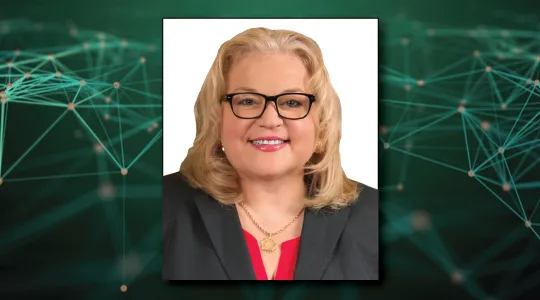
John Gilroy: Welcome to Constellations, the podcast from Kratos. My name is John Gilroy, and I’ll be your moderator. Our guest today is Randy Segal, a partner in Hogan Lovells. We will discuss space law and its impact on such issues as orbital debris, geospatial analytics, space tourism, and much more. We mentioned that Randy Segal is a partner in Hogan Lovells, you may not realize that they are one of the world’s largest law firms. She focuses on satellite, wireless, drone and technology transactions. Randy provides commercially practical solutions in industries where technological change is ever present. Randy’s practice is reflected in three segments; co-leader of space in satellite practice, advisor to technology investors and their portfolio companies, and advisor to global clients on complex international and legal issues. Randy, why don’t we start with you giving us the elevator pitch you use to describe space law?
Randy Segal: Well, John, first I want to start with my pre-elevator pitch to my elevator pitch, and that I have never before this podcast thought about how to articulate what space law is. I’ve been doing it for 30 years, and I have never quite put it into an elevator pitch or any kind of other statement. So, thank you and Kratos for giving me this opportunity, and let me give you my newly designed elevator pitch. So there are basically two broad buckets of space law, the first being the one that I practice on a day-to-day basis, which is the underlying body of law that’s applicable to operating, deploying and developing a space-based company, manufacturing, services, operations, innovation in space, and the related ground elements, which are becoming by the way more and more important these days, based on space industry norms, whether for satellites, launch services, communications regulatory, exports, and as well as the unique risks and ameliorative actions for these risks in the full gamut of space-related issues like orbital debris, cyber security, national security, risks to persons, health, and property in space, and everything in between.
Randy Segal: Okay. That’s one of the two arms of space law as I see it. The second one, which is the focus of generally a different group of people, is the specific bodies of law that are more treaty based, and between the countries, such as the Outer Space Act and the newest Artemis Accords which we’ll be talking about a little later in this podcast, that are developed to coordinate between countries, the use and operations in and of outer space. Those of us who practice space law typically focus on one or the other buckets as do I, but there’s also an overlap and intersection between the business of space and how these global treaties influence or direct the day-to-day business of space and its evolution. So, we’ve finally arrived at the 50th floor of my high rise in my elevator pitch, and that’s my elevator pitch.
John Gilroy: Quite a range there, everything from treaties to actual space satellites themselves. We take a look at this whole body of work that you cover here, there’s always most important things in there. So, what are the most important aspects of space law today for participants, new and old, to remember, regardless of what their role is in this space-based company? You described so many different roles.
Randy Segal: So, again, my thanks to you, John, Kratos, for asking me this question, because I poured through 30 years of experience, 30 years, long time in space. Poured through my experience, and I’ve come up with four main principles that I had unknowingly carried with myself or made mistakes on and learned as I stumbled over them during that period of time, and here are the four principles; one, never assume anything anymore, especially in space, is boiler plate. With every new space innovation, as well as the twists and turns in the global arena and economies, virtually all issues need to be reconsidered with a clean sheet of paper. Example, force majeure clauses, excusable delays, and the pandemic. We have forever included excusable delay clauses from the beginning of space, but they have never had the type of meaning they do today. And I will tell you that it was astonishing how this has become now the clause, that is the focus of everyone’s focus in contract negotiations these days.
Randy Segal: Second, when you approach any new space endeavor, go through a mental checklist of all regulatory considerations required for a system or your initiatives, including areas, and this is something that is shifting sands, including the areas not yet with a clearly defined regulatory path, and what new issues can be presented or will be presented by other areas of science or technology to your space-based challenge. It’s an area of convergence that has never before been known in the space industry. Think about it, medical issues and all of the medical regulations converge with human space, exploration and tourism, 3D printing with space items, and all of the artificial intelligence and cyber security issues in space.
Randy Segal: Third, in cases where the law has not caught up with the pace of space innovation, and by the way, there are many of them, is it possible when you go through your transaction, your contract to get a change or improve the clarity with the administrations in time for your transaction or deal but as is more likely in the interim before you can get the clarification? Or to try to tread water and have your deal reflect what will happen if A is decided versus B is decided, how do you approach your commercial transactions to protect what you are doing in the area of legal uncertainty? So we are a lot of us working in areas of new uncertainty with how the regulations are going to operate in terms of export rules, in terms of government permissions of sales of certain advanced technologies in other countries, watch this space, is a lot of what is going on right now.
Randy Segal: And fourth, last but not least, always, but always run through as many different scenarios as you can think as likely, possible, or important in any transaction, including off-ramps, responsibilities for increased costs, or exits or other actions if regulatory hurdles arise. In space, often, insurance is used to close the gaps as the traditional space participants know with launch risks. But it is critical as you are developing a venture with other parties, and so many of the ventures we are doing these days are with other parties, whether it is venture capital investments into new space opportunities, whether it is the larger satellite players who have invested in space ventures, whether it is the Silicon Valley folks who’ve invested in the space players, always consider the different business risks, profiles, and goals of both parties, often big players and small party players, these startups versus the traditional government contractors, very different corporate personalities. Consider how decisions are being made, how the venture can pivot, particularly in case of shifts and priorities and business opportunities, law regulation, costs, and risks.
Randy Segal: I would go one step even further, always expect the unexpected. Yes. I said that. In space, one thing I have learned in my career is that something almost always happens that you did not expect to happen. And so, the more you can build in sort of some sort of plug into your agreements and your thought process and safety valves for these unexpected, the better. And often, when the unexpected happens, they bring tremendous challenges for the engineering team. Often there are anomalies that happened that you have to work around the clock to try to fix, there’s often dead ends you end up with technology developments where you don’t hit the specifications that are desired or contractually mandated to make the business work, and the engineers have a really tough road on that one. But there’s plenty in the law, in the contracts you developed, that you have to be there right to your engineers in sorting through the legal consequences, disclosures, and outcomes for the right result or the best result you can reach for your company.
John Gilroy: And Randy, I’m going to quote someone world famous from YouTube, it’s a four- word summary, what you just said; something may go South. You said that, didn’t you?
Randy Segal: Yes. I said that. I did say that.
John Gilroy: I know. Yeah. I mean, you got to get up every morning, this business and walk and you’re off and go, “Okay, what’s good? The light’s going to go out, the heat is going to fail, what’s going to happen? It’s a dangerous world out there.” Let’s switch over and talk about the regulatory and policy side of space law. An editor in chief of the journal of space law once defined space law as the jagged edge between legislative and executive power. What do you think about that observation?
Randy Segal: I will say that it’s a really cool quote, and you have to have at least one cool quote about space. But thank you John for repeating my own cool quote to me right before this. But more seriously, getting to the heart of the quote, space is truly the convergence of so many, so much involved between these two arms of government who share the development of space policy regulation, as well as the enormous appetite, and future appetite of the government as a consumer of everything in space. Space law, including space regulation, combines both legislative and executive treaty-type elements, and perhaps, as important, the third piece of the puzzle, which is the opportunity for the executive branch as consumer to shape the future.
Randy Segal: What the US government sends out to the commercial world for their desires and what they want to see for the future of their own procurements, shapes very much so what the commercial world of space is now producing. These two hats of the government, as regulator and consumer/international policy maker, are not always fully and clearly aligned. In my career, I’ve often had people say to me, my clients, that the government really wants to see this opportunity out there, this platform out there, so they’re going to support us. And I said back to my clients, “But that is the government with hat one on, or hat two on.” The government as the regulator and or the legislator has hat three on, and it is astonishing, remarkable, but absolutely the case in space as it is in other areas as well, I’m certain, that each side has actually very different goals to protect national security, to have insight into technology, to have technology deployed in the world in a way that doesn’t give away, US technology, but allows a US platform much better than having a Chinese based platform that the international players are buying from.
Randy Segal: So, the government is of three minds, hence the jagged edge, and maybe we can coin our own phrase as a three-way jagged edge between the two or three at all times.
John Gilroy: Well, early, we talked about quotes. I’m going to read a quote to you and have you identified who said it. Are you ready? This is going to be an easy one for you.
Randy Segal: Oh, my gosh, the pressure.
John Gilroy: Oh, the pressure. Space is hard, but it is worth it.
Randy Segal: I think that was my quote. Is that my quote?
John Gilroy: No.
Randy Segal: Oh, no, it’s not my quote.
John Gilroy: But it’s a good quote.
Randy Segal: It’s not my quote.
John Gilroy: It’s from our buddy, Elon.
Randy Segal: Oh, Elon. I gave him the idea for it
John Gilroy: Okay so winner winner chicken dinner you get credit for this because he stole it from you?
Randy Segal: That’s my story. And I’m sticking to it at least on this podcast.
John Gilroy: Now, last night I was reading about The War of The Spanish Succession, and there was a treaty that ended, and I always think of wars and treaties and everything else and… But now what we have is we have treaties that are discussing the holiday of space law. Historically, there have been five space- related treaties, commonly referred to as the five United Nations treaties in outer space. The one that we have most often have heard about is The Outer Space Treaty. Back in October, I think it’s fair to say that a sixth UN Outer Space Treaty has come into being, the Artemis Accords. What do you think about the current role and importance of these agreements, most recently, the Artemis Accords?
Randy Segal: So, it’s been over 50 years since the Outer Space Treaty Act was adopted, and the follow-on acts. But the Outer Space Act is the one that we hear about most today, until, at least, the Artemis Accords, which is a very logical modernization and follow on to the Outer Space Act. Its goal is to create a unified, safe, peaceful, and prosperous future in space for all humanity to enjoy in the exploration of the moon. So, as a principle, I think that’s like motherhood and apple pie in terms of, let’s work together. And honestly, you have to work together because there is so much going on in space that if you don’t work together, you will have space during [inaudible 00:15:32], a non-space traffic management system and everyone declaring ownership of space resources such as asteroids and other items in space and it will be a free for all. It will be the Wild, Wild West with everyone staking a gold claim or mining claim.
Randy Segal: So, having coordination and cooperation on all of these types of principles, and the Artemis Accords has 10 principles that I’ll very briefly mention because most of them are indeed as stated, motherhood and apple pie in terms of transparency, emergency assistance to other astronauts in case, and otherwise, in case of a problem, a registration, which is a system we already have in place of space objects released to the scientific community of information for the betterment of society and the world, having a deconfliction of activities, which is another way of saying what we do on this planet in terms of trying to avoid harmful interference, which is aspirational, and also having interoperability, which is crucial, and we’ve seen it with the International Space Station, where if you have multiple jurisdictions that want to assist each other in getting crew and cargo, having a lock for the space station, sharing the space station and scientific discoveries to have everyone have the same interface. And that is actually crucial if you’re going to fulfill a lot of these other goals of emergency assistance, to be able to lock into each other’s station.
Randy Segal: So as the principals involved, and above and beyond, by the way, the number one overarching principle which has yet to be fully defined, and I’m guessing is going to be a major issue is, it sounds easy, which is all activities are to be conducted for peaceful purposes, there will be issues. Peaceful does not equate to commercial only necessarily, there will also be questions that will arise as to the rules of government and military non-weapon utilization of space. So watch this space, so to speak. The dilemma as to the Artemis Accords, as well as all treaties and quote quote-unquote treaties in space, is it hasn’t been fully embraced. It just was adopted by seven allies of the United States, and the US, including Australia, Canada, Italy, Japan, Luxembourg, the UAE and the UK. But other treaty members of the Outer Space Treaty have not yet joined, it’s the joining of these other folks is relatively new so it’s not to say they won’t join, but already, Russia has stated that the program is too US centric, and without Russia as a member, the utility of the treaties is only as good as the members who agreed to it.
Randy Segal: So far, no African or South American countries have joined, but we assume they will. Germany, France and India have not yet joined, and they have well- developed space programs that would surely benefit everyone from their involvement in the Artemis Accords. And China has never joined the Outer Space Treaty, nor will at the present time, US congressional rules, prohibit collaboration with China on space. And so, the ultimate conclusion is, the Artemis Accords coming 50 years since the Outer Space Treaty, a well-needed advancement because so much has changed and evolved. The Artemis Accords can make a significant influence and difference in the field of space exploration, but without Russian participation, which probably will occur. But without the inclusion of China, the Accords can only present a partial solution to these issues in space. Time though, will tell.
John Gilroy: Randy, earlier we kind of facetiously referred to Elon Musk in a silly little quote. But the point of the matter is, is that space is becoming big business. So how are commercial and government interests aligning and not aligning in evolving the law of outer space?
Randy Segal: Well, I will tell you that I really do think that the interest, not only in the United States, but globally, as we can see it, with, for example, the OneWeb bankruptcy and the UK government with a commercial enterprise joining together to buy OneWeb out of the bankruptcy, I believe the interests are aligning, and that there are real opportunities and channels of communication to become much stronger between commercial and government dialogues. These robust channels and cooperation have evolved significantly over the past five to 10 years, with much more robust public private partnerships in space coming together less formal than many of the public private partnerships we’ve seen historically, but less formal. But nevertheless, they’ve combined to solve problems or solutions and making commercial activities available as a government solution for their access to space. No longer just the large government contractors but looking for a much more democratized access to space and looking much more at the innovations being created by space companies.
Randy Segal: Let’s give some examples. Let’s take the International Space Station and all of the various commercial and scientific efforts that have evolved over the past decade, and how the government has cooperated and coordinated with a number of players in a safe collaborative environment to go forward and use the space station for these efforts. When I first started in space back in the ’90s, and even as recently as the year 2005, there’s something called a Cooperative Research and Development Agreement, a CRADA, and they were impossible to get into place at that time between the government and commercial space. Today, almost everyone has access if they just put their minds to it, to getting into a CRADA with the US government, which is a great collaborative effort to explore the art of the possible between commercial and government enterprises.
Randy Segal: Similarly, the US government has been outreaching over the past two to three years, I think, quite increasingly to collaborate with the commercial enterprises as to ways to develop information and shared databases for global humanitarian efforts, as well as for ways to attack or deal with the orbital debris issue. So of course, we have not figured out everything yet, and indeed we will see geopolitical issues which influence our global agreements on commercial versus government interests once you look at the same to an international lens. But the biggest disconnects or disagreements on evolving space law, I do believe will not be between commercial and government interests in outer space but will be between international folks. And, again, my closing statement, a few of these questions’ answers are time will in detail.
John Gilroy: Randy, you mentioned you’ve been involved in this industry since the early ’90s, you’ve seen trends I’m sure. Let’s kind of look into the future here. How do you foresee a consensus on procedures and platforms for everything space; situational awareness, traffic management, debris mitigation, space sustainability in the near future?
Randy Segal: Well, over the past decade, there has been tremendous, tremendous growth in space innovation and new platforms and technologies, and the promise of significant global deployment of mega constellations. With them, have come new ideas to address these issues, the issues that are raised with these innovations. So, for every innovation, someone else creating something to deal with the risks of the innovation that is out there, and right now, so many of them are out there. I think that we will develop and evolve procedures and platforms to address every one of these issues. And yes, I think they will be developed in the near future, depending on your definition of near. I think that the Artemis Accords provide a new platform for countries to come together for consensus. Hopefully, and this may be against US congressional policy, but hopefully it will be a platform that can be joined by all the key space participants peacefully including China and Russia. For it to be truly effective, the cooperation needs to extend to all major space participants, or else it’s only a partial answer.
Randy Segal: Perhaps, of all the issues with space, I think the biggest challenges will be in figuring out a way in this new era where there’s so much happening in space, how we will coordinate and cooperate with all nations. Today, many of the activities that we are doing are centric or owned by a particular country. LEO constellations are owned by their flagged country, and create space issues for everyone, not just the country in which they’re flagged. Just a few weeks ago, China filed with the ITU for two mega LEO Constellations, totaling nearly 13,000 satellites. Without open communications agreements on orbital debris, collision avoidance and spectrum coordination, we are heading for some very serious issues and potential battlegrounds in space.
John Gilroy: What a great interview. Randy, in law school but they talk about breathing life into the constitution. What you have done today is breathe life into space law. Good job. I’d like to thank our guest, Randy Segal, a partner in Hogan Lovells.
John Gilroy: Hi all! Thank you for listening to this episode of Constellations. I hope you enjoyed it. I just wanted to clarify for our audience that the Artemis Accords is an international agreement signed by several nations but it’s not a UN agreement and that China did join the Outer Space treaty in 1984. Stay tuned for more Constellations Podcast and don’t hesitate to send us your feedback at [email protected]
