Transcript:
John Gilroy: Welcome to Constellations, the podcast from Kratos. My name is John Gilroy and I’ll be your moderator. Today, we will discuss how a new batch of startups is changing the space industry.
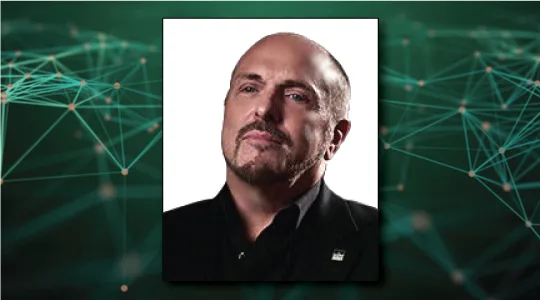
John Gilroy: Our guest is Rick Tumlinson. He is the founding partner of SpaceFund Venture Capital, and a long time space activist credited with coining and helping start what many call, the New Space Revolution, led today by Elon Musk and Jeff Bezos. He is also the cofounder of the Space Frontier Foundation and has testified on space related topics before the U.S. Congress. We will discuss Rick’s experience in the venture capital or VC world, what advice he gives startups in the space industry, and what they can do to stand out from the crowd. We will also learn about some of SpaceFunds latest investments, as well as establishing settlements in space and creating commercial opportunities in the industry.
John Gilroy: Well talk about standing out from the crowd, so Rick, your Twitter handle is RocketRick, @RocketRick. I guess you’re showing your cards there, aren’t you?
Rick Tumlinson: Yeah, I mean we’re on a ride in our field and you just got to hang on and go for it. And thank you for having me by the way. This is a great little show you have here.
John Gilroy: I went to your website, I read all kinds of stuff and it seems like that you advocate for exploration and settlement of the solar system. And people like Jeff Bezos, Elon Musk and others are pouring billions into this area. So why this specific area?
Rick Tumlinson: Well, when I give my lectures, I show up early on, I do a talk called The Space Revolution. And I’ll show a kid in the ’60s or ’70s sitting in front of a TV set. And we had the Apollo moon race and all of that, which we celebrated last year. But everybody talks about spinoffs, these different things that came out of the space program. And they’re all around you, the technology we’re using right now to do this interview. But the biggest spinoff of the space race was a generation that was watching. And so you’ve got these kids sitting there watching people walking on the moon. There’s this Cold War that surrounds them where basically we’re all going to die, a nuclear attack thing like this being talked about all the time. And at the same time, by flipping the channel, which back in the day used to be done with a remote control device. It was usually your little brother or sister. But they’re flipping the channel, and well behold, there’s Star Trek. And then they flip the channel and then there’s nuclear Armageddon coming. And then they flip the channel and there’s riots and this and that. And then they flip the channel and somebody is driving a car on the moon or the Voyager spacecraft is heading out into the solar system.
Rick Tumlinson: And these kids were inspired by that. They stayed in school, they studied, they got more and more engaged. And some of them went out and started businesses, some of them became active in the political arena, policy arenas, to try and make this happen. They wanted to be Captain Kirk or the astronauts or whatever. It was a role modeling. It was an inspiration to some of them. And so we arced out. And it was one of those things, what they call today in the industry, a moonshot. The idea of something grand, something unachievable that you can achieve. And some of us went out and did that. And a couple of them were very, very directly linked to it.
Rick Tumlinson: For example, Jeff Bezos. Back in school, when he was in school, he was wanting to start a book club and one of the books that he sold was called The High Frontier by a guy named Gerry O’Neill. And Gerry O’Neil is the guru, the godfather of everything you’re seeing with Elon and Jeff and the stuff I’m working on, the XPRIZE, all of this comes from Dr. O’Neill. And in his book, he basically told our generation that you don’t have to be an astronaut or a scientist or a soldier or whatever to go into space. You can just take your ideas, free enterprise, the institution of the democracy, and use the resources of space to expand civilization. And that was really cool.
Rick Tumlinson: Jeff, literally gave his graduation speech in high school and in his talk basically said, “I’m going to make money, and then I’m going to build colonies in space.” And the same thing kind of for myself. I wish I’d made the same career choice he did. But we are all coming upwards into our own lives and working to make this happen.
Rick Tumlinson: And so, here we are now, and that’s why you see Elon building what he calls the Starship. That’s why you see Bezos putting over $1 billion a year… You just keep your eye out. In the next few months you’re going to see some things coming from him. Branson is of the same rough generation.
Rick Tumlinson: And so, we all believed in this idea that humanity, we’ve kind of done it on this planet and we’ve kind of done it badly on this planet to some degree. And so if you look at the different things we’re doing, they’re both very optimistic, but they also are aimed at taking us to the next level. We don’t want to leave the planet behind, by the way. There a couple of people who probably do, but basically the rest of us, we really care about the Earth and we want to make it a better place. But we also want to create new opportunities for people on this new frontier. So it’s really exciting.
John Gilroy: Great, great. I always thought it was Gerald O’Neill when I read his articles, so people called him Gerry. That’s interesting.
John Gilroy: So let me put this maybe, focus this in for our listeners. So the reason you’re putting together the SpaceFund, is to put your vision into work boots, hmm? Actually make it practical. Is that why you started SpaceFund?
Rick Tumlinson: You know, the old astronaut slogan was, “No bucks, no Buck Rogers.” I like to say, “Nobody stays until somebody pays.” And I would prefer that it wasn’t the government. A lot of the infrastructure to get this done… Obviously, we stand on the shoulders of giants and they’ve done an amazing lot of work to create what we need to go out there.
Rick Tumlinson: But if you look at what, and I’ll keep coming back to Jeff and Elon because they’re easy targets, right? But what you see Jeff and Elon doing as far as creating a transportation system to space, which by the way, your readers need to understand this. The number one breakthrough necessary for opening up space to humanity, is the transportation up and down for the first hundred miles. Science fiction writer Robert Heinlein used to say, “A hundred miles up and you’re halfway to anywhere.”
Rick Tumlinson: This is the key. And if they are able to crack this. If they are able to bring it down from the current roughly $10,000 a pound to go into space, down to 100, which is quite possible with some of the technologies they’re working on, then everything breaks open. So what we’re doing with SpaceFund, is we’re looking at those companies that will either feed into this happening or benefit from it happening by having this access to this entire new domain that we call basically the rest of the universe. Or as some people would call that, the industrial ecosystem. So we’re focused on the little guys who are going to play in this.
John Gilroy: Speaking of little guys, you’ve been on both sides of this venture capital table, haven’t you? You’ve been the little guy asking for money and you’ve been the guy evaluating proposals here. So given that experience you have, what do you like most about both sides?
Rick Tumlinson: There’s this old saying somebody once pointed out to me, it said, “If you’re looking at a minefield and how to get across it, you want to learn where the mines are, ask the guy on the other side who’s got one leg.” And I guess in this situation, I’m kind of that guy. I’ve been out there. I’ve done a couple of startups, didn’t go so well here and there. Some did great, different things like that. And so I wanted to come back in and work with this generation of startups and help them avoid making mistakes, and also help steer them in the right direction.
Rick Tumlinson: And I must do a shout out to my partner, Meagan Crawford, who is this amazing woman who has the longest running space business plan competition in the world. And she works with hundreds of these, what I call embryos, embryonic companies, to get them going as well. And it’s really just a matter of helping shepherd people who want to get into this. Because think about it for a second, it’s space. And people can get very carried away, they can get way over-ambitious. Plans get exaggerated, things like that going on. And you have to be very-well grounded.
John Gilroy: So, if you and Meagan are sitting down with a startup, or with a group of startups or a group of students here, what kind of advice would you give these potential entrepreneurs in the space industry?
Rick Tumlinson: Well, one of the great things about our partnership is, Meagan and I probably represent two different halves of the brain. She is the Excel spreadsheets, bottom line person. I think I am the broader terms. Some of the things I would suggest is, you have to have an understanding of the field, first of all. You can’t come rolling in from the outside and think you’ve got it figured out. You have to have an understanding of what the needs are and where things are going. You should do your background studies on who’s doing what so that you know you’re not reinventing the wheel. People completely underestimate the timescales of getting into the field. This is going to take a while, most of these projects. It’s very rare to have a space project that you can start and is creating revenue within a year. If you can do that, and you’re plugging into a need that’s in the industry, then you’re doing fantastic.
Rick Tumlinson: It’s going to be very, very rare also, that you’re going to get that times X multiple that you can get from software when you’re doing the technologically heavy stuff that people have to do in space.
Rick Tumlinson: And then there of course is the very, very basic stuff. Be honest. Don’t overly exaggerate your claims. You’re going to be turned off. Always understand that the person you’re talking to can pick up the phone or go to a conference and meet somebody, and ask, and find out whether or not you’re speaking the truth, or as occasionally happens, breaking the laws of physics.
Rick Tumlinson: And of course, then there’s the picking of a team. And I’m sure you hear this a lot on your podcast. The very basic idea is that you have to have a five star team around you, and you have to have people that are willing to tell you that you’re wrong. And you have to have the ability to listen to them telling you that you’re wrong, and adjust your course if necessary.
John Gilroy: You know, Rick, thousands of people from all over the world have listened to this podcast that you’re on. All you have to do if you’re listening is go to Google, type in Constellations Podcast and get our show notes. Here, you can get transcripts for all of our 68 interviews. And also you can sign up for free email notifications for future podcasts with guys like Rick the Rocket Man. Yeah, good.
John Gilroy: So Rick, everyone’s made mistakes. Some are good, some are bad, and then some cost you a lot more than others. So what kind of mistakes do you think the startups make when they pitch you?
Rick Tumlinson: Some of the things that I was mentioning. Over-exaggeration is one of the biggest ones. Again, it’s space. Space draws people who have big imaginations and big ideas. So we get people that roll in a lot who over-promise and exaggerate what it is they’re doing. They’re big talkers, big grand visions. But then you ask them, “Okay, but how are you going to pay the bills?”
Rick Tumlinson: Or one of the biggest ones that we get, of course, is the big budget people. You know, “Just giving me $1 billion and I will do this.” That right there, click, the phone is hung up.
Rick Tumlinson: And the other one that we really look for is, if somebody has a near-term, what we call terrestrial revenue source. So in other words, if you’re developing a product that might be useful to help astronauts that Elon sends to Mars survive by recycling their air, and you’ve got a plan that is going to take that piece of hardware and put it in people’s homes today, that they can buy on Amazon or at a catalog store and that’s a revenue stream that’s going to lead to you being able to do that on Mars, we love that. That gets you revenue. That shortens your runway and really gets you into play a lot sooner. That’s one of our big ones. And that really tells you that’s somebody who’s been thinking when we see those kinds of pitches.
John Gilroy: So, in order to stand out, one thing you’re looking at is some kind of existing terrestrial revenue to build on. Any other magic sauce? Is it innovation? Is it creativity? It’s a repackage of an old idea? Any kind of specialty that you look for when you invest in a company?
Rick Tumlinson: Yeah. You mentioned repackaging of an old idea. Once in a while we see some stuff come through that is really an imaginative, a very imaginative repurposing of something that people haven’t thought of because they’re so focused on the super high tech. And somebody rolls in with something that’s really basic and incredibly useful.
Rick Tumlinson: What we focus on in our company is what we call Frontier Enabling Technology. In other words, we’re not chasing swarms of satellites. We’re certainly not chasing rockets. There are too many launch vehicles in the field. The joke in the field is somebody will say, “Well, we’ve got 120 rocket startups right now. Oh what time is it? Okay 122.” There are too many. And the fact is that our field probably has room enough for less than 10 very operational space launch companies.
Rick Tumlinson: So there’s going to be major shakedowns. Of course everybody is attracted to that because it’s very glamorous, you know, boys like rockets. And by the way, there are way too many men in our field. We are always working hard to get women entrepreneurs and leaders into the field.
Rick Tumlinson: But it really is the kind of thing where we’re looking for technologies that enhance human life and the ability for human beings to do things in space. Because, going back to what I was saying earlier, if Bezos and Musk are able to get the transportation systems in place that can carry people out there, then we’re going to have all kinds of things happening and they’re going to largely be human centric at that point. Because that’s what this is all about. If you realize, if you focus on the fact that this is being driven… Yes, the economics are very important to us, but this is being driven by a group of people who want people to be out there.
John Gilroy: I think everyone does due diligence when they invest in a company, and I do due diligence when I do an interview. So I went to Wikipedia, typed in your name, lo and behold, you’re in Wikipedia, that’s pretty good! But I’m sure that you’ve made mistakes in your life and those aren’t going to be in Wikipedia. So maybe you can share with us the biggest mistakes you’ve made and maybe some lessons for us mere mortals here.
Rick Tumlinson: Oh Lord. How long do we have?
John Gilroy: Keep the two-minute drill.
Rick Tumlinson: Yeah! That just warms me up, on the mistake side of things. The fact is, as one wise person once said, it’s not how many times you fall up, fall down… Say we’re in space, we could fall up. But it’s not how many times you fall down, it’s how many times you get up again. And how you get up and what you learn from that. And some of the biggest mistakes I have made are overestimating my own knowledge, bringing in partners without vetting them the right way so that I could anticipate or at least understand how the interaction was going to go between us.
Rick Tumlinson: You know, you’ve seen Spock do the Vulcan mind meld. It’s really good if when you’re starting a company, your cofounders and yourself are totally on the same page. Because it’s very easy sometimes to, especially if you have an assertive personality, which is the kind of personality a startup person often has, to assume that they have melded with you, the other partners you’re working with. And then you get into a crisis when you get down the road and you realize, ah, we were never really on the same page. So that’s very critical.
Rick Tumlinson: Integrity is important. You can get into a lot of trouble by talking your way into a presentation of what it is you’re doing that maybe is beyond the reality of things. You might even not know you’re doing it. Again, that goes back to having partners that’ll keep you in check, so that you have high integrity. And I’ve tried very hard for most of my career to make sure that that was solid.
Rick Tumlinson: Finance. Make sure that you have a strong financial team and understanding of finances, and that you listen to those financial experts. If somebody on your team, if your CFO or whatever is telling you about your runway, don’t magically think that that runway is going to continue being paid beyond what they’re telling you.
Rick Tumlinson: Being conservative, building in for dry spells. Building it lean and mean. A lot of people, and I’ve seen this in the space field, will sink so much money into looking good because they feel they’re in, you know, “I’m building a rocket company, and we have to have this big building and we have to have all this cool looking stuff and tons of swag.” I don’t know what goes on with that. And, “We have to be everywhere and have booths everywhere,” things like that. You don’t really need a lot of that stuff to get the job done. So keep it lean and mean and focused on getting the job accomplished. Those are things that I have learned through some of my mistakes.
Rick Tumlinson: And getting ahead of the curve by the way. I had a company that, we were going to do asteroid mining a few years ago. My friend Peter Diamandis, the XPRIZE founder and I had two competing companies. And we were a bit ahead of the curve. They were called Planetary Resources. We were called Deep Space Industries. And at the end of the day we did do something important historically, in that we were able to get the world thinking about space resources to the level where laws have been passed in the U.S. and the United Nations. People are talking about it, things like that. It’s a real thing now and it wasn’t before. But both companies, we were a little ahead of our time. We were worried about how do you go out there and create a resource base for people to live in space, and yet the transportation systems and such weren’t quite ready to get there. So in both cases, our companies have been acquired as we’ve moved on to other projects.
Rick Tumlinson: Timing is good. And frankly, luck. Sometimes it’s just plain old luck.
John Gilroy: Yeah it’s true.
Rick Tumlinson: But the one thing I can tell you, one thing I can tell you about luck is, or coincidence or synchronicity or whatever, if you’re wanting lightning to strike you, the good kind of lightning, financial lightning or whatever, to strike you, it’s not going to strike you if you’re sitting on your couch with a remote control, or you’re timidly hoarding your idea and not taking action and getting out into the field. You have to run out into the middle of the field in a rainstorm, brave all of those elements and be able to hold a metal rod in the air forever until it hits. You have to be able to take the positive action and engage in what Teddy Roosevelt once called, The Arena. You have to get into the arena. You have to get out there, take the knocks and keep going.
John Gilroy: You just talked about sitting in front of the TV, and earlier you talked about the couch and whatnot. And I was at your website this morning and I saw this thing called the Reality Rating Database. I thought it’s something with reality TV. No it’s got nothing to do with reality TV but maybe that’s the theme you have here. So what is this Reality Rating Database on your website, and how do you use it?
Rick Tumlinson: Yeah, the SpaceFund Reality Rating. We call it the SFR. The point there was that we were doing diligence on a lot of startup companies that we were interested in and pushing at to different sectors. And we realized that nobody in our field had ever sat down and gone through sector by sector, and put the information together just in a simple database, and then rated the level of accomplishment of those companies and put it out to the world. So we thought that we would provide that as a service to our community. And so we’ve gone through, we’re going sector by sector, space transportation, all these different things that we’re looking at. Communications. And I think we have one coming out pretty soon on energy in space. And we go through and we rate them on a whole set of criteria. Do they have financing? Do they have a qualified staff? Does their idea fill a market niche? These kinds of questions. And we give them a rating on a one to nine scale, which by the way gets you some very interesting phone calls if somebody’s getting a five, something like that.
Rick Tumlinson: But yeah, it’s a service to help people understand and navigate. And yeah, we’ve been very excited. We’ve gotten calls from the FAA, military people, et cetera, going, “Man, that is amazing. Nobody’s done this before.” So we’re very excited about that. It’s a reality check.
John Gilroy: Yeah, yeah. You’re company’s first fund, SpaceFund One is up and running and just announced its three first investments. One of them is Made In Space. Actually, we had them as a podcast guest a couple years back. Episode number five on Constellations if you want to listen to it. So what can you tell us about those three investments and why did you choose them? Three different cities, three different concepts completely. Why’d you choose them?
Rick Tumlinson: Well we’ve had over a hundred in this round of expanding the portfolio that we’ve rejected. We chose them somewhat to make the point on our first fund, which is sort of a proof of concept, that we are engaged in the middle of the field. We know our way around. We chose them also because each one is slightly different. They represent a different part of the field. But if you want to get down to the specifics as to why we chose each one, so I’ll run through them quickly.
Rick Tumlinson: Axiom is a company that’s working on building a private space station. We chose them because we know there’s going to actually be, interestingly, going back to what I said about transportation, a housing shortage in the future. But the beauty of Axiom is it was founded by the guy who used to run the International Space Station for NASA. And we knew that they were on track to doing something real when last year suddenly NASA announced the rates that they would charge for people to spend time in the space station.
Rick Tumlinson: As you may know from my Wikipedia, whatever, I signed up the first American to buy a ticket to go to space, a guy named Dennis Tito. And at the time we actually had to fly him in the Russian section because the U.S. side was not allowed to do private transactions and have private citizens. Well, Axiom behind the scenes made that happen on the space station. And so that was a leading indicator that these people were making something happen.
Rick Tumlinson: We also found out that they’re going to be flying private citizens themselves. And then they hired the former head of NASA. Then we looked at their financial team. They came from some very strong backgrounds. So we liked them. And they’re a top level infrastructure. Now they’re a big player. A lot of money is going to go into that obviously to build a private space station. And then we were really excited because a few weeks after we invested, it was announced that they got a $410 million contract from NASA to put basically a hotel room on the station.
Rick Tumlinson: Number two was Orbit Fab. And I’ll come back around to Made In Space. Orbit Fab is one of our former executives from Deep Space Industries. And what he’s doing is creating the ability to refuel satellites.
John Gilroy: The gas station of space!
Rick Tumlinson: Yeah, yeah. Gas station. You got it. And people may not realize this, but that DIRECTV satellite or whatever that’s up there, it may be a billion dollar satellite, is launched with a tank of propellant to keep it in place so it doesn’t drift around, and when that’s gone, that thing is dead. And wouldn’t it be cool if they were able to be refueled and reusable. And you could push them to a higher orbit and do things with them. And so we have to get this whole infrastructure in place, which is tugboats and gas stations and repair, all of that.
Rick Tumlinson: So Daniel Faber, the CEO of Orbit Fab who’s put that together, he did it miraculously fast. It’s the opposite of Axiom in that it’s very low budget. But he was able to move so fast that within a few months of founding he was able to fly a test demo on the space station and move some liquid, I think it was water, back and forth between some containers and show that this could be done. And so he’s out working to put basically gas caps on the satellites in anticipation, because there’s a time delay in the development of the technology of satellites. It could be years before it’ll actually fly. So then that’ll meet later on in the market where we’ll be able to refuel in space.
Rick Tumlinson: And number three, going back to your original question, Made In Space, interestingly, those guys actually came through the Space Frontier Foundation when they were first getting started, a business plan competition we held there. So I’ve kind of been watching them. They’re a great team. They have this amazing symbiosis between the founders and their employees, and a lot of vision. They flew the first 3D printer in space.
John Gilroy: We talk to them at trade shows. They’re really a lot of fun. They’re really interesting characters there, Made In Space.
Rick Tumlinson: Yeah, they are. And very imaginative. And, what I like about them too is they’re very flexible. They’ve been very able to tap into the trend. I mean, they flew that 3D printer when that was a new thing. And they were able to get into NASA, get the grant, get engaged, and then were able to fly it. And then they kept going.
Rick Tumlinson: And what we like, I’ll give you one example, is that they’re looking at all these different industrial processes that are needed in space but could make money in [inaudible 00:28:05]. One of them is fiber optics. If they are able to follow through with this, they’re going to be able to produce fiber optics in space that are a thousand times more efficient than what we can produce here on earth. And that’s a terrestrial market. So you have three different investments that come at it in three different ways, but they all play into this overarching opening of the industrial frontier in space.
John Gilroy: What I like about it is that they’re not in Silicon Valley, three different cities. You’re not in Silicon Valley. So there’s talent all throughout the United States, especially in this creative area of space, isn’t there? I mean it’s just great.
John Gilroy: Let’s say we want to amend your Wikipedia page and I’m the editor. And I want to put in something like Rick’s prediction. So what is your prediction? What’s the hottest trend to watch right today in space? So what are we going to put in there? What’s the hottest trend right now?
Rick Tumlinson: Oh, the hottest trend. Again, I think we’re teetering on the edge of the transportation breakthrough. I really think that’s the big one. Jeff Bezos has some stuff up his sleeve, that when he starts flying his New Shepard and his other large scale systems into space, that’s going to be huge. Elon is moving full-bore. And I don’t know if any of your listeners saw the landings of the boosters where they would fly something to the space station and then the boosters would come back and land on their own. I jokingly call that space porn. It’s like so amazing. This is how bad geeks are, right? But it is so amazing to watch the actual hardware that’s used to fly something out to the space station, then have these things fly all the way back to where they were launched from and land on their own legs.
Rick Tumlinson: Now, what’s really important about that, getting to that cost breakthrough, is that until now, we’ve been throwing everything away when we go into space. It’s as if you went to the airport, climbed in a plane and were flying from New York to LA, and on the way to LA, all the pieces of the airplane were thrown away and you landed in a pod. And then to get back to New York, they had to rebuild the entire airplane and you fly back and throw away all the pieces. None of us would ever be able to afford to go anywhere. So with reusability and the ability to launch frequently and fly back and forth frequently, everything opens up. This is the equivalent of almost the transistor let’s say, to electronics. The ability to go back and forth.
Rick Tumlinson: The other one, a couple of things that have happened that are big, are what’s called CubeSat. CubeSats are 10 by 10 by 10 centimeter little cubes. And they were created by a professor in Kentucky who had the idea of being able to plug and play. And by the way, you can assemble them. So you can have a one CubeSat, a 10 CubeSat and a 20 CubeSat. And the pieces are interchangeable, they can be packaged in. This is why you’re getting constellations of small satellites, Planet Systems, Planet Labs. These other companies are using those kinds of formats. So the reduction in size along with the reduction in cost is huge. I think those are the two biggest.
Rick Tumlinson: And then the next big one, which is the one that we started on a few years ago that I told you we were a little too early about, is going to be the ability to use resources in space. Now, with the current plan to go back to the Moon, people are looking at being able to harvest the water on the North and South Pole of the Moon.
Rick Tumlinson: Water is the gold of space. Forget all this talk about platinum and gold and all that. That’s all great but it’s very challenging to do. The gold of space is water. If you have water you can make air, you can make rocket propellant, you can do all kinds of other things. You can make concrete, all kinds of other things with it. So, when we’re able to start to live off the land and we can get there cheaply, easily and frequently, then everything will open up and it really is going to be a great day.
John Gilroy: Wow. You’ve just given us about three hours of information in a half hour here.
John Gilroy: If you’re listening to this and want to follow Rick, you can go over to Twitter, @RocketRick, or you can go to @SpaceFundInc.
John Gilroy: Rick, unfortunately here we’re running out of time. I’d like to thank our guest, Rick Tumlinson, founding partner of SpaceFund Capital. Thanks Rick.
Rick Tumlinson: Thank you so much.