Transcript:
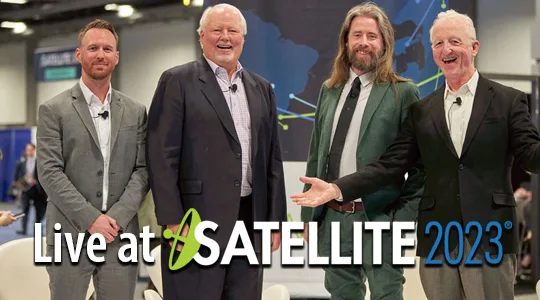
John Gilroy: Welcome to Constellations, the podcast from Kratos. My name is John Gilroy and I’ll be your moderator. As you may know, digitally transformative technologies have been making their way across the satellite industry all through the show here today. From the core to gateways, in orbit, and on the ground there’s no denying that space communications is starting to become more like space IT. Today, we have a panel of experts to talk with us about how this transformation is happening at the edge of the network specifically and what that means for the industry. Our distinguished guests are Dallas Kasaboski, Analyst for Northern Sky Research, Kevin Tobias, Director of Product Management at Kratos, and Jack Waters, CEO at ZipLink. I’m going to jump right in the conversation. Dallas is to my right so I’m going to start here, you ready?
John Gilroy: So Dallas, the satellite industry has been changing. The space layer has been experiencing innovation like software-defined satellites and multi orbit constellations which has been met with a bottleneck in the ground system. So can you talk a little bit about these drivers and explain how ground systems have been changing to account for the new space innovations?
Dallas Kasaboski: Yeah, there’s a lot of transformation happening in satellite and on the ground. Basically, we’re all here, we’re all at the Satellite Show, but we know that satellite has been removed and separate from the rest of the networks. So from hardware to software, we’re seeing a complexification and added capability. In terms of the drivers, the main driver is to reach more customers. The whole aspect of satellite is to go global, but then you run into the fact you can’t meet with any of the telcos, you can’t meet with any of the other service providers. There’s a lot of innovation happening from software-defined satellites as you mentioned, and on the ground, we’re looking at network architecture and infrastructure, I’m sure others we’ll talk about, just trying to make that layer less special and more integrated with the rest of the network.
John Gilroy: Dallas, let’s talk about terminals here, all kinds of terminal vendors here including software terminals. Let’s look specifically at the terminal market for commercial satcom. So what is the state of that part of the market and how is it changing?
Dallas Kasaboski: There’s about two dozen. Well, on the show floor, there’s probably several dozen manufacturers, but whether or not we’re talking about gov/mill versus commercial is a completely different story. But for those who are commercial providers, there are about two dozen players on the market looking to offer mechanically or electronically steer terminals. What we’re talking about are different kinds of antennas for air ship, land, fixed enterprise, and eventually consumer broadband. That’s half and that’s what we’ve been seeing here the last few years depending on the booths that you go to. We’re also seeing Starlink and Amazon, who they just talked about today. So we’re seeing a lot of big players trying to put out flat panel antennas or other kinds of electronically steered equipment in order to narrow that gap between satellite and the ground.
John Gilroy: Well, Dallas, we’re here in Washington DC. There’s a school up the hill called Georgetown and I’m sure at Georgetown there’s English 101. So I’m going to ask you a satellite 101 question here. Kind of simple question, but you can riff on this a little bit, I’m sure. What is a terminal and what are the different types of terminals and operation today?
Dallas Kasaboski: Yeah, so a terminal in a satellite world is an antenna, which includes the electronic equipment necessary and a modem. It’s the whole package. So sometimes a lot of the manufacturers talk about antennas and they’re only talking about the dish and the electronics behind them, but a terminal is the whole package. It’s the whole thing that not only enables connecting to the network, but manipulating the signal in order to connect to different networks and things like that. In terms of what’s available, any curved dish you see often called VSATs or very small aperture terminals, or in a case like over here, it’s very large. So you have the parabolic and you have flat panel. This flat panel can be a literal flat panel that’s on a rotating gimbal, mechanically steered, or the fancier ones are electronically steered. They just look like kind of an LCD screen or a ceramic dish. They just sit there. But behind the screen there’s a lot of electronic steering and beam forming capability.
John Gilroy: Kevin, same question to you, let’s expand on this a little bit. I’m sure this is a topic that many people can kick around. So what are the components for you that make up a terminal?
Kevin Tobias: Sure. So I’ll just build on what Dallas talked about. Terminals specifically at the remote site or the far edge of a network, are providing connectivity to a number of different use cases and depending on the use case, it will drive the configuration of that terminal. A few, just for example, you have fixed use cases where you might have a parabolic that’s pointing at a geosynchronous satellite and it’s just providing a trunking connectivity or cell back haul to a remote site or a remote island. Then you have use cases like comms on the pause, comms on the move, more generally we’d call it mobility. Those terminals are providing connectivity while that application is on the move, so think trains, planes, boats, automobiles, and depending on each one of those use cases that will drive what components build up the terminal. So we start at the antenna aperture, and that antenna aperture is connecting to the satellite at the frequency of the satellite, stepping that down, we take it from the satellite frequency down to an intermediate frequency called L band, and we do that with a BUC and an LNB. These are the components that make up the antenna. Then at L band, that analog RF spectrum is taken in through a modem, and that modem is ultimately the network function that takes care of the modulation, de modulation and sends out IP traffic. So those are the main components of a terminal.
John Gilroy: I have to warn you that Jack has survived one of my podcast interviews before and only minimal mental damage, maybe a few trips to the psychiatrist. So Jack going to pick on you a little bit here. In Washington D.C., we got a lot of podcasts including a lot of podcasts about technology. There’s one podcast called Feds At The Edge that talk about edge computing, sensors, military and trained sensors. So Feds at the Edge are everywhere and we see the edge being talked about constantly. There’s almost a trending phrase and I’m sure at Google Trends you’d see edge coming way up. So let’s talk about the edge here, Jack. In modern networks, the ones we have in town here, the edge is the place closest to the end user where edge computing potentially can occur. Now it’s the terminal in the satellite communication network edge, but computing doesn’t take place there. So as data is relayed back to the gateway, can you share with us your knowledge on how telcos work at the edge and how that differs from satellites?
Jack Waters: Yeah. I’m going to start there by going 25 years back, where satcom was very proprietary and the satcom industry rallied around TCP/IP networking. So there was some sort of level playing field, at least for the data packets. Companies like iDirect perfected those kinds of things, as well as Hughes, and other vendors. So the telcos, the satellite vendors, everybody use TCP and IP as a universal transport layer to move everything. Now, you fast-forward to today and the telcos are building out edge computing capability, maybe not all the way out to where the customer is, but darn close. The long term idea is to compute some of the items locally before you deliver to the customer and you don’t even send it back to the central office. So you might take off some of the video surveillance or something like that. You might take off some of the picture to minimize the amount of data to go back and those kinds of things. Satellite is the ultimate edge, right? Because you’re typically bandwidth limited and therefore you’d want to obviously do remote computing as far out as you can. It’s actually evolving now to the point where telcos don’t use it much yet. They’re looking for killer applications, so it’s not all that much different than the satellite business today. What’s quite different though is that the telcos today use software-defined networking to actually build the service automatically because they reach so many endpoints, and now the satcom business is following with software-defined networking to have a software way to build the service from start to finish and have a higher, faster deployment capability. That’s a little bit of edge computing because you have to have some compute intelligence at the remote side to do all that.
John Gilroy: Years ago, when I studied VoIP, I learned about CO and I never thought there’d be a connection between a central office and the satellite. But all those barriers are being destroyed, aren’t they? Everything’s new now. You can’t limit one term to one field anymore. You can’t silo that vocabulary. So Dallas, I want to ask more about this edge, this whole concept of edge and satellites. So what about the satellites? Can the satellite itself be a network edge and run edge computing on board? Can it run it on board?
Dallas Kasaboski: Soon. Yeah. I mean, we’re seeing the development. Just building off of what Jack was saying, software-defined satellites is the next big thing in communications. We’re seeing satellites that are capable of transforming their beams and changing their signal. I mean we’ve had the ability to change the location of the beams, but now we’re changing frequency, all this kind of stuff, just adding flexibility on orbit and the ability to actually change the satellite’s mission after it’s been launched. We’re seeing a lot of push to try and do that and that’s in the comms side. You have other applications and you mentioned surveillance. Well, in Earth observation, one of the problems of Earth observation satellites is that they downlink a lot of data that they never use. It’s all full of clouds, it’s bad weather, or a bad signal. So the ability to tell your satellite, “Remove anything that’s irrelevant to me before downlinking,” can save time, can save money, and those industries are hard at work at trying to get edge computing on satellites today.
John Gilroy: Let me state the obvious, I have gray hair and Jack has gray hair, and we probably remember a song by David Bowie called Changes. You probably remember that, and some people must think it’s ancient history. I want to talk about changes with Kevin, let’s talk about changes. We’re going to talk about changes in space, changes in attitudes, and mostly changes in the traditional terminal. So how can they be responsive to all these changes we see with software-defined networks and software-defined satellites?
Kevin Tobias: Yeah. So as the space layer continues to just innovate and become more dynamic, the ground really has to adapt. One of the main ways that we can do that first and foremost, is making sure that the edge, the terminal is open and standards based. The next approach would be virtualizing the network functions that were traditionally physical. By virtualizing the network function, we can disaggregate the network function from the proprietary hardware that it’s running on. Once you do this, the vision of converging with terrestrial technologies becomes a reality, right? So all the network functions that are being run on general purpose compute at the edge, we can then take the network functions I talked about like the modem and virtualize that and run it on the exact same platform, which allows us to orchestrate it like it’s a part of that edge. We can start to think about the edge more holistically about the solution that we’re providing instead of just one specific network function and it kind of being on proprietary hardware. So those are the main things is open standards based and virtualized.
John Gilroy: Last week I did an interview with two real bright engineers from a company called Rivada. Real intelligent and we had a good conversation. A lot of engineers floating around here, but many of them can’t connect the dots. See most of the people in the audience here, they look at this technology and say, “Well, hey, what’s in it for me? Can it save me money? Can it make me more flexible? Can I leverage existing assets? Can I increase revenue?” So that’s the question, what’s in it for me? So Kevin, what are the main advantages of software-enabled terminals to satellite operators and end users? What’s in it for them?
Kevin Tobias: Sure, a lot of flexibility comes once you virtualize and can run on that general purpose compute. So a couple of things. This concept at the edge where we virtualize network functions and run them on general purpose compute is called universal customer premise equipment, right? So we’re able to leverage the economies of scale that exist within the UCP market, that the telcos and the CSPs have been taking advantage of for many years. So we’re able to run in that exact same environment. We’re then also not locked into a specific vendor because we’re disaggregated. So whatever the use case may be, we can go to the vendor of our choice, pick the right size compute to build out that edge that we’re going to deploy and make sure that it’s a shoe fit solution instead of a one shoe size fits all approach to it. And there’s other things that we start to think about. During the pandemic, for instance, supply chain was the big story. So if you’re tied to one vendor and you can’t get delivery of that specific modem, how do you answer the business demands and the network changes if you’re locked in? When you take a more open approach with UCP and can run on general purpose compute, you can go and pick from the vendor of your choice, mix and match network functions.
John Gilroy: The Constellations Podcast was launched back in 2017. It was a small step for man, but a giant leap for podcasting. Today, thousands of people from all over the world listen to Constellations and thanks to you, we’ve grown into more than just a podcast. Sign up for the Constellations newsletter to receive articles on current industry issues, podcast summaries and contributed blog posts at constellationspodcast.com. A big topic today is the convergence of satellite networks with telcos and mobile network operators. It’s been a hot topic. I mean, they got the MNO, I think they’ve got their own acronym, so that means something, huh? So question for Dallas is, can you fill us in on how digital transformation in the satellite industry has been affecting this relationship?
Dallas Kasaboski: Absolutely. So direct-to-device is another hot topic. It’s a buzzword that everybody’s talking about it. You’re seeing big deals now in the industry, Apple, Global Star, Starlink, and T-Mobile. Basically what’s happening is satellite is figuring out how to properly communicate and address telcos and mobile network operators, MNOs. They’re filling that gap. They’re narrowing that gap with the technology, digitally transforming what they do in order to disaggregate. A lot of buzzwords, but essentially, they’re narrowing the gap technologically speaking. They’re realizing we can work together, we can work with the same addressable market. We have the global reach. Satellites literally have the global reach, but they can’t reach the customers. Whereas the operators, that’s what they do. So they’re really looking to try to make it so that we don’t need terminals, we just need phones. That’s one of the biggest things that’s happening is direct-to-device, satellite-to-device with cooperation among telcos and the mobile network operators.
John Gilroy: Jack and I have been around, we visited a lot of company websites and the trending phrase on company websites now is digital transformation. Everything is digital transformation, digital this. Jack, from your perspective, what do you believe the advantages are of a new digitally transformed terminal model for telcos? Digital transformation huh?
Jack Waters: Yeah, yeah, Kevin hit a little on it. Number one, cost does drive a lot of things. We can all add, us vendors, can all add value and try to sell it for a certain price, but cost is still king. The number one thing is customers are going to save a lot of capital costs using this general purpose compute, go buy your Dell server, go buy whatever server. So that alone has a huge cost impact on it. The second thing in today’s world, as an older man, I’m always amazed how fast things move today. So everybody is expecting quick service. If you order it and you have to wait six months or eight months, that’s just too long. The ability to profile and issue a service in minutes instead of months is huge so I believe the customer satisfaction will build as a result. There’s a second technical thing there, which is there’s fewer errors. So once you build this software definition for services and clean out all the errors, it just replicates accurately over and over again. So that should help with the customer satisfaction and the customer take rate. I think that’s one reason that the MNOs, by the way, will start to come together with the satellite companies because satellite has been very difficult, and it was only 2% of the telecom market, so they were more like, “Hey, let me hand it off.” So it’ll have an effect on the integrator, the middle person that has to fix all these things and make it run. It’s certainly going to operate a lot smoother. But luckily, we need somebody to put all that infrastructure in place so the integrators are safe.
John Gilroy: I have a background in radio, 25 years on radio and on radio you can say, “Hey, that’s the phrase that pays,” and get a QPI dollar or something. Jack, you used the phrase that pays and the phrase that pays is general purpose compute. That’s what the Feds at the Edge talk about, they say one of the advantages of having intelligence at the end is you can do compute at the edge of the network, and they talk about that a lot. So I have a question for Kevin here. If a terminal is running on general purpose compute as opposed to I guess purpose- built, what does that mean with regard to value added applications and other functions? Is there a conflict there?
Kevin Tobias: No, there’s a huge value here, and I think one of the main things I would point out is this really futureproofs your operations. So as business needs evolve, network changes happen, you’re able to spin up new network functions as you need them. Instead of having to actually go send an installer out to that site and have to provision that network function, you can spin up a second modem, you can spin up a second link, you can spin up an optimizer, you can spin up a firewall, whatever you may need at the edge to fulfill that solution, you can orchestrate it all on one platform instead of those things all being disaggregated from each other in such a way that you have to go in to each network function and tie them together with cables. So I think that the important thing to note is that that future proofing aspect and the zero touch provisioning that comes with running on general purpose compute and those third party value added applications really bring extra power in terms of delivering the end solution.
John Gilroy: So Jack, we’re going to pull a phrase from Kevin here, and the phrase is “value added applications”. Let’s talk about those. So when it comes to value added applications, what is the difference between how they’re deployed typically in a satellite and how they’re deployed in a terrestrial network? Are there differences?
Jack Waters: Well, certainly. I mean, if you think about cloud computing and it’s integration with telecom right now, because things are not virtualized oftentimes in satcom, you can’t just spin it up on a cloud. It’s not digital. So you can’t just quickly spin that up. So telcos can do that with their standard telco products today and soon, hopefully in the next couple of years, they’ll be able to do that with satcom as well and build a service all the way in. Let’s pray that we can also do end-to-end, so a telco service that’s continued with satcom all the way to the end point in a software-defined manner. So yeah, I think it’s going to be possible. The satellite industry has to jump this divide from old ways to new ways. When I say fairly quickly, within a couple years period of time, the virtualization side has already started. So we’re almost there. We just got to complete that. Then now, the telcos are becoming more interested in satcom for two reasons. One, you mentioned is direct-to-device, which is outside of my purvey, but that’s very interesting to the telcos. The other is to reach the unreachable, the people they have not been able to reach so far and they won’t do that, the mainline telcos, until they have a soft ability to define it all the way to the edge service because it’s the only way they’re profitable.
John Gilroy: Jack, earlier used the phrase “software-defined network” and in my interviews for Constellations, I’ve used software-defined satellite, software-defined space, software-defined everything. So when network functions are deployed as software, how does that affect the business model for value added apps and the deployments for satellites? How about the bottom line here?
Jack Waters: Yeah. Well, it’s interesting because the vendors of software like ZipLink traditionally had to use proprietary products so they were very costly, and now we can just buy off the shelf compute, so that’s good. But from a business opportunity standpoint, the whole edge computing atmosphere is very interesting. We’re only really now taking the first steps into edge computing, right? We’re putting things like cell back haul, something we do with Kratos right now, and we add that value into the edge compute in order to take cellular data in effectively. But once the computing power is out there, we’re going to see what kind of applications come about and are sold. I think we’re going to be here a few years from now going, “Oh wow, that was a killer app.” We didn’t know what it was today, but it’s going to be allowed to run on the edge compute platform that’s being built today.
John Gilroy: When you listen to radios, people use this phrase, “final word”. Well, I’m going to give each person here the final word. We’re going to start off with Dallas, and we’re going to use that phrase that’s bandied about all the time, that phrase is digital transformation. Probably means 53 things to 53 different people here. So Dallas, first question to you, digital transformation is undeniably creeping into all aspects of satellite networks. I’m sure each of you have different perspectives on this question, but for each of you, look 10, not 10 weeks, 10 years down the road, if that’s possible, look 10 years down the road. And how would you describe the satellite networks of the future, of the next decade?
Dallas Kasaboski: I’ll start from the satellite perspective. We’re talking about narrowing the gap in 10 years with all the functions being digitized and all of the flexibility being improved, and a lot of adaptability post-launch. Basically, on the satellite side, the satellite will be a vital component in any network. If you’re a telco, if you’re an MNO and you want to go global, you will have a satellite or several or constellation as part of your fleet, and that will be enabled by digital transforming processes that actually allow your satellite and the rest of your network to communicate cohesively.
John Gilroy: Jack, jump in.
Jack Waters: Well, first of all, I’m going to be retired in 10 years, so who cares? Maybe I’ll make it a few years into the process and I’ll probably be a user of whatever nice service that’s come about in 10 years. Hopefully it’s out on the golf course somewhere. But no, I mean, I’ve been in telecom before I was in satellite. It’s always about bandwidth. It just keeps growing and growing and growing. Back in the early days, it was kilobits, and recently it’s been hundreds of megabits and it’s going to be gigabits in 10 years, no question about it, right? Video surveillance and very high speed computing, low latency access, those things will be very, very important in 10 years.
John Gilroy: Mr. Kratos, go for it.
Kevin Tobias: Sure. So I can’t help but think that within 10 years we’ll be in a place where we’re not just talking about connecting certain things. It will be internet of everything everywhere at a moment’s notice whenever you need it. Another thing that comes to mind is seamless connectivity, I think will be in a place that from a user experience perspective, non-terrestrial and terrestrial networks will have converged to such a place that as the user, you don’t know if you’re using 5G, 6G, satellite, wifi, makes no difference. It’s transparent to the end user. And then the last thing I would say is I think it will be more autonomous than it is now. I think that the edge, the gateway, the core, they become more cognitive, are able to infer, make decisions on the network without the user having to actually touch the system.
John Gilroy: The guy who designed 5G is named OOF Edwardson, and he told me there’s a new G every 10 years. So I don’t know about the next 10, 15 years, maybe you’ll see 5, 7, 8G. That’s a whole lot of Gs. I’ll tell you something, and this is a great T- shirt right here, ladies and gentlemen, come on down, get the QR code, get this fine t-shirt. This is a space cowboy T-shirt guaranteed in writing to have fun when you wear this t-shirt. I’ll guarantee everyone it’s the fun, fun t-shirt to have. I’d like to thank my guests for this great discussion. Jack Waters, CEO at ZipLink. Dallas Kasabowski, analyst for Northern Sky Research, and Kevin Tobias, director of Product Management for Edge Solutions at Kratos. Give them all a hand. Thanks guys. Pleasure.