Transcript:
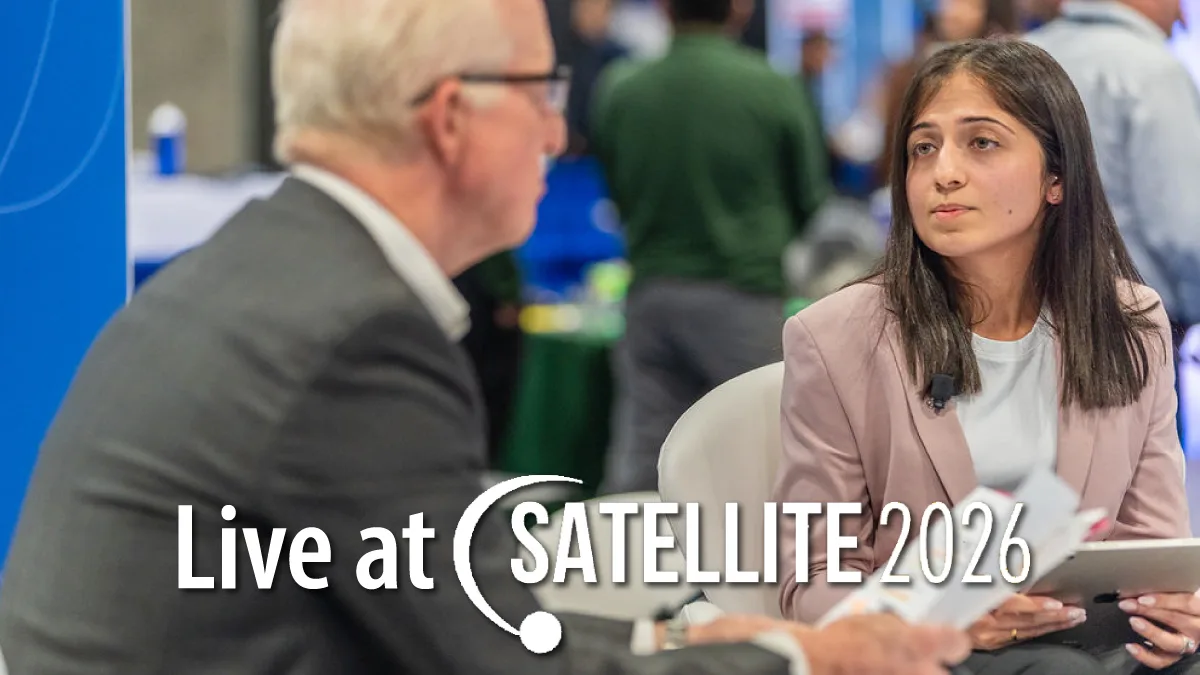
John Gilroy: Welcome to Constellations, the podcast from Kratos. My name is John Gilroy and I’ll be your moderator. Our guest today is Grace Khanuja, Manager at Novaspace. We’re going to talk about virtual ground and traditional hard-based systems. Let me set the stage. Satellite operators embracing virtual ground systems aren’t simply trying to reduce their hardware footprints, but also integrate with telecom networks, maximize capacity, and move customers to an operational expenditure or OpEx model to compete with mega consolation such as Starlink. Everyone knows Starlink. Novaspace laid out the business case for virtualized ground in a February white paper, even comparing the financial models for a virtualized versus traditional hardware based over five years. Here today to talk with us as a result of this exercise, and the ROI of virtualized ground more broadly is Grace Khanuja, Manager at Novaspace. Are you all ready, Grace?
Grace Khanuja: Yes. Thank you so much for having me back on the Constellations podcast. It’s always fun to talk to you, so I’m ready.
John Gilroy: Good. Fortunately for the SatCom market, the earth observation and remote sensing markets already paved the way in adopting virtualized ground. What would you say are the biggest lessons learned from their efforts in terms of adaptability and profitability?
Grace Khanuja: Right, so this is a good question to start with as well, because observation and remote sensing market has been serving as a proving ground for virtualization and virtualized software ground techniques. And it’s not just about a technical upgrade, it’s also about a business model transformation that we see when we bring about virtual ground systems in practice. And like you rightly said, there are two big lessons, adaptability and profitability. Talking about adaptability, EO and remote sensing markets were hit by a large volume of data and complex networks, and they had to keep pace it from a ground perspective as well. And that’s where software ground virtualization comes in, where you move to a more elastic software centric system and you can move away from traditional CapEx heavy hardware systems and you can pace up faster. You can beef up faster your systems. You can provide capacity more flexibly as the demand grows, so there’s that adaptability concept that SatCom can also take a learning from. The other aspect is the economics or the profitability. We did model those scenarios for earth observation and we got double-digit savings for earth observation operators and cost reductions even exceeding 50% in some cases. It’s not just the adaptability or the cost part. There’s another aspect which is more revenue being generated by using virtualized systems because the faster you go to market, the quicker you reach market, the more revenue you can capture. So all in all, it’s not just a cost efficiency story. It’s a tech upgrade story as well. It’s how quickly you monetize your infrastructure. These are some learnings that SatCom can take from earth observation as well.
John Gilroy: And with all the innovation just on the show floor here, you have to be ready to adapt to new things coming at you. We can just walk around the floor and see all kinds of innovation taking place in front of us. Let’s go back to this EO concept here. Is the EO and remote sensing market success with virtualized ground, is it easy, replicable for the SatCom market? And if so, how?
Grace Khanuja: Well, the short answer is yes, it is replicable, but we have to keep in mind that both these markets are different. They have a different sort of ramp up as well. The underlying drivers still remain the same. Increasing demand, more complex networks, need for flexibility, but SatCom, like you said in your introduction as well, it has been hit by the trend of mega constellations and pricing disruptions, which actually make virtualization even more crucial now so it’s even more critical to implement that in the SatCom market. And I think one more aspect that we learned from the EO side of things was if you can create a vendor unlock, as we say, so you’re not really stuck with proprietary hardware systems and you can use more commonly found off the shelf servers and software compute that gives a bit of flexibility and that’s something that SatCom can use at this point.
John Gilroy: So Grace, Novaspace’s recent business case for virtual ground systems. What it did, I think it modeled GEO high throughput satellite regional operator on both a legacy hardware and a modern virtualized system. So yin and yang contrast both of them. So will you walk us through the details of that exercise and the comparative findings? Where are the biggest cost reductions you mentioned earlier?
Grace Khanuja: Yep, sure. That was really the core of the white paper as well, what you just asked. The whole objective of the white paper was to qualify the cost savings that can be implemented by virtual ground. We compared the traditional hardware system with virtual ground solutions deployed on premises and we did it for a period of five years. It was a realistic SatCom scenario taking a regional HTS operator, one gateway, about 16 beams, 640 remote sites, around 13 to 14 Gbps high throughput. These are the technicalities. And then what we did was we compared what a traditional hardware system, dealing with typical demodulators, modulators, multiple racks of equipment and separate hardware for signal processing and networking, how that stood against a virtual solution, which was a different architecture, putting in specialized hardware for some cases, some lesser number of digitizers, commercial, off the shelf servers. The major difference that came in was the CapEx expenditure. In the prior case, which is the hardware case, you have to spend the entire CapEx upfront. That makes a big cost go in before you monetize the entire network. Whereas the virtualized system made us realize that the CapEx or the cost that is invested can be scaled up as the demand rises. It aligned more to the revenue as well. When we compare these, I have some statistics here. We had around 40% plus reduction in CapEx. We had 30% reduction in OpEx and overall about a 40% total cost savings over the five-year period. And then I think the second part of your question was more about what were the key drivers of these cost savings. The first one and the biggest one, which I alluded to a little bit already, was the physical layer. The physical layer where in traditional systems you rely more on setting up the hardware, buying the proprietary hardware, putting it on site, which has longer procurement cycles, you have to wait for manual processes, whereas for contrasting it with the virtualization aspect, you handle it in standard software compute, limited costs so that was the big cost reduction. The other one, which sometimes gets left behind as well, is the licensing and operations. Once you’ve done the upfront setup, there’s also a need to upgrade the systems as we go through the years through the systems as the capacity changes. That’s much easier and much faster in a virtualized system because it’s software upgrades with minimal OpEx cost, right? That’s another source of cost savings that we saw. There were other savings as well that came about, which were more operational in nature, like faster deployment, smaller footprint, scalability. Fundamentally moving away from traditional hardware and creating a new operating model using a software solution.
John Gilroy: If you’re listening to this podcaster in the audience and you download the white paper from Kratos Space, you’ll get some dazzling numbers. It’ll be knock your socks off numbers. I guess I should have one of those fancy socks that get them knocked off or something. I’ll give you the numbers. I mean, Grace, these are pretty shocking really. This exercise she just conducted, the virtualized system saw a five-year ROI of 781% compared to a measly 443% ROI for the hardware based system. So what factors account for the growing ROI delta between these two year over year? These are big numbers.
Grace Khanuja: Yep. So when you look at them individually, they’re big numbers, but the most interesting part was the fact that as we went through the model and across five years, the delta kept widening. And that was more or less a compounding effect of the advantages of virtual systems over traditional hardware systems. So when we start in year one, both the systems are ramping up, but there is a differential in returns already because you don’t have the upfront CapEx that you invest in hardware systems, like I mentioned previously. And as you ramp up to fifth year, the gap is a bit more dramatic, like you said, and it’s through three main drivers. The first one being the lower cumulative costs as we spoke about. So as you go through the years, you don’t have to spend a lot on proprietary hardware. You can use commonly found servers, so that’s a reduction in CapEx. Then for operation and maintenance, there is much more needed in a hardware system compared to a software system so there’s a reduction in OpEx as well. And then the second aspect is the faster revenue generation. The deployment time for a hardware solution is roughly a week after the initial installation phase, whereas for a software solution, it’s nearly a day. So that differential in time to deployment is also something that leads to faster revenue capture rate and obviously a greater rift in the ROI differentials as well. And then obviously other factors like resource utilization, scalability, flexibility. So all of these basically lead to a differential in the ROI as we see in our analysis.
John Gilroy: We’re in Washington, DC here. It’s obvious not too many miles from here. They talk about billions and billions of dollars. I want to use the billion here, but this is important for this audience. I’m talking about billions, but this is really important number here. The 5G NTN market represents an estimated $30 billion opportunity for the satellite industry by 2030, 30 by ’30. That’s a big number. How will software based ground systems provide the agility to enable integration with terrestrial networks?
Grace Khanuja: Yeah. So before that, it’s important to understand what 5G NTN is as well. It’s not just satellite networks coexisting with telecom networks, it’s also satellite networks talking to telecom networks, and that’s where the opportunity lies for the virtualized software solutions so it’s more about how easily can SatCom networks talk to telecom networks. For traditional hardware systems, it takes a bit of time to update those physical configurations. It takes a little bit of cost to update those physical configurations as well. Whereas for the virtualized system, it’s probably a software upgrade, and then we can create standards that match with the 3GPP NTN standards and enable a seamless transition between terrestrial and non-terrestrial, which is what is the core for 5G NTN as well. And then talking about the agility aspect that you mentioned, I think it shows up in a couple of ways. The faster virtualized systems can implement this transition, the faster operators can take the services to market. It makes it easier to stick to the software upgrades or the standard updates that come in. So overall, it enables the operators to be able to capture more users, to be updated commercially in terms of standards and capture the wave of this 30 billion 5G NTN market as well.
John Gilroy: You walk around the show here at the satellite show and a lot of companies use the word disruption. It’s a trending phrase, they want to disrupt something or other. But I think all of us know that there is a company that really has disrupted the space industry. The massive disruptions Starlink has caused within the satellite industry has seen more providers offer multi-orbit services. So how will virtualized ground systems establish, maintain, and optimize these operations better than the traditional hardware ones?
Grace Khanuja: Yep. So like you said, Starlink has disrupted the traditional GEO only or LEO-only model. So all other competition, the peers are looking at GEO, MEO, LEO, and they’re trying to build a resilient architecture to deliver flexible services as well. But the challenge is that each orbit behaves differently. So it’s not that how GEO behaves, MEO would behave the same way and LEO would behave the same way. So it’s important to understand how these three behave and to coordinate them. There is a need for a unified platform, and I think virtualized ground system can manage the resources across orbits really well in a dynamic way as well. They can allocate capacity where it’s needed. They can switch between orbits as needed. So I think that’s where virtualization becomes key as well. And they also enable a shared infrastructure. You don’t need to install separate hardware for separate orbits. There can be a unified platform, like I said earlier, which can coordinate between orbits and it reduces your cost and it increases your efficiency to capture the demand across the orbits.
John Gilroy: No, Grace, I think the people in the audience here and the podcast listeners all over the world, they understand that software defined satellites can be reconfigured in orbit. Well, know that. The question is, how will virtualized ground unlock this potential for customers and allow them to shift to your OpEx model?
Grace Khanuja: Yep. So software defined satellites was a great innovation where satellite operators could configure satellites in orbit to meet the demand where the capacity demand is and not over provision in areas where it’s not needed. But the other side of equation is the virtual ground. So ground has to keep pace with that change as well. So what virtualized ground system allow the operators is to dynamically switch as the satellite switches. They switch the ground focus as well. They sync it with the satellite services. Then I think I mentioned this earlier as well, and it’s really important that they can focus their energies on where actually the demand is rather than over provisioning at places where there is no demand. They can better utilize, more efficiently utilize the capacity that’s available. And then overall from a business perspective, I think this shifts towards an OpEx. Why? Because you don’t have to preempt where you have to install the hardware and you don’t have to preempt where the demand would be. It’s more OpEx oriented. Wherever the demand is, that’s where you align your costs and that’s how you scale up basically.
John Gilroy: You’ve just explained the OpEx model here. While we’re talking about OpEx models, what is ground segment as a service and why is it appealing to satellite operators?
Grace Khanuja: Yep. Ground segment as a service or GSaaS, how we call it, is an interesting concept. It’s essentially bringing cloud economics to the satellite ground system. Instead of owning and operating the physical infrastructure, satellite operators can lease it or subscribe access to a separately owned physical infrastructure. That way they don’t have to own it, don’t have to maintain it. It’s just use case based. They pay as you go when they use the GSaaS model as well. Why it’s attractive is it lowers the barrier to entry as well, because if there’s a high upfront CapEx for you where you have to spend and you have to install those ground stations, it’s a big barrier to entry for upcoming players. But when you remove that from the equation and you can just rent or lease a ground infrastructure, it just lowers the barrier to entry. More players can enter the market and it’s essentially an extension of virtualization and that’s why it’s attractive for most of the players.
John Gilroy: So Grace, earlier you talked about flexibility. Okay. So what other features of virtualized ground, such as the ability to take advantage of emerging technologies being flexible, how can that attract new customers?
Grace Khanuja: Yeah. I think the best way to look at it is through looking at the broader IT world as well. When we move from traditional proprietary hardware to virtualized ground where we try to adapt the technologies from the broader IT world, I think that’s where the growth lies. The satellite industry can benefit from how the IT world is progressing. Instead of being logged into specialized hardware, operators can take advantage of what improvements are happening from an overall IT perspective, whether it’s cloud, whether it’s IP networking and whatnot. Overall, taking advantage of how the emerging technologies are developing in the IT world and not just the satellite world.
John Gilroy: Grace, I walked around the show floor here and inevitably you’ll meet someone at one of these booths here and their job title is go to market, something that Joe Smith go to market. Let’s talk about a different market here. How does virtualization accelerate satellite operators time to market to realize revenue gains?
Grace Khanuja: Yep. I think this is one of the key factors that I mentioned earlier while walking you through the model as well. So time to market is actually the most immediate and tangible benefit of virtualization because like I said, after the initial installation phase, for a virtual ground system to be fully implemented, it would take about a day. Whereas for a traditional hardware system, it would take about a week. And then when you talk about upgrades and subsequent enhancements of the system as well, it’s a matter of a software upgrade which takes minutes compared to hours of upgrades for a traditional hardware system. That differential, the time differential is what creates an opportunity to capture the revenues with the faster deployment, capturing more customers. Think of it in a competitive lens. If there is an operator that utilizes virtual ground versus an operator that doesn’t, so the operator that utilizes a virtual ground or a software based solution can reach market much quicker, capture more revenue, capture more customers and have an edge over its competitors as well. So it’s not just an operational lever, it’s also more like a revenue acceleration lever as well. That’s the smart go to market strategy that it can bring in.
John Gilroy: Let’s talk about this innovation from a different perspective. Let’s look at it from an HR lens, okay? Humans really. What re-skilling and hiring trends are you seeing within the EO and remote sensing markets as a result of embracing virtualized ground and what do they mean for SatCom?
Grace Khanuja: Yeah, so let’s talk about EO first. So EO, by the nature of the industry as well, it is very data centric and they have very software heavy operations as well. The hiring trend there changed automatically and with virtualization coming into picture, it accelerated where the skills required starting moving away from traditional satellite expertise, but towards more cloud software and automation, network operations sort of roles. And that was necessary as well. But now looking at SatCom, which is a more… In my personal opinion, the transition for SatCom in terms of hiring trends would be in the same direction as EO, but it would be more gradual because SatCom comes from a more hardware intensive RF heavy phase. There are a lot more sites that are still in traditional hardware side of things. They’re more oriented towards satellite expertise. The mix would evolve eventually, I think, towards IT, cloud and those sort of skills, but it’s just, it’ll be slower than earth observation in my opinion. And then it should stay mixed for a while, but eventually leading up to a more broader IT-based skill hiring.
John Gilroy: Grace, I think you’ve given this audience here a better idea of the gap between virtual ground and traditional hardware based systems, and it’s really current too. I’d like to thank my guest, Grace Khanuja, who’s a Manager at Novaspace. Thank you very much.
Grace Khanuja: Thank you, thanks for having me.
John Gilroy: Good job.