

North Korea’s “Contagious Interview” cyber campaign exploits fake job opportunities and malicious coding assignments to steal sensitive information, exposing potential cybersecurity risks across the space and defense sectors.
Read more


Space is a Network.
Constellations is Your Connection.
North Korea’s “Contagious Interview” cyber campaign exploits fake job opportunities and malicious coding assignments to steal sensitive information, exposing potential cybersecurity risks across the space and defense sectors.
Read more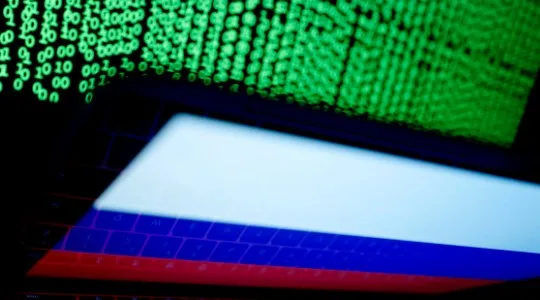
Over the last 18 months, cyberattacks on space networks have become more common. Space operators and security professionals alike are aware of the vulnerabilities posed to ground-based architecture, including satellite terminals that can be exploited by a variety of cyberattacks.
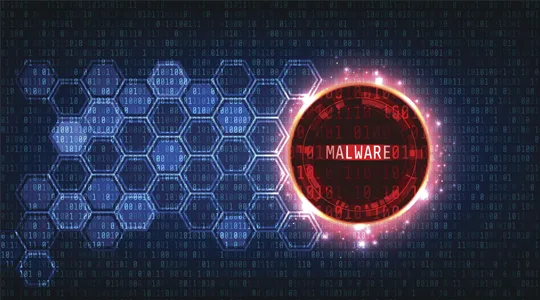
A new malware strain was discovered by the threat research firm Adlumin with supposed implications for the U.S. aerospace sector. The malicious script, dubbed PowerDrop, was “implanted in the network” of an unnamed U.S. aerospace defense contractor.
Thales researchers demonstrated a successful hack of the European Space Agency’s nanosatellite, OPS-SAT, providing insight into potential vulnerabilities, attack patterns, and necessary countermeasures for improving satellite systems’ cybersecurity resilience.

As space technology proliferates and the sophistication of cyber-attacks evolves, threat actors may be capable of exploiting vulnerabilities within the complex network of satellite systems to gain unauthorized access.

LockBit 3.0 is the most widely used malware in the world and has recently targeted aerospace companies. LockBit’s success as a ransomware organization is attributed to its business model of implementing Ransomware-as-a-Service (RaaS) offerings as collaborative opportunities for other adversaries looking to gain access to specific industries.

As virtualization technology becomes increasingly important in various sectors, including space systems, organizations must stay up to date with patches and updates to protect against threats like ESXiArgs and ensure the security of their systems.

In October 2022, a critical vulnerability was discovered in servers running Sophos Firewall solutions. Early into 2023, this vulnerability continues to be exploited and could pose a significant threat to aerospace manufacturers and suppliers.

Since the onset of the Russia and Ukraine War in March 2022, there has been a sharp increase in retaliatory cyberattacks conducted by numerous pro-Russian and Ukrainian cyber groups.

Throughout 2022, researchers and cyber threat analysts saw several instances of what is known as ‘Wiper Malware’, which is a certain type of malware intended to completely wipe hard disks and completely destroy data.