



Open Doors, Complex Architectures: Navigating Opportunity, Integration and Uncertainty in Defense Space

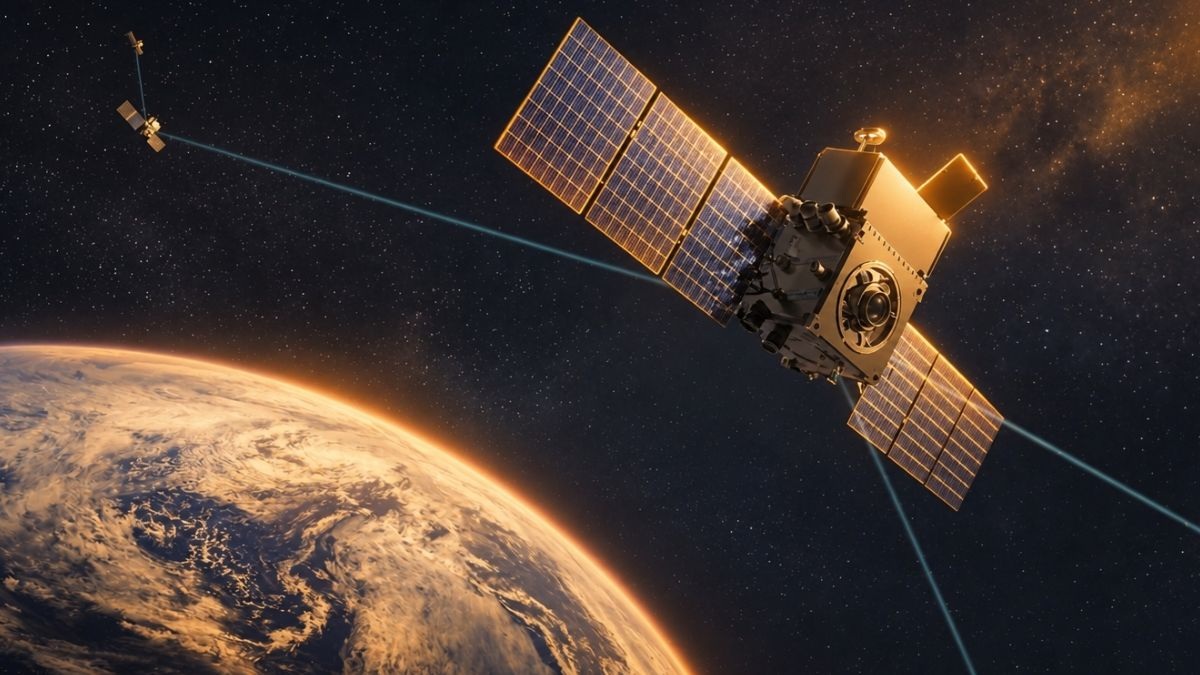
The U.S. military is relying on commercial space companies for a growing share of its missile warning, tracking, communications and data transport capabilities. As a result, more firms are seeking a role in a defense space market that was once dominated by a relatively small group of contractors.
The Space Force has encouraged that shift through acquisition strategies designed to draw technologies from a wider range of providers. Several of its major efforts are built around the assumption that capabilities developed by different companies will operate as part of a common architecture.
Expanding participation, however, is only one part of the challenge. The success of those architectures will depend on whether capabilities developed by different companies can be integrated, secured and sustained over time.
More Suppliers Bring New Options
The Pentagon’s efforts to broaden participation in defense space procurement have created additional opportunities for companies developing specialized technologies. Commercial firms can compete through government solicitations, other transaction agreements and partnerships with established contractors, although the financial and technical barriers to participating in defense missions remain considerable.
Startup activity has increased across the space industry, with companies pursuing technologies ranging from launch and propulsion to on-orbit capabilities. Incumbent contractors maintain an advantage through their longstanding involvement in military programs, but smaller companies often bring a greater willingness to take risks in developing new technologies, Colonel Edward Gutierrez (ret.), SkillBridge fellow at Cypress International and former deputy commander of Mission Delta 3 at the U.S. Space Force, told Constellations.
The cost of getting capabilities into orbit remains a significant obstacle, particularly for emerging companies without the resources to recover from unsuccessful demonstrations.
“You only get one shot and unless there is significant backing, they may not get another opportunity.” —Colonel Edward Gutierrez (ret.), U.S. Space Force
Venture capital and defense-backed awards have provided more opportunities for smaller companies to compete, while the government’s evolving acquisition approach could give an advantage to those with demonstrated capabilities.
The Department of War (DoW) is aligning acquisition with commercial innovation through iterative development and recurring opportunities to introduce new capabilities, Jon Ludwigson, director in the Government Accountability Office’s Contracting and National Security Acquisitions team, told Constellations. Still, smaller firms may struggle to finance the investments and production scale-up required to compete, Ludwigson said.
Gutierrez pointed to General Michael Guetlein’s emphasis on buying what is commercially available and building only what is necessary as an indication of that shift. Rather than relying on lengthy development programs for every requirement, the government is placing greater importance on companies delivering working technologies within shorter timelines, he said.
The opportunities are particularly visible in major initiatives such as Golden Dome, whose proposed architecture encompasses capabilities from government programs, traditional defense contractors and newer commercial suppliers.
“The door to get in is probably bigger than people think,” Lacey Wean, program executive for geospatial and space tech solutions at Carahsoft, said during the recent CyberSat conference.
Wean identified competitions, other transaction agreements and partnerships with existing contract holders as potential pathways for companies with specialized technologies to participate in Golden Dome.
The benefits of expanding procurement competition also extend to the government’s ability to acquire capabilities from different sources.
A broader supplier base can reduce procurement bottlenecks by giving the government alternatives when one contractor encounters delays. If several companies are developing similar capabilities, the government is less dependent on any single provider, Alexander Clark, senior analyst at Analysys Mason, told Constellations.
A larger pool of suppliers can provide additional options when requirements change or technologies encounter development problems. However, incorporating those technologies into military operations introduces another set of requirements that procurement competition alone cannot address.
Making Different Systems Work Together
Expanding the supplier base creates another challenge: ensuring that technologies developed independently can function as part of a common operational architecture.
As missile warning, tracking, communications and data transport capabilities are distributed across different vendors and orbital regimes, interoperability becomes increasingly important. Systems must be capable of exchanging information across organizational and technical boundaries without requiring years of additional development.
The Space Force’s Nov. 5 announcement of plans to advance its Space Data Network Backbone offers one example of how it plans to address that problem. Its proposed Mission Operations Center would coordinate network operations and data transport across multiple constellations and providers, including routing information according to mission priorities.
Integration remains an ongoing challenge. Golden Dome is already encountering interoperability issues involving the laser communication links used to transfer data between missile warning satellites, Todd Harrison, a senior fellow at the American Enterprise Institute, told Constellations. While the DoW urgently needs universal interoperability standards, some hardware may already be too far into production to be easily adapted, he said.
Even strong technologies can have limited value if integration, data flow, cybersecurity, organizational coordination, licensing and access issues prevent effective use, Matthew Harris, national security space strategist and researcher and adjunct professor at Embry-Riddle Aeronautical University, told Constellations.
“The strategic value of commercial technology is not determined solely by what it can accomplish independently, but by what it enables the larger mission architecture to accomplish.” —Matthew Harris, National Security Space Strategist and Researcher
Legacy defense systems often rely on proprietary interfaces and incumbent contractors, making it difficult for new commercial technologies to connect, Harris said.
Harris and Gutierrez both identified open architectures, data standards and middleware as critical to integrating capabilities from a growing number of suppliers. Processing information closer to its source will also become increasingly important as military systems generate and exchange larger volumes of data.
“We need to get to a point that we can integrate anything from software to hardware as quickly as possible without going through years of development and integration.” —Colonel Edward Gutierrez (ret.), U.S. Space Force
That requires more than compatible hardware, Gutierrez noted. Software must be able to connect different sensor and command data sets into continuous information flows, whether supporting a common operating picture or time-sensitive military operations, he said.
Yet Gutierrez argued that integration is not solely a technical or acquisition problem. Drawing on the organizational principles outlined in retired General Stanley McChrystal’s “Team of Teams,” he emphasized the importance of trust, shared objectives and coordination among government organizations and contractors.
No contract can anticipate every requirement or guarantee that every supplier will meet its commitments. Bringing multiple providers together therefore requires cooperation beyond the contractual arrangements governing their individual contributions, he said.
New Connections, New Vulnerabilities
But integrating capabilities across a growing network of providers solves only part of the problem. The same interconnected architecture that enables faster data sharing and operational flexibility also creates new opportunities for adversaries to disrupt or exploit military systems.
“Cost, schedule, performance don’t matter if it’s not secure,” quantum technical evangelist at IonQ and former congresswoman Katie Arrington said during the CyberSat conference.
An attacker may be able to disable a capability or manipulate information without destroying satellites. As a result, the attack surface extends through networks, software and ground infrastructure as well as spacecraft.
While compliance is important, passing a compliance process does not necessarily mean a system is adequately protected, John Plumb, vice president of strategy at K2 and former assistant secretary of war for space policy, said during the conference.
“An ATO means I got through the ATO process. That doesn’t really mean I should be operating,” Plumb said.
Supplier diversification also introduces security responsibilities across a larger number of organizations. Smaller companies may need support to achieve and maintain the standards required for defense work, Wean said.
Commercial technology does not always transition directly into classified missions, Plumb added. Spacecraft carrying classified payloads must support classified traffic, raising questions about how much of the commercial model’s speed and cost advantages can ultimately be preserved.
The companies supplying those systems also require the facilities, approvals and infrastructure necessary to handle classified work. Those requirements continue to present constraints even as acquisition pathways have become faster, he said.
Gutierrez similarly identified security clearances, access to classified facilities and accreditation as persistent barriers for commercial providers. The difficulty is not necessarily maintaining innovation once companies enter secure environments, but getting them access to those environments in the first place.
He pointed to the department’s Secure Space Network initiative as a step toward improving commercial access to classified environments. Companies also need visibility into classified threats to adapt their technologies to operational requirements, he said.
Beyond initial accreditation, cyber protections must be incorporated into system architectures from the beginning and updated as threats evolve. Gutierrez emphasized that defense systems cannot depend on infrequent software releases or contractual arrangements that delay critical security updates.
Concentrating and Distributing Risk
Security measures can reduce risk, but they cannot eliminate it entirely. Military space architectures must also be able to continue operating when satellites, networks or other components are degraded or lost.
One question surrounding Golden Dome is whether concentrating critical capabilities within a single infrastructure effort could create unwanted dependencies.
As the architecture becomes more important to military operations, the incentive to disrupt it also increases, Clark said.
“If you focus so heavily on it, you only paint a big target on its back.” —Alexander Clark, Analysys Mason
Clark argued that those concerns are partly addressed by the architecture’s distributed nature. Planned capabilities would be spread across proliferated constellations, multiple orbital regimes and data-relay networks rather than concentrated in a single platform or layer.
“So you’re not just putting all of your assets on one satellite and saying cool, we’re done now,” Clark said.
In that sense, the risks associated with dependence on space are already influencing architectural decisions. Redundancy can reduce the impact of losing individual satellites even if the broader infrastructure remains strategically important.
Clark compared the challenge to other forms of critical infrastructure, including subsea cables. Building a valuable connection inherently creates something worth disrupting. The objective is not to eliminate that vulnerability entirely, but to reduce the consequences of disruption through redundancy and alternative paths.
The infrastructure being developed for Golden Dome could also support missions beyond missile defense. The ability to move data, process observations and deliver information quickly enough for decision-making would support targeting and other military functions as well, Plumb said.
Those benefits depend on the network continuing to function even when some assets are lost, he said. Faster communications and distributed spacecraft must ultimately produce an architecture that remains useful under degraded conditions.
The Challenge of Setting Priorities
While architectural redundancy can address some concerns about concentration, it does not answer a separate question: how much protection the government is ultimately trying to buy.
The answer has significant implications for both cost and scale. A system designed to improve protection against a limited set of threats would require a very different level of investment than one intended to track and intercept every missile capable of reaching the United States, Clark said.
“Essentially, if you want the ability to track every possible missile that could reach the U.S. at once, and the possibility to intercept them, the current funding scale, which is already kind of slated against Golden Dome needs to be drastically higher,” Clark said.
Golden Dome is projected to cost $1.2 trillion over a period of 20 years, according to a Congressional Budget Office analysis.
The distinction between defense and deterrence further complicates the calculation. Stronger defenses do not necessarily prevent an adversary from pursuing an attack, Plumb said. Opponents can alter trajectories, increase the volume of an attack or choose other methods in response to defensive improvements.
For that reason, he argued that missile defense capabilities should not automatically be equated with strategic deterrence.
“Can a space-based interceptor constellation put pressure on a North Korean rogue ICBM shot? Yes, I think it can. Can it deter China from a massive attack against the United States? Absolutely not,” Plumb said.
A large investment in interception would therefore have to be judged against an adversary’s ability to adapt, as well as the other military capabilities that money could purchase. A hypothetical $1 trillion system would impose too great an opportunity cost and would be unlikely to reach completion, Plumb said.
Those tradeoffs are not unique to missile defense. Across the military, allocating resources requires identifying the most significant threats, prioritizing capability gaps and determining where risk can be accepted, Gutierrez said. “I never want to peanut butter spread resources because you will never close on your priorities.”
For industry, changes in those priorities can affect anticipated contract awards and the investments companies have already made to pursue them. Large development programs also face the possibility of rising costs, changing requirements and schedule delays.
This has been a recurring challenge across a number of defense programs, Clark noted. In many cases, costs continue to rise beyond initial approvals, schedules slip and projects experience significant delays, he said. There have been several notable examples of this. For example, the Space Force’s OCX GPS ground control system encountered so many delays and complications that it was ultimately canceled and scrapped altogether.
These kinds of risks are especially pronounced when a program is built around a broad, loosely defined concept. Without clearly scoped objectives and achievable interim milestones, projects can become difficult to manage and execute effectively, Clark said.
Smaller, achievable objectives would reduce the risks associated with requirements expanding and costs rising over a long development period. Clear scope and sustained funding would make the undertaking more feasible, he said.
“I think U.S. defense procurement has wised up to this and is starting to also begin to revolutionize the way it does defense procurements by no longer trying to do many, many things within one bucket, but rather on more specific, shorter terms.” —Alexander Clark, Analysys Mason
Beyond the Acquisition Cycle
For smaller space companies, the long-term opportunity in defense depends partly on distinguishing demand for a particular acquisition program from demand for the capabilities it is intended to provide.
“It is an opportunity, but like any large defense program, there’s [sic] risks involved for cancellation or restructuring,” Clark said.
Even for firms not directly involved in Golden Dome, spending associated with the program is likely to have broader effects across the defense space sector, Harrison said. However, if Congress does not continue appropriating funds, that momentum could prove temporary and create a bubble in the market, he said.
Long development timelines add another layer of uncertainty. Over a period of decades, administrations change, priorities shift and new threats emerge.
“Every threat may actually redirect funds elsewhere,” Clark said, noting that the threat landscape could change drastically over a program’s multi-year, sometimes multi-decade development period.
That uncertainty is particularly acute for ambitious programs that require decades of investment and sustained bipartisan backing, such as Golden Dome.
“I don’t think Golden Dome will exist as a program in five years,” Harrison said. “I think some of its parts will continue as separate initiatives, but Golden Dome has not built the bipartisan support necessary for long-term success.”
Plumb agreed that the program itself could evolve or even disappear, but he argued that the underlying security challenge is unlikely to go away. In his view, policymakers may ultimately rebrand or restructure the effort, yet continue investing in technologies that support a similar mission.
“Missile defense is needed, and missile defense will continue,” Plumb said.
“Golden Dome may be scaled back or redesigned, but the strategic requirements behind it won’t disappear,” Mark Boggett, chief executive and general partner at Seraphim Space, told Constellations, echoing Plumb.
That distinction could be important for companies deciding how heavily to orient future growth around Golden Dome. Capabilities such as tracking, communications and data transport may remain relevant even if the program’s structure changes, while individual interception technologies could face a different set of market pressures. Clark also noted that replacing assets in orbit takes significantly longer than fielding new capabilities on the ground.
Enduring Requirements Shape Commercial Opportunities
The broader space industrial base faces similar considerations as companies determine which military requirements are likely to support business beyond initial contracts or major acquisition initiatives.
“There is always a level of risk when doing business with the government or even in the commercial industry. Program Offices face the same challenges during the budget cycle. Those who do well always deliver,” Gutierrez said.
Golden Dome highlights the distinction between strategic goals, available funding, implementable acquisition plans, and reliable commercial returns, Embry-Riddle’s Harris said.
Although the program has secured significant upfront funding, ongoing uncertainty around future budgets, system architecture, and procurement timelines makes investment decisions difficult.
“For smaller firms, the challenge is balancing technological opportunity against financial exposure. A government demonstration contract may validate a technology without creating the recurring operational demand necessary to sustain a business.” —Matthew Harris, National Security Space Strategist and Researcher
Resilient communications, missile detection and tracking, intelligence and assured positioning, navigation and timing will remain important in contested environments. Greater scrutiny of government spending could also accelerate the shift toward commercial providers capable of delivering these technologies more quickly and at lower cost than traditional procurement, Boggett said.
Companies must also finance the period between anticipated awards and signed contracts. Investors and lenders need realistic expectations about government procurement timelines, Arrington said, while suppliers must clearly identify the capability gaps they address, the certifications they possess and the pathways through which their technology can be acquired.
For emerging companies, established military requirements may provide a more consistent basis for evaluating opportunities than the anticipated budgets of individual programs. That places importance on technologies with applications across multiple missions, as well as the ability to meet government delivery and performance expectations.
The DoW’s expanding use of commercial space technologies offers opportunities to draw on capabilities from a wider range of companies. How those capabilities are integrated and funded will help determine the long-term effects on the industrial base, particularly for smaller suppliers seeking to establish a sustained presence in defense markets.
“The companies best positioned to win government contracts will be those that can demonstrate they are solving a genuine defense requirement while delivering greater capability at lower cost and on shorter timelines.” —Mark Boggett, Seraphim Space
Harris added that the ability to adapt to changing government priorities will also be a key success factor for space firms.
The distinction between individual programs and enduring military requirements will remain important as procurement priorities evolve. The companies supplying those requirements may change, but the underlying need for reliable, interoperable space capabilities will continue to inform the government’s acquisition decisions.