



4 Takeaways: Orbital Cleanup, Capture Bags and the Path to Asteroid Mining

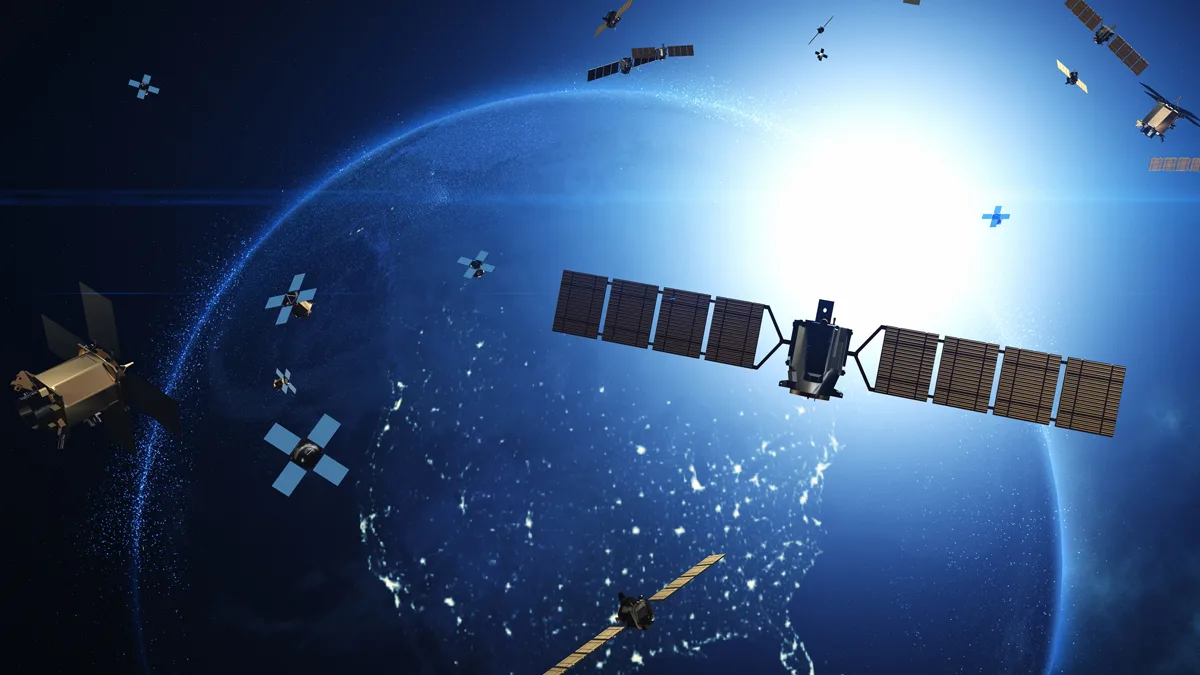
As the number of objects in low Earth orbit continues to rise, keeping the environment sustainable is becoming a priority for the space industry. But the same technologies aimed at capturing dangerous debris could ultimately enable lucrative new ventures in asteroid mining.
TransAstra is trapping debris and targeting asteroids with a tool called “Capture Bags,” inflatable technologies composed of soft engineering materials designed to capture large debris or even asteroids in orbit.
Read our top four takeaways from our conversation with Joel Sercel, CEO and founder of TransAstra, or listen to the full episode.
Takeaway 1: Orbital debris is dangerous, but the industry can still keep it at bay.
Orbital debris represents a growing danger for satellites, other spacecraft and astronauts operating in LEO, largely because of the extreme velocities involved, Sorcel said.
Objects in LEO move at extraordinary speeds, which dramatically increases the energy of any collision, Sorcel said.
“When satellites collide or when big pieces of orbital debris collide with each other in space, these objects are moving at relative speeds of as high as 10 [kilometers] or, in worst case, 15 kilometers per second,” he said. “So their closing speeds are vastly higher than the speed of a high-powered rifle bullet.”
While the debris population is large and hazardous, responsible operational practices and targeted cleanup can prevent the problem from escalating, Sercel said.
“It’s a pretty big threat, but it’s manageable. It’s not existential,” he said. “It’s one of the things that a satellite builder has to keep in mind when they’re planning a mission.”
Part of this mitigation strategy includes having a moratorium on the use of kinetic weapons in LEO and requiring satellite operators to move their spacecraft into a safe orbit immediately upon the end of its mission life, Sercel said.
“The U.S. has been very good about that. You can’t get permission to launch a satellite without a good end of life disposal plan,” he said.
There’s still time for international regulators and operators to get ahead of the debris threat before it becomes detrimental to space operators, said Sercel.
“If the space community, the international space community can operate in a responsible way, I think it can be managed effectively,” he said.
Takeaway 2: Removing a small number of large objects could significantly reduce collision risk.
Despite an enormous and ever-increasing number of objects circling the globe in low Earth orbit, removing a few dozen large, uncontrolled spacecraft or rocket bodies using a Capture Bag could drastically reduce the likelihood of cascading debris events, according to Sercel.
“Recent studies show that in terms of orbital debris and potential collision avoidance issues, there are only about 50 significant objects big enough for Capture Bag of different sizes,” Sercel said. “That if you were to clean those out, you’d deal with half of the problem.”
TransAstra produces scalable Capture Bags that, when folded up, are as small a coffee cup and expand to capture an object approximately the size of a watermelon, said Sercel. But for smaller pieces of debris in LEO that are ineligible for Capture Bags, companies are hitting the objects from afar with lasers to partially erode them or deflect their orbits, he said.
“I think that’s a really clever and interesting technology that has a lot of promise,” he said.
Takeaway 3: Debris cleanup needs an operator-friendly cost structure.
The economics of orbital debris removal remain one of the space industry’s biggest challenges. Orbital debris represents a classic “tragedy of the commons,” where shared environments are degraded because no single actor is fully responsible for maintaining them, Sercel said.
“This is the sort of situation that we have with the explosion of plastics in the ocean,” he said. “The oceans are in the commons of all humanity. They’re not owned by any one sovereign state. And so many sovereign states dump plastics in the ocean … And there’s no incentive to keep people from dumping plastics in the ocean.”
One complicating factor is the absence of salvage rights in space, said Sercel. Unlike maritime law, abandoned spacecraft cannot easily be recovered or claimed by third parties, Sercel noted.
“There are no salvage rights in space, so you can leave derelict spacecraft and there’s no motivation for anyone to pick it up,” he said.
Governments are beginning to address this through regulations requiring end-of-life disposal plans for satellites, said Sercel.
“One of the business models that the government has put in place that’s very helpful, is you can’t launch into low Earth orbit or just launch a spacecraft,” Sercel said. “You can’t get permission until you have an end-of-life disposal plan.”
However, end-of-life disposal plans can be costly for operators, said Sercel. Flexible financing options, such as small down payments with pay-later options, could prove more economical, Sercel said.
“You don’t want to have to pay for your end-of-life disposal at the beginning of the five years because now you’re paying five years of high interest on that investment that you put in,” he said.
Takeaway 4: Asteroid mining could be the catalyst for the next era in space.
Beyond making orbital cleanup affordable, capture technology could eventually enable asteroid mining, and in turn, unlock new lucrative markets in space, said Sorcel.
Asteroid mining also presents an opportunity for nations to claim an edge in the overall space ecosystem, Sercel said.
“What’s the next leap that keeps the United States and the West ahead? The answer is space materials, millions of tons of materials in space that we can manufacture from,” Sorcel said.
TransAstra has already identified roughly 15,000 asteroids that are theoretically close enough to Earth for retrieval, he said.
If those resources become accessible, asteroid mining could unlock a new era of space infrastructure and manufacturing – from large orbital data facilities to massive data centers – fundamentally reshaping the space economy in the decades ahead, Sercel said.
“That’s the next revolution and it’s enabled by asteroid mining,” he said.
For more, listen to the full episode.