



4 Takeaways: Orbital Data Centers Are Becoming a Real Architectural Consideration

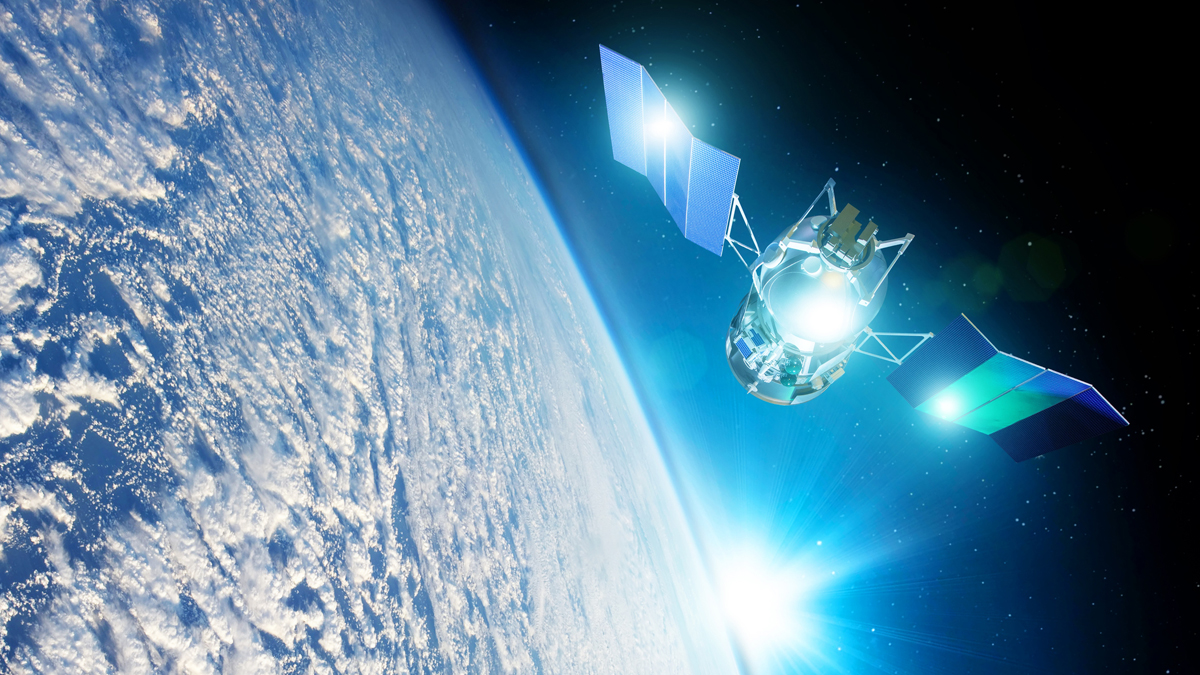
Interest in orbital data centers has accelerated as terrestrial compute infrastructure faces new limits driven by the rapid adoption of AI. Power availability, cooling requirements and location challenges are prompting both government and commercial organizations to reexamine where large-scale compute can physically reside. During the SmallSat Conference, Redwire CTO Al Tadros spoke about why the idea has gained credibility, what engineering questions need to be addressed and how orbital compute may integrate into broader space architectures over time.
Read our top four takeaways from our conversation with Redwire’s Al Tadros, or listen to the full episode.
Takeaway 1: AI demand and terrestrial constraints have shifted orbital compute from speculation to serious engineering.
Interest in orbital data centers is not emerging from within the space sector alone, Tadros said on the podcast. Instead, organizations that build and rely on terrestrial data centers are raising the question themselves as they confront structural limits. “AI has gone from research labs to everyday dinner table conversations and tools,” he said, noting that this shift has driven unprecedented consumption of compute resources.
Communities and utilities are pushing back on new data center construction because of competing demands for water, power and land, Tadros noted. He described how these factors have encouraged decision-makers to evaluate alternatives that once seemed purely conceptual. “There’s a tremendous amount of discussion about data centers,” he said. “And of course there’s a lot of controversy, whether they increase cost of utilities, water usage, blight, not in my backyard.”
The physics and engineering fundamentals involved are not new. “There’s no physics that says we can’t,” he said, pointing out that spacecraft already generate power and reject heat in ways that align with compute needs. The question is not whether orbital compute is theoretically possible but how to scale it in a way that makes operational and economic sense, Tadros said.
Takeaway 2: Power generation and thermal management set the foundation for realistic orbital compute architecture.
Interest in orbital data centers often centers on processors and AI, but Tadros explained that the fundamental engineering challenges are power generation, heat rejection and the ability to scale both alongside compute. The GPU ecosystem is already advancing rapidly, but space systems must supply the environment those processors require.
People frequently ask whether space systems can generate enough power to run GPUs or whether thermal constraints make the idea impractical, Tadros said. He noted that many of these questions come from assumptions that do not reflect what the space industry has already solved.
“This is what we do in space,” he said. “Where you generate power, you have to manage heat, and we do manage waste heat in space.”
Referencing a recent paper by Redwire, Tadros described how solar arrays provide high-efficiency power, how radiators reject heat into cold space and why understanding radiation versus convection is essential for realistic designs. He emphasized that none of these principles need to be invented. They already exist in operational spacecraft, and the challenge now is scaling them within an architecture that supports large-scale compute.
Takeaway 3: Launch economics and the adoption of AI agents will determine when orbital computing becomes operational.
The most significant barrier to orbital data centers is access to space, Tadros said. Launch frequency, mass capability and cost per kilogram must improve before orbital compute becomes economically viable, he said.
If super heavy lift vehicles reach high frequency and lower cost toward $500 or even $200 per kilogram, orbital compute becomes far more feasible, Tadros said.
Widespread, everyday use of AI assistants will be a major signal that orbital computing is ready to move from trial phases to real infrastructure, Tadros said. “If it becomes the human experience to have AI agents, if it becomes a natural part of our daily lives, that means the economic value of putting it in space is there,” he said.
Takeaway 4: Orbital computing adds value for mission diversity, government operations and future human activity beyond Earth.
Government organizations are increasingly discussing architectures that distribute capability across different environments, Tadros said. Orbital compute contributes to that effort by providing an additional location for critical functions and reducing dependence on a single domain. “Having them on Earth, great. Having equivalents in space, greater,” Tadros said, noting that physical separation from terrestrial threats is one of the advantages already used in protected communications.
Orbital compute also aligns with the direction of human spaceflight, Tadros noted. NASA plans to transition to commercially owned stations in low Earth orbit and maintain a sustained presence on the lunar surface, he said. Compute, data access and AI tools will be necessary elements of those environments. “Where humans go, we like to have our compute capabilities, our AI, our search, our data,” Tadros said.
Lunar operations provide a place to prepare for missions deeper into the solar system, Tadros said, likening the Moon to a training ground for how humanity will explore and operate in more distant environments.
“We are going to use the Moon to prepare for going beyond the Earth-Moon system. And when we do that, we want to operate the way that we’re going to explore, and that includes taking our compute with us,” Tadros said.
For more, listen to the full episode.