



FCC Goes All-In on Satellite D2D

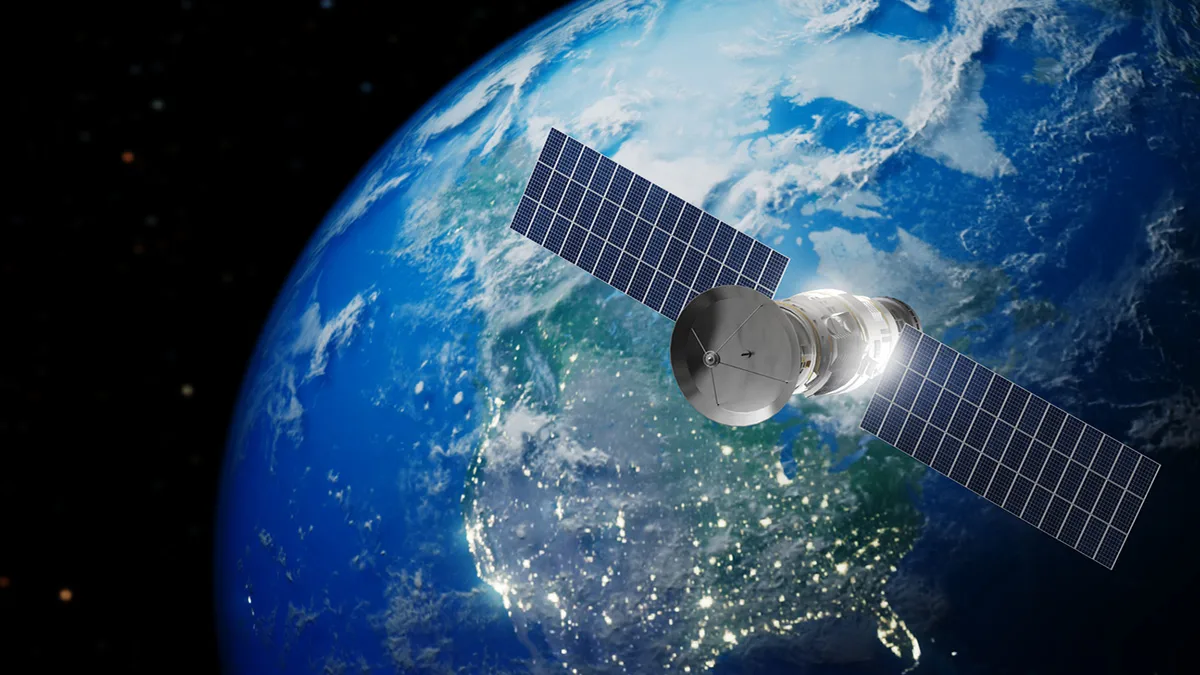
The U.S. Federal Communications Commission (FCC) is working to position the United States as a leader in the use of spectrum for space applications. A central focus of this effort is incentivizing investment in the satellite direct-to-device (D2D) market, which is projected to grow to roughly $10 billion worldwide by 2033, reaching more than 425 million monthly users.
Regulatory frameworks for satellite D2D applications are still in their early, contentious stages and the technology, while proven, remains largely experimental for consumer-scale broadband. Going forward, success will depend on both regulatory and technical approaches to harmonize the interests of diverse stakeholders within the constraints of finite spectrum resources.
Setting the Course
FCC Chair Brendan Carr signaled to lawmakers earlier this month that, in addition to the push for a revised D2D regulatory framework, the FCC could also consider new spectrum for D2D services. “What we’re doing right now is positioning the United States to lead the world in this new technology by making sure we have the spectrum resources and the regulatory framework for this direct-to-cell technology to really flourish and flourish in America first,” he said.
In coordination with the FCC, the U.S. administration has explicitly called for “spectrum leadership across space systems to promote United States technology competitiveness, spectrum management efficiency, and global market access,” simultaneously, aiming to attract $50 billion of additional investment in the U.S. space market by 2028. The emphasis on U.S. spectrum leadership is also clear in initiatives around the “6G race,” where spectrum efficiency, reallocation and reuse are paramount.
“The industry is looking toward 6G as we plan for the 2030s,” said Luciana Camargos, head of spectrum at the Global System for Mobile Communications Association (GSMA). “The U.S. has made strong steps in delivering a forward-looking spectrum pipeline to support future capacity, innovation, and global leadership.”
Sharing with Mobile
Today, satellite operators provide D2D service one of two ways: by reusing terrestrial mobile spectrum or by using dedicated spectrum for mobile satellite services (MSS). U.S. providers T-Mobile, AT&T and Verizon have embraced the first approach, making spectrum available to their respective satellite partners at SpaceX’s Starlink and AST SpaceMobile. Globalstar uses its dedicated MSS to provide D2D services to Apple devices and Skylo has an agreement with Verizon to provide services via satellite spectrum.
D2D deployments that reuse terrestrial spectrum are governed by the FCC’s 2024 rules for Supplemental Coverage from Space (SCS). The framework was revolutionary in allowing satellite operators to share specific bands of mobile spectrum. Real-world implementation has been more complicated.
One of the biggest challenges in implementing SCS has come from limiting D2D coverage to a geographically independent area (GIA). The rule was intended to prevent interference and ensure ubiquitous coverage, but it required the MNO or satellite operator to have a spectrum license footprint covering the entirety of the contiguous United States (or similar GIA versus regional licenses). U.S. MNOs operate a patchwork of coverage that covers the majority of the country, but not 100%.
“It has been very hard for people to take advantage of them [the SCS rules],” said Tim Farrar, a satellite and telecom consultant and president of TMF Associates. “Other than the Starlink deal with T-Mobile, everyone else has been asking for waivers.”
AT&T and Verizon have coverage gaps that required them to seek waivers for D2D via AST SpaceMobile. Only SpaceX and T-Mobile have come up with wall-to-wall licensing required under the rule, because T-Mobile’s PCS-G block spectrum was largely unused.
The SCS rules also required the satellite operator to have a Part 25 license, ensuring safe, sustainable orbital operations and clean radio transmission respecting existing equivalent power flux density (EPFD) limits. While SpaceX met the geographic requirements, it requested and received two waivers for power emissions in March 2025 and another in January, when the FCC approved another 7,500 Starlink Gen2 satellites. The waivers have drawn criticism from legacy GEO operators who have reported concerns and incidents of Starlink interference.
The original SCS rule “made sense as a first step for simplicity,” said Farrar. But since Starlink was the only operator to meet the requirements—and now requires a waiver after its $2.6 billion purchase of EchoStar’s AWS-3 spectrum—there is growing support to adjust the rules to consider smaller geographic areas and different configurations. While this could work, critics argue the policy could run afoul of physics, leading to satellite beams bleeding into neighboring coverage areas or dead zones without satellite or mobile coverage.
C-Band Carve Outs for D2D?
At the same time, there is also a push to free up more spectrum for D2D services beyond the sub-2 GHz bands authorized in the current framework. This is where the upcoming C-band auction comes into play. Under renewed auction authority, the FCC will sell off at least 100 MHz—possibly more—in the upper C-band (3.98-4.20 GHz) by July 2027.
Like the previous C-band auction, satellite operators will vacate parts of the band and mobile network operators (MNOs) are the most likely to purchase the newly available spectrum. However, SpaceX recently submitted comments to the FCC saying the commission should be “reserving a portion of spectrum in the Upper C-band for next-generation satellite use,” adding the FCC “can no longer afford to treat satellite service alongside terrestrial networks as an afterthought.”
SpaceX further urged the FCC to reconsider performance requirements in C-band to allow for satellite direct-to-device, which the company claimed “will have the ability to provide robust broadband, particularly where satellite operators are able to aggregate spectrum across multiple blocks or bands.”
The pending C-band auction is also reopening issues around the evolution of legacy GEO satellite services, with the prospects of disruption and potentially significant payout for vacating the spectrum.
“There are lots of exciting developments in fixed satellite services, but they are not happening I the C-band,” said Camargos. GSMA has observed that across global markets. “For satellite, it does not offer enough capacity for the 2010s, let alone the 2030s. … In that sense, the C-band experience has been an important success story for the mobile ecosystem.”
If the last C-band auction taught nothing else, it was the value of spectrum licenses for terrestrial 5G mobile services. The 2020-2021 C-band auction generated more than $81 billion in bids for 280 MHz of spectrum. However, it’s not clear if history will repeat itself. The market dynamics for MNOs today are characterized by tight competition, stagnant growth and high debt, which paints a different landscape than what existed five years ago.
“I think the FCC is facing some challenges in talking up investment and persuading mobile operators to buy a lot of spectrum right now,” Farrar advised, “because we’re clearly moving into something of a price war in telecoms.”
MSS: If You Got It, Pool It
While a few satellite operators fight for valuable terrestrial spectrum real estate, a growing number of global satellite operators are consolidating opportunities using MSS spectrum already licensed for satellite D2D.
Organizations like the Mobile Satellite Services Association are focused on coordinating commercial partnerships to essentially pool resources for D2D. They’re also working to advance existing global frameworks, specifically 3GPP Release 17 standards, which designated the L- and S-bands for the deployment of non-terrestrial network (NTN) services. MSSA has noted that the industry has upwards of 100 MHz of L-band and S-band already allocated and licensed for mobile satellite services. If it’s coordinated, that standardized spectrum can be used for the delivery of “high-performance cellular-like services” to devices globally. Several of the group’s members, including Viasat, Omnispace and Ligado, have actively pressed the FCC to prioritize MSS spectrum pooling, arguing the approach is more efficient, leverages international standards and enables competition in a SpaceX-dominated D2D market.
Without pooling resources, individual allocations of L-band and S-band generally max out at a few hundred kilobytes per second (Kbps) per channel and are too narrow to support broadband rates from space. Pooling resources, or acquiring blocks of spectrum from operators, like AST’s recent purchase of 40 MHz of Ligado L-band spectrum, offers an alternative. Critically, proponents of this approach argue that MSS spectrum makes better use of physics, beaming coverage across entire geographic areas in the satellite’s footprint, rather than relying on the patchwork or incomplete coverage of terrestrial networks.
Paving the Way to WRC-27
The debate playing out at the U.S. FCC will inevitably feed into the World Radio Conference in 2027 (WRC-27), where the International Telecommunications Union (ITU) is scheduled to address a range of issues impacting satellite-to-cell applications.
The proceedings of WRC-27 are expected to cover spectrum requirements, the possible allocation of additional MSS spectrum, technical and operational feasibility studies and a global regulatory framework for D2D services. Moreover, the United States is far from the only country working to define a framework. China, the European Union, Japan and the United Kingdom are actively forming sat-to-cell partnerships while formulating technical and regulatory standards.
As the FCC works to position the United States as a leader in D2D, it will have to harmonize the diverse interests of mobile and satellite stakeholders while navigating technical and policy obstacles. Not the least of these challenges is the viability of high-performance D2D, beyond narrow-band applications, the financial realities for satellite and mobile network operators, and navigating a global landscape where multiple nations are pushing ahead with satellite-mobile convergence for 5G and 6G.
“The U.S. has already taken a clear leadership role in D2D,” said Camargos, including being the first to roll out a regulatory framework with SCS in 2024. “Harmonization will help these services mature. The work toward WRC-27 offers an opportunity to align on common principles, such as protection of terrestrial services, so that [the] U.S.’s early national leadership can translate into global scale.”