Space is a Network.
Constellations is Your Connection.

Deployment of operational optical inter-satellite links is reshaping multi-orbit data flow by enabling continuous, low-latency, cloud-like routing in space. Kepler Communications CEO Mina Mitry discusses how optical relays, on-orbit processing and interoperability standards are laying the foundation for scalable, real-time space networking.


This hybrid network utilizes Q- and V-band links to deliver speeds of 144 Gbps in LEO, while MEO optical links aim to provide throughput up to 6 Tbps. With a projected deployment start in late 2027, the system targets a capped capacity of roughly 100,000 customers, distinguishing itself from the broader consumer focus of Amazon Leo.

Despite a deployment of over 650 satellites, the service currently faces brief visibility outages and a limited aggregate downstream capacity of approximately 10Gbit/s. To ensure a successful rollout, mobile network operators must utilize detailed analytics to align these technical realities with realistic user expectations and pricing models.

With major players like Starlink and Eutelsat expanding their constellations, the 3GPP’s adaptable 5G NTN standard supports diverse network architectures by allowing the radio base station to reside either on the ground or on the satellite itself. This flexibility enables operators to balance proprietary mission requirements with the strict interoperability needed for direct-to-device connectivity.

Once focused on buying satellites, the region is now building sovereign capabilities that drive economic diversification, security, and technological leadership. Bold investments and local industry growth are positioning the Middle East as an emerging global hub for space innovation.

As global LEO constellations reshape satellite economics through scale and speed, Middle Eastern operators are charting a different path rooted in sovereignty, regulatory alignment and national strategy. How regional satellite companies are leveraging close ties with governments, multi-orbit collaboration and spectrum stewardship to remain relevant and grow.

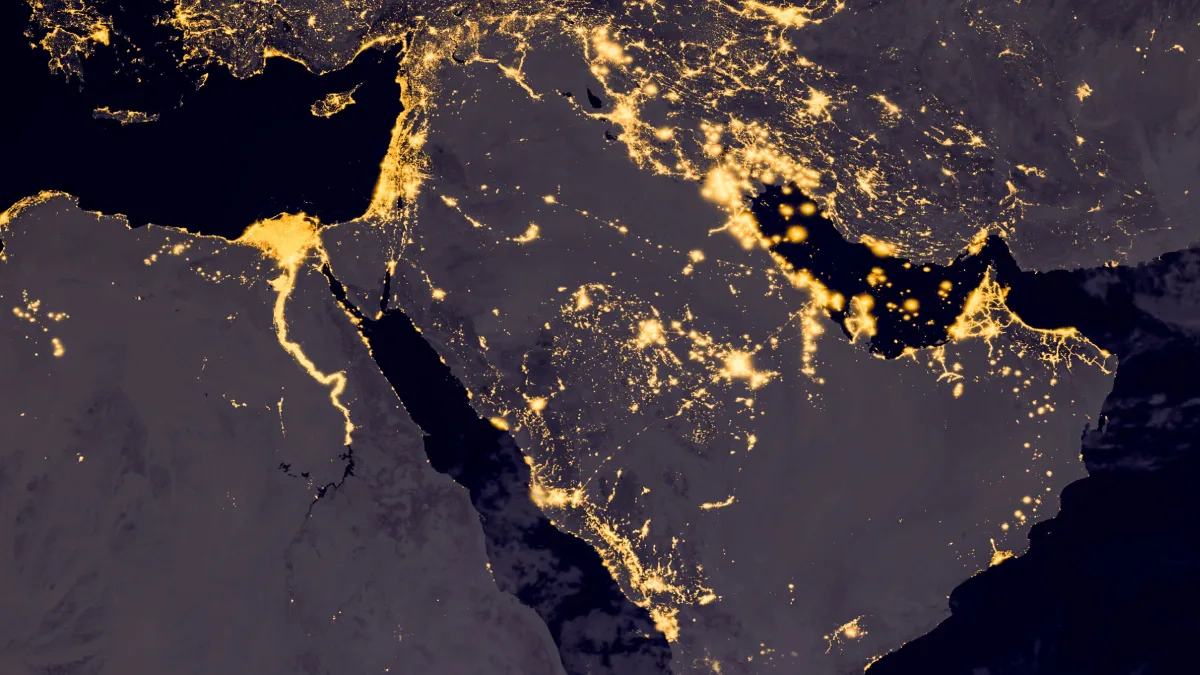
Ahead of the Middle East Space Conference, the map of the global space economy is being redrawn. From Oman’s Etlaq spaceport to Saudi Arabia’s emerging geospatial dominance to the engineering ecosystems in the UAE and Türkiye, the road to space increasingly runs through the Middle East.

The attribution of this failure to a micrometeorite strike bears a skeptical resemblance to the Inmarsat-6 F2 incident, where insurance underwriters questioned similar claims regarding an Airbus-built bus. Considering the tumbling and power loss issues previously suffered by its twin, SpainSat NG 1, it is worth scrutinizing whether this is truly bad luck with space debris or a recurring systemic fault in the satellite’s design.