
Space is a Network.
Constellations is Your Connection.

Routing this data directly into public clouds allows operators to clear the massive hurdle of machine learning ingestion while avoiding prohibitive egress fees. As NGSO constellations and vHTS architectures expand, applying these localized algorithms across deployed sensors will become mandatory for maintaining situational dominance and service quality.

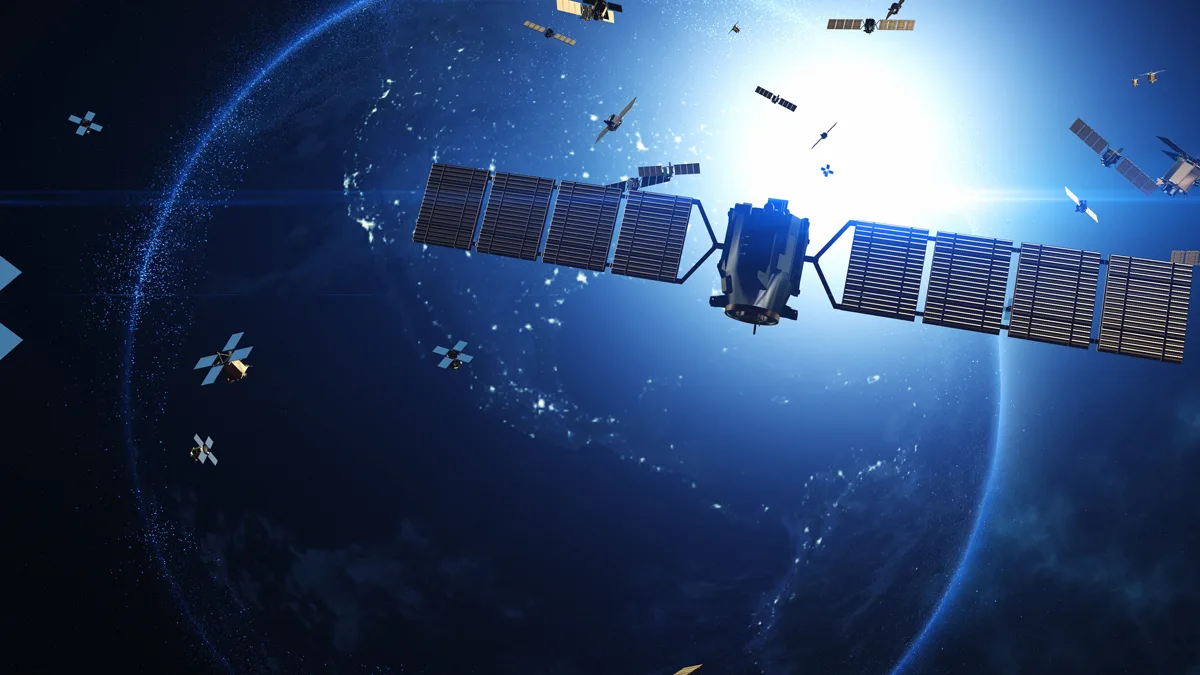
While off-the-shelf cellular modules offer an avenue for massive scale, merging static terrestrial towers with satellites moving at orbital velocities introduces severe routing, authentication, and latency hurdles. Overcoming these physical engineering barriers is required to build a resilient hybrid network that also satisfies strict national demands for infrastructure sovereignty.

As low Earth orbit becomes increasingly crowded with mega-constellations, escalating collision and debris risks are pushing satellite operators to replace traditional, human-driven models with autonomous, AI-enabled space situational awareness and collision-avoidance systems embedded into mission design from the outset.

Network Architecture & Infrastructure

China’s D2D Ambitions

ABI Research’s Rachel Kong breaks down mega-constellation filings, 5G NTN trials, and the coordinated state–telco model shaping D2D connectivity. Discover how this approach could influence spectrum access, handset interoperability, and Western operators’ competitive positioning.

Satellite Communications (SATCOM)

FCC Goes All-In on Satellite D2D

The FCC is pushing for U.S. leadership in direct-to-device but still needs a framework to harmonize satellite and mobile network operators’ interests within the constraints of finite spectrum resources.