

Space is a Network.
Constellations is Your Connection.

Non-Terrestrial Networks (NTN) / 5G

The Next Phase of 5G NTN Deployment

In our latest interview, ABI Research’s Andrew Cavalier breaks down the latency, cost, and standardization hurdles the industry must overcome to make non-terrestrial networks (NTN) a seamless extension of mobile infrastructure. Discover which players are best positioned to capture value as operators and chipset vendors race to bring satellite connectivity to the mass market.
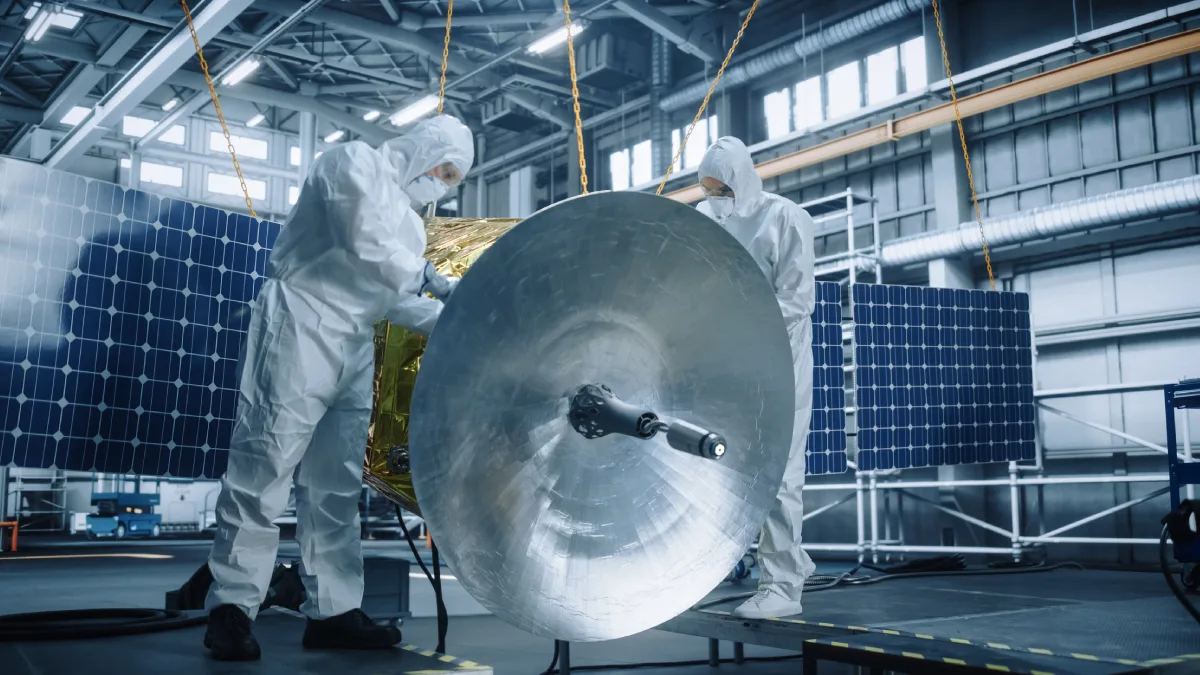

The facility will begin limited deliveries for Telesat’s Lightspeed constellation later this year before reaching full production in 2027. Built around MDA’s adaptable Aurora platform, the factory aims to drive further orders by churning out both broadband and direct-to-device (D2D) satellites for major clients like Globalstar.

This article breaks down four vital takeaways driving the industry's next growth curve, from fierce spectrum land grabs to the game-changing scale of Low Earth Orbit (LEO) deployments. Click the link to uncover how the clash between proprietary systems and emerging 6G standards will reshape global connectivity.

Operators transitioning to these software-based architectures can achieve nearly 40% in overall cost savings while significantly accelerating deployment cycles for new services. This technological shift is essential for capturing the $30 billion 5G NTN opportunity and ensuring long-term mission adaptability in a rapidly evolving orbital economy.

Automation and AI are becoming foundational to 5G non-terrestrial networks, enabling self-optimizing satellite constellations, real-time spectrum coordination, and cloud-native operations that can scale across multi-operator and multi-orbit environments.

Constellations talked to Dr. Peter Garretson of the American Foreign Policy Council about how allied and commercial systems factor into deterrence, where current space strategies may be too narrowly focused, and which mission areas and technologies could quietly define space operations in the 2030s.

CEO Matt Desch is finally playing the valuation game, signaling openness to mergers or alliances to command the premium multiples currently assigned to direct-to-device hype. Beyond the spectrum positioning, the firm operates as the baseline fallback network for aviation and government infrastructure, offering an embedded hedge against broader market exuberance.

Bringing manufacturing in-house grants these companies the strategic advantage of controlling the entire stack, though it introduces substantial capital risk and threatens market fragmentation. To maintain optionality and outpace competition, vendors must pursue targeted M&A to navigate the rising geopolitical demand for sovereign data solutions.