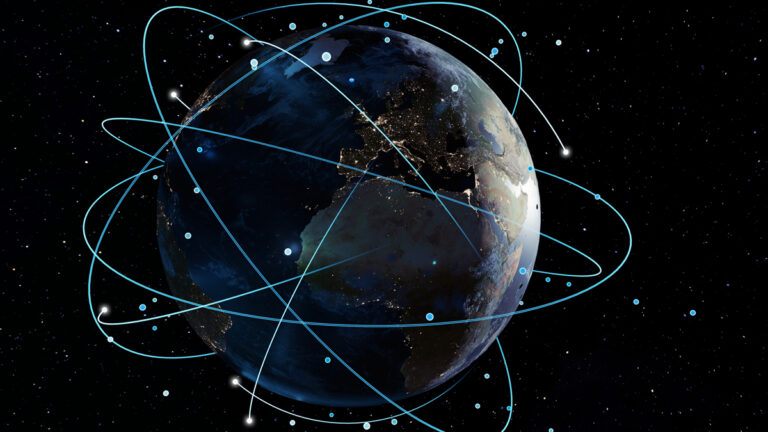




Space is a Network.
Constellations is Your Connection.

Space & Orbital Operations

Charles Beames, chairman at the SmallSat Alliance and Dr. Angel Smith, executive director at the SmallSat Alliance explore how data centric security and object level encryption are changing the way government and commercial space operators share information, especially as agencies move faster on AI, adopt proliferated architectures, and work to secure data moving across mixed clouds, networks, and constellations.

How very low Earth orbit’s extreme drag, atmospheric variability and unique operating conditions are reshaping spacecraft design while opening new opportunities for sensing, imaging and communications.

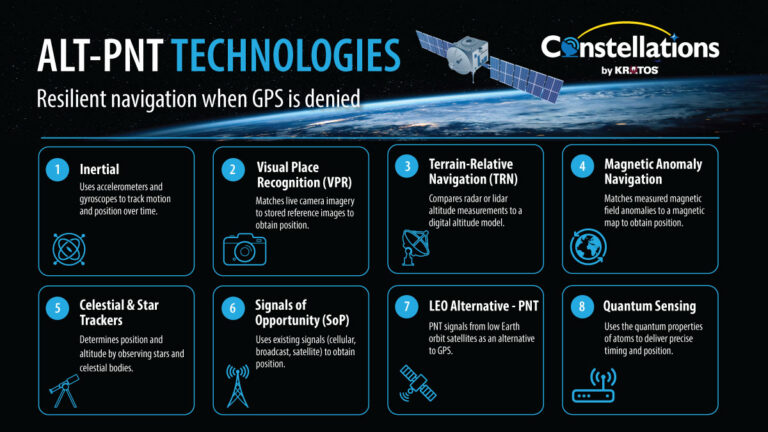
As GPS faces growing jamming and spoofing threats, commercial satellite systems, quantum sensing and hybrid navigation technologies are driving a shift toward more diverse, resilient and trustworthy positioning, navigation and timing (PNT) infrastructure.

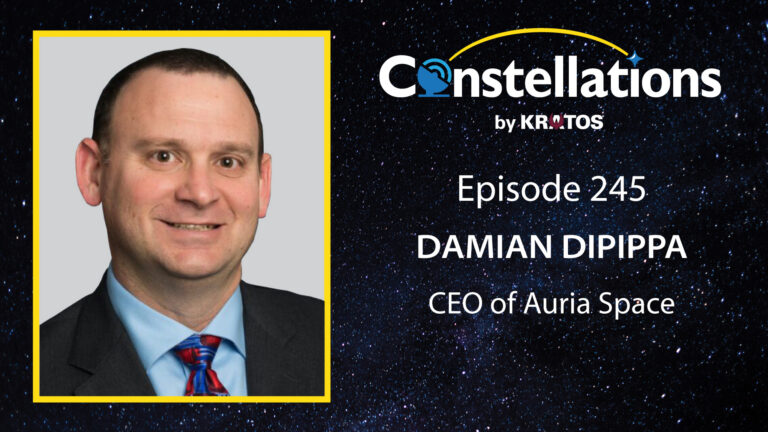
Constellations is joined by Damian DiPippa, CEO of Auria, who explores how rapid changes in the space industry are reshaping mission execution for national security. The CEO discusses missions becoming more complex, demanding stronger collaboration and faster integration of commercial capabilities.

Satellite broadband is becoming an active layer of hybrid networks, combining with fiber and 5G to deliver greater resilience, coverage and flexibility for enterprise connectivity.

Dr. David Voss of the Space Warfighting Analysis Center explores why mission architectures matter, how resilience is truly achieved in real-world operations, and what becomes possible as the space community advances toward a more connected, interoperable future.

Space Infrastructure & Operations

The Emerging Architecture of Lunar Cooperation

As lunar exploration expands, governments and commercial operators are developing shared, interoperable communications, navigation and infrastructure networks to support future missions and strengthen international cooperation.

Al Tadros of Redwire discusses why orbital data centers are quickly becoming a realistic architectural possibility, what’s driving that shift, the engineering challenges we still need to solve and how autonomous operations are redefining the future of space infrastructure.

Space & Orbital Operations

Surprise. Time to Fire Stage 2?

As the space industry enters its next phase of growth, scaling infrastructure and services will depend increasingly on interoperability to integrate systems, strengthen supply chains and meet rising commercial and defense demand.

Satellite insurers are recalibrating risk models as mega-constellations, orbital congestion, emerging technologies and new mission profiles reshape how the industry evaluates and covers an increasingly complex space market.