


Auria CEO Damian DiPippa explains how commercial innovation, open architectures and evolving acquisition strategies are reshaping national security space missions and government-industry partnerships.
Space is a Network.
Constellations is Your Connection.
Open Doors, Complex Architectures: Navigating Opportunity, Integration and Uncertainty in Defense Space
The Department of War’s growing embrace of commercial space capabilities is reshaping the defense space market, creating new opportunities for industry while raising complex questions about integration, security, resilience and the long-term viability of evolving space architectures.
Can Zero Trust Security Transform the Future of Space Defense?
Charles Beames, chairman at the SmallSat Alliance and Dr. Angel Smith, executive director at the SmallSat Alliance explore how data centric security and object level encryption are changing the way government and commercial space operators share information, especially as agencies move faster on AI, adopt proliferated architectures, and work to secure data moving across mixed clouds, networks, and constellations.
Is Commercial Innovation Transforming National Security Space?
Constellations is joined by Damian DiPippa, CEO of Auria, who explores how rapid changes in the space industry are reshaping mission execution for national security. The CEO discusses missions becoming more complex, demanding stronger collaboration and faster integration of commercial capabilities.
# Community
Regulating Satellite Connectivity Across Different Operating Models
As satellite connectivity becomes more integrated with terrestrial networks, regulators must adopt flexible, proportionate policies that account for different operating models while supporting innovation, resilience and expanded connectivity.
AST Has Too Few Satellites for Beta Service This Year, 2027 Outlook Uncertain; Co Building a Rocket with Firefly Technology
AST SpaceMobile faces launch delays that threaten its 2027 direct-to-device service rollout, prompting the company to develop its own rocket using Firefly Aerospace technology to gain greater control over satellite deployment.
Threat Briefing 52: Volt Typhoon’s Silent Train: Strategic Threats to Aerospace and Satellite Infrastructure
Chinese state-sponsored threat actor Volt Typhoon is exploiting trusted network infrastructure through its stealthy Silent Train framework, raising concerns about persistent cyber threats to U.S. satellite communications, defense systems and critical infrastructure.
How are Sovereignty Goals Driving System Interoperability?
Growing demand for sovereign space capabilities is driving global adoption of open architectures and interoperability standards that enable military and commercial satellite systems to work together and adapt to evolving threats.
# Insights
4 Takeaways: Orbital Data Centers Are Becoming a Real Architectural Consideration
Redwire CTO Al Tadros explores how rising AI demand, advances in power and thermal management, and improving launch economics are bringing orbital data centers closer to reality as part of future space infrastructure.
Why Satellite Spectrum Monitoring Is Becoming Essential in the Multi-Orbit Era
As NGSO constellations expand, the growing complexity of satellite interference is exposing a gap between regulatory models and real-world operations, raising questions about how operators and regulators can ensure effective spectrum sharing.
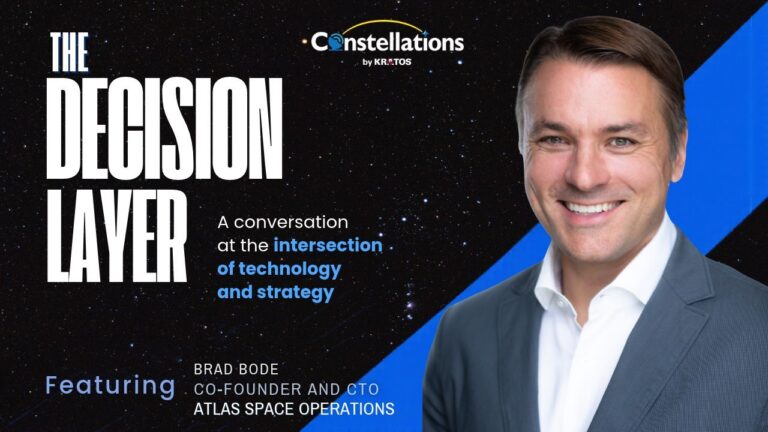
The Decision Layer: Federation by Design
The Decision Layer explores how senior technology leaders approach the responsibilities that come with executive‑level oversight and how they frame the decisions that move a space organization forward. With this first installment, we’re opening a dialogue that brings these innovation‑shaping perspectives into focus. In this installment, we speak with Brad Bode, ATLAS Space Operations’ chief technology officer and co-founder – and the mind behind much of the company’s ground system innovation.
The Emerging Architecture of Lunar Cooperation
As lunar exploration expands, governments and commercial operators are developing shared, interoperable communications, navigation and infrastructure networks to support future missions and strengthen international cooperation.
4 Takeaways: Why Future Space Architectures Must Evolve Beyond Today’s Assumptions
As space operations grow more complex, hybrid architectures, interoperable systems and adaptable technologies are becoming essential to building resilient, operationally effective space capabilities.
# Podcasts
Are Orbital Data Centers Becoming the Next Evolution in Computing?
Al Tadros of Redwire discusses why orbital data centers are quickly becoming a realistic architectural possibility, what’s driving that shift, the engineering challenges we still need to solve and how autonomous operations are redefining the future of space infrastructure.
What Does True Resilience Look Like Across the Space Enterprise?
Dr. David Voss of the Space Warfighting Analysis Center explores why mission architectures matter, how resilience is truly achieved in real-world operations, and what becomes possible as the space community advances toward a more connected, interoperable future.
What Does VLEO Really Demand From Spacecraft?
Orion Space Solutions’ Chad Fish explains the real constraints, sensing challenges, and operational shifts that define modern VLEO missions – and what teams discover only when they start designing this low.