
Space is a Network.
Constellations is Your Connection.

Telecom & Connectivity

NATO allies are pursuing federated schemes for pooling satcom resources. The enabler is not the satellites themselves, but the network that will make the multination, multi-orbit dream work. From the ground up, interoperability and common standards are the first principles for future hybrid satcom.

While Europe’s HALO and IRIS² initiatives both aim to strengthen sovereign satellite communications, their ultimate success will depend on building interoperable, sovereign-controlled ground infrastructure that enables secure command, connectivity and cross-border operations.

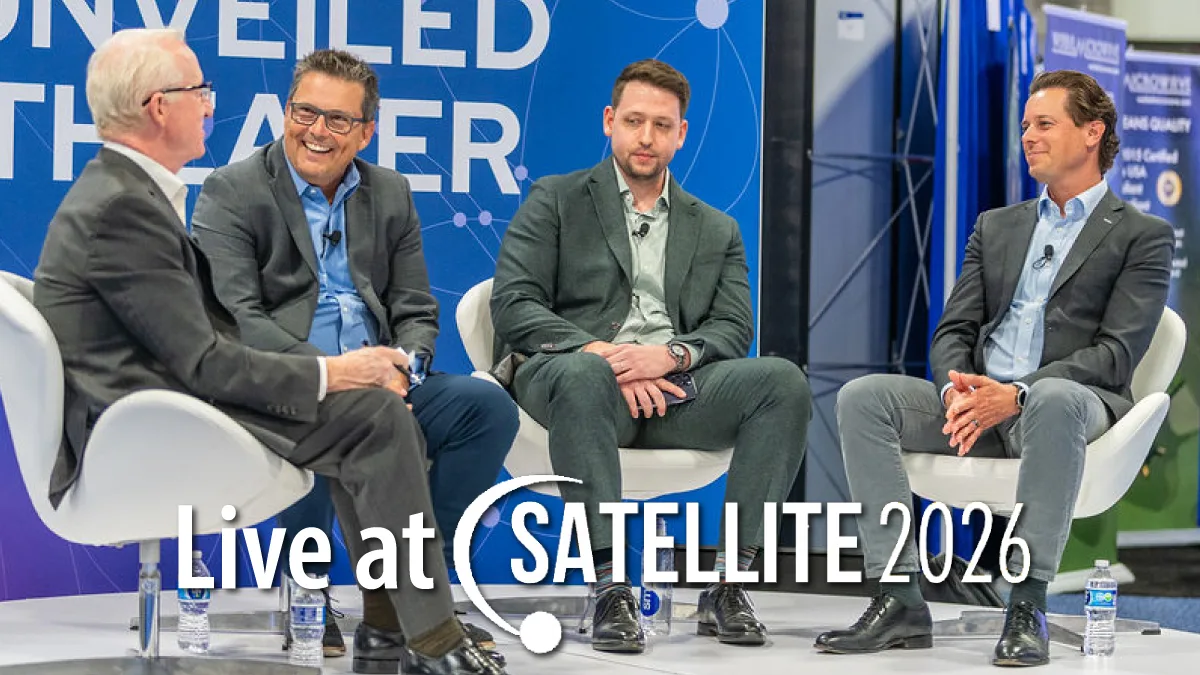
At the 2026 Satellite Show, Constellations spoke with Blane Boynton of SES, Andrew Cavalier of ABI Research and Greg Quiggle of Kratos about developing long term 5G NTN strategies, the competitive forces driving ground system evolution and how early 5G implementations signal growing commercial readiness.

The growing shift toward virtualized, software-defined ground systems is accelerating adoption of interoperability standards like DIFI, enabling satellite operators to reduce dependence on proprietary hardware while supporting scalable multi-orbit networks, 5G NTN integration and future AI-native architectures.

Satellite Connectivity & Technology

Sovereignty Without Borders

As the global space economy evolves, national autonomy is shifting from simple hardware ownership toward total control over the operational stack, including data and networks. Industry experts suggest that hybrid architectures are now the most pragmatic way for nations to maintain security and decision-making authority in an increasingly interconnected orbital landscape.

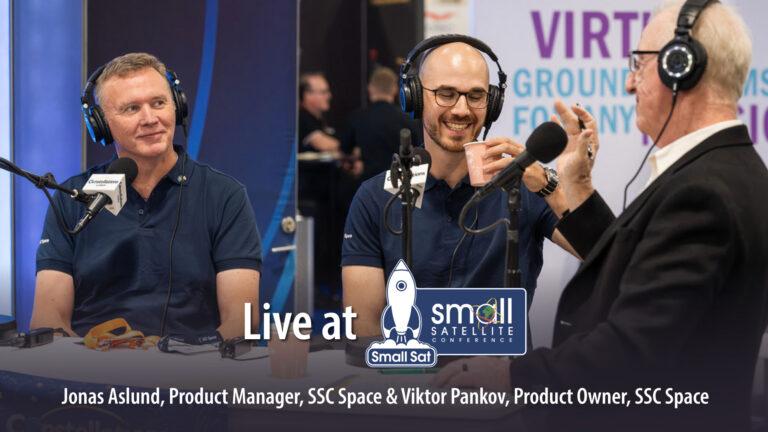
Live from the show floor of Smallsat, Constellations is joined by Jonas Åslund and Viktor Pankov of SSC Space, who dive into one of the most important shifts happening across the sector: the emergence of a new space infrastructure built on global ground networks.

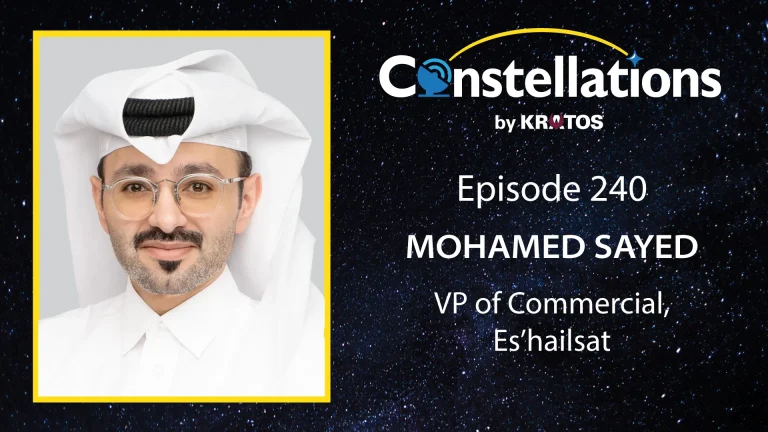
Mohamed Sayed, VP of Commercial at Es’hailsat joins Constellations to discuss how regional operators are navigating a new era of mega-constellations, as governments across the Middle East invest in sovereign space capabilities and secure communications-regional operators will start playing a bigger role.

Univity’s proposed broadband and direct-to-device constellation reflects a new approach to satellite connectivity by putting telecom operators—not satellite providers—at the center of the value chain through a shared, wholesale space infrastructure that seamlessly extends terrestrial 5G networks into space.

As direct-to-device satellite services move toward commercial scale, operators, regulators and mobile carriers are grappling with how spectrum rights, licensing frameworks and cross-border interference will shape the future of global connectivity. How hybrid use of terrestrial and MSS spectrum is emerging as the most practical path forward, even as questions around sovereignty, regulation and customer control remain unresolved.

Market Competition & Strategy

What’s in Store at Space Industry Forum

Novaspace’s Nathan de Ruiter shares why the industry is moving past speculation toward real-time execution in areas like sovereign connectivity and multi-orbit strategies. Read the full interview to understand how operators are navigating a fragmented landscape defined by local regulation and the convergence of satellite and terrestrial networks.

By prioritizing 3GPP standards and a pay-per-use model, the telco is treating satellite access as a simple roaming extension rather than a standalone luxury. This “one SIM” strategy aims to eliminate vendor lock-in, making space-based data an invisible but essential part of the global mobile ecosystem.

Satellite Connectivity & Technology

Is Spectrum the Next Big Bottleneck for Space?

ABI Research explores how growing demand for satellite spectrum is challenging decades-old regulations and how new technologies could enable more efficient spectrum sharing across increasingly crowded GEO, MEO and LEO networks.

Digital Transformation

What’s in Store at VOSS

Constellations talked to the Space ISAC team about what to expect from the 2026 Value of Space Summit, what’s new about the event and what they most love about the location.

Digital Transformation

Space at the Speed of Software

As AI, cloud computing and cyber threats accelerate the pace of network operations, satellite communications must embrace software-defined, interoperable architectures to keep pace with modern defense and commercial requirements.

Live at SATshow 2026, Constellations speaks with Blane Boynton of SES, Andrew Cavalier of ABI Research and Greg Quiggle of Kratos on developing long-term 5G NTN strategies, the competitive forces driving ground-system evolution, and how early 5G implementations signal growing commercial readiness.

The head of the Taiwan Space Agency recently proposed an Asia-Pacific answer to Starlink, kicking off a critical discussion about sovereignty, regional collaboration and the role of commercial partnerships in LEO.

By securing Apple as a cornerstone partner, Amazon is officially launching a high-stakes challenge to Starlink’s orbital supremacy. The merger integrates Globalstar’s established spectrum with the “Amazon Leo” infrastructure to bring seamless, high-speed direct-to-device connectivity to the global market by 2028.