




Space is a Network.
Constellations is Your Connection.

SES and Eutelsat confirmed that while the project has missed its initial April deadline, an agreement is expected within the coming weeks. Both companies emphasized that their participation remains contingent on the multi-orbit project meeting strict internal return requirements and technical benchmarks.

By prioritizing 3GPP standards and a pay-per-use model, the telco is treating satellite access as a simple roaming extension rather than a standalone luxury. This “one SIM” strategy aims to eliminate vendor lock-in, making space-based data an invisible but essential part of the global mobile ecosystem.

By securing Apple as a cornerstone partner, Amazon is officially launching a high-stakes challenge to Starlink’s orbital supremacy. The merger integrates Globalstar’s established spectrum with the “Amazon Leo” infrastructure to bring seamless, high-speed direct-to-device connectivity to the global market by 2028.

The SpaceRise consortium—led by industry heavyweights SES, Eutelsat, and Hispasat—has finally hammered out the compromises needed to secure a multi-billion euro green light for the secure multi-orbit network. While the roadmap includes some technical concessions to hit aggressive 2030 deadlines, the deal marks a massive leap forward for Europe’s strategic autonomy in space-based communications.

Following lessons learned from the conflict in Ukraine, the 32-nation alliance is moving beyond traditional geostationary leases to integrate LEO, MEO, and HEO constellations for more resilient connectivity. This strategic evolution includes a revamped procurement policy designed to bypass bureaucracy and potentially return NATO to owning its own space-based transponders by 2034.

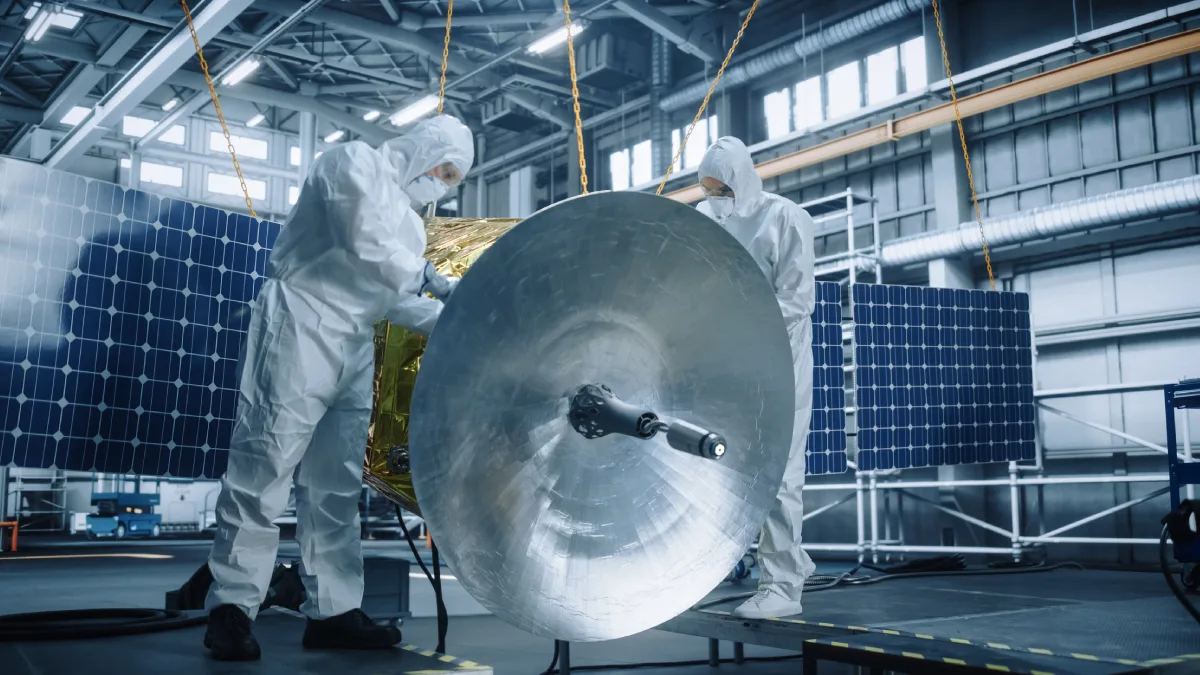
The facility will begin limited deliveries for Telesat’s Lightspeed constellation later this year before reaching full production in 2027. Built around MDA’s adaptable Aurora platform, the factory aims to drive further orders by churning out both broadband and direct-to-device (D2D) satellites for major clients like Globalstar.

CEO Matt Desch is finally playing the valuation game, signaling openness to mergers or alliances to command the premium multiples currently assigned to direct-to-device hype. Beyond the spectrum positioning, the firm operates as the baseline fallback network for aviation and government infrastructure, offering an embedded hedge against broader market exuberance.

This hybrid network utilizes Q- and V-band links to deliver speeds of 144 Gbps in LEO, while MEO optical links aim to provide throughput up to 6 Tbps. With a projected deployment start in late 2027, the system targets a capped capacity of roughly 100,000 customers, distinguishing itself from the broader consumer focus of Amazon Leo.