Space is a Network.
Constellations is Your Connection.

Digital Infrastructure

Al Tadros of Redwire discusses why orbital data centers are quickly becoming a realistic architectural possibility, what’s driving that shift, the engineering challenges we still need to solve and how autonomous operations are redefining the future of space infrastructure.
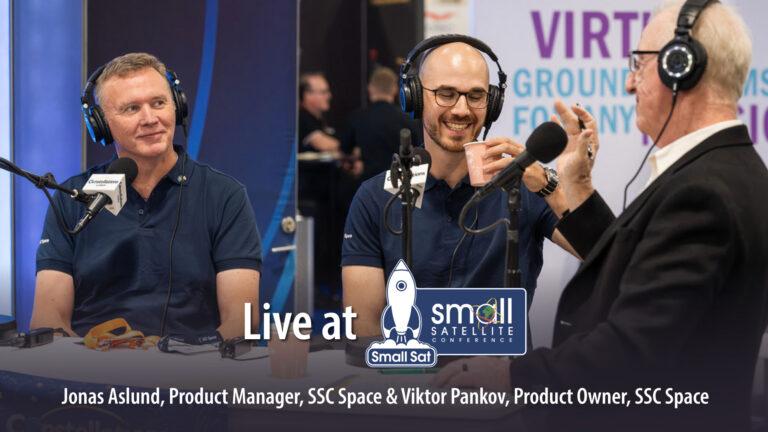

Live from the show floor of Smallsat, Constellations is joined by Jonas Åslund and Viktor Pankov of SSC Space, who dive into one of the most important shifts happening across the sector: the emergence of a new space infrastructure built on global ground networks.

As AI pushes terrestrial data centers toward their power and capacity limits, researchers and industry leaders are exploring orbital data centers as a potential long-term solution for scalable, resilient computing despite significant technical and economic hurdles.

Missile defense systems and autonomous UAVs are converging around a shared need for tighter data integration, AI-driven decision-making and multi-layered network architectures to operate effectively in contested environments. Future resilience will depend on unifying sensing, communication and control into a single intelligent system, while overcoming persistent challenges in interoperability, policy and real-time coordination.

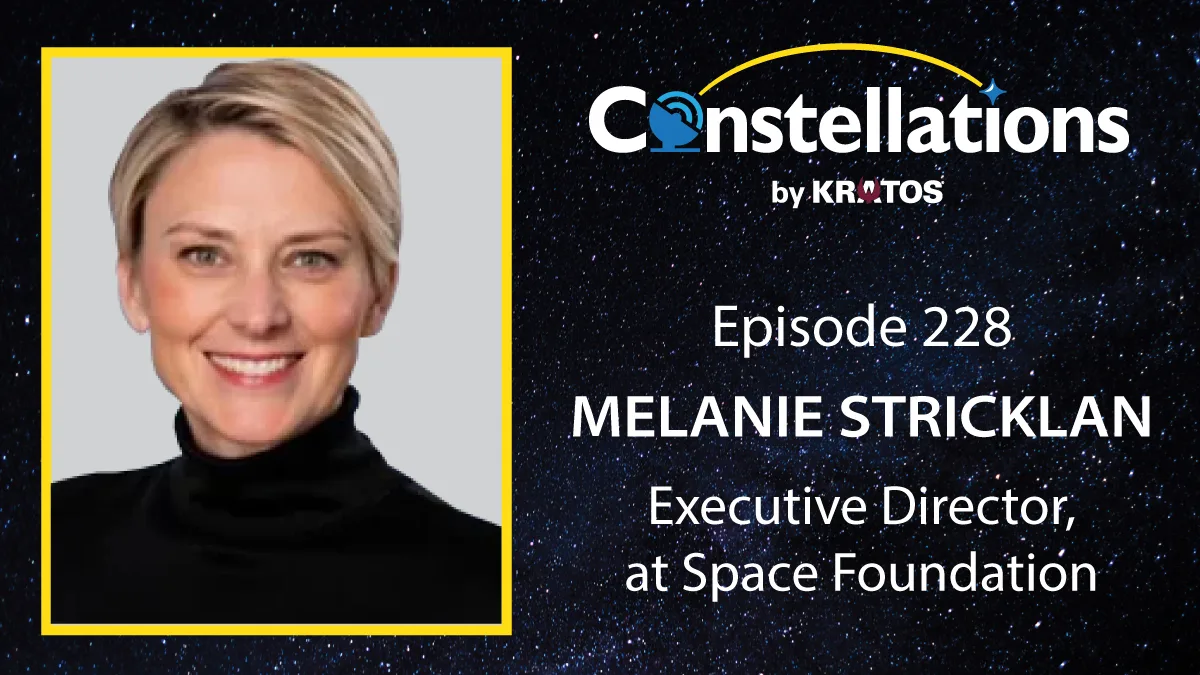
Melanie Stricklan of Space Foundation examines the growing complexity of modern space operations, showing how orchestrating space, ground, and cloud systems—and tackling issues like semantic misalignment and AI-driven autonomy—is redefining how missions succeed.

By moving AI processing directly onto satellites, the industry is shifting from slow, massive data dumps to real-time “event” detection at the edge. This evolution allows orbital sensors to filter through the noise and send instant, actionable insights—like a wildfire alert—instead of making analysts wait hours for a full downlink.

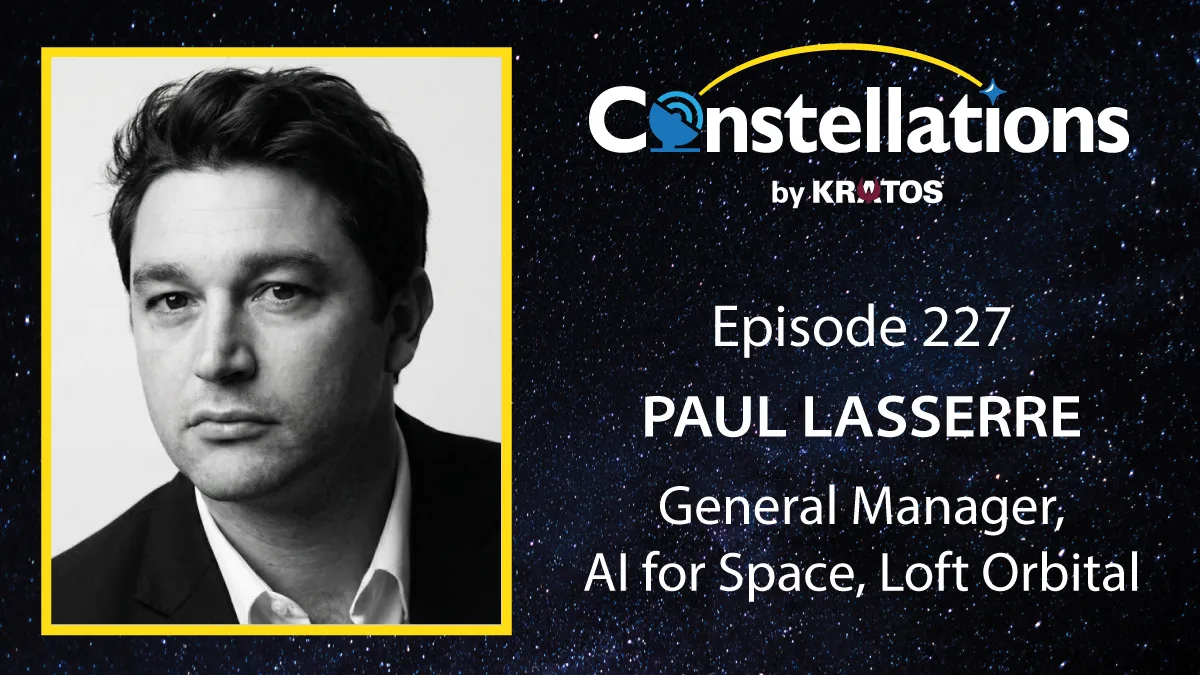
Paul Lasserre of Loft Orbital discusses how AI is quietly expanding its role in determining what satellites notice, flag and send home and weighs how this progression could reshape long-standing assumptions.

Europe is strengthening its sovereign space capabilities, but its path to becoming a true space power will depend on balancing greater autonomy with multinational cooperation and overcoming political, industrial and operational constraints.

Artificial Intelligence & Analytics

AI Becomes Mission Control

AI is emerging as a critical tool for more resilient space operations, helping operators manage growing constellations, detect cyber threats, avoid collisions, predict failures and enable greater spacecraft autonomy.

Decades of satellite missions have generated vast amounts of dark data that remain largely unprocessed due to technical complexity, limited funding and a growing gap between data collection and analysis capabilities. Unlocking this data will require AI, improved onboard processing, open-source collaboration and stronger investment in academia and national labs to turn archived information into scientific, commercial and strategic value.

Advances in AI and onboard computing are gradually enabling satellites to take on more autonomous functions, particularly in processing data and managing operations in orbit. While autonomy can improve efficiency, technical constraints, connectivity limits and policy concerns mean this shift will be incremental rather than immediate.

Melanie Stricklan of Space Foundation examines the growing complexity of modern space operations, showing how orchestrating space, ground, and cloud systems-and tackling issues like semantic misalignment and AI-driven autonomy-is redefining how missions succeed.

Deployment of operational optical inter-satellite links is reshaping multi-orbit data flow by enabling continuous, low-latency, cloud-like routing in space. Kepler Communications CEO Mina Mitry discusses how optical relays, on-orbit processing and interoperability standards are laying the foundation for scalable, real-time space networking.

Jesús Bernal Allende joins Constellations to explore how existing space law is being applied as autonomous systems take on a larger share of spacecraft decision making.

As orbital activity accelerates, the challenge for space situational awareness is shifting from collecting more data to ensuring its accuracy, interoperability and trustworthiness through advanced data fusion and greater collaboration among operators, governments and commercial providers.

Cloud Computing

Certifiable

The approval of a certification program for the DIFI 1.1 standard marks a key step toward greater interoperability and trust in digital IF equipment, enabling both standardized performance assurance and independent third-party validation. As virtualization and cloud-based ground systems expand, DIFI compliance and feature-based certification will make it easier for organizations to specify, deploy and scale interoperable solutions.

The satellite ground segment is evolving into a software-defined, cloud-native control layer that enables seamless integration with terrestrial 5G networks. Andrew Cavalier of ABI Research discusses the role of virtualization, AI-driven orchestration, and new consumption-based models in scaling NTN services and overcoming structural barriers to commercial deployment.

Routing this data directly into public clouds allows operators to clear the massive hurdle of machine learning ingestion while avoiding prohibitive egress fees. As NGSO constellations and vHTS architectures expand, applying these localized algorithms across deployed sensors will become mandatory for maintaining situational dominance and service quality.

Despite a deployment of over 650 satellites, the service currently faces brief visibility outages and a limited aggregate downstream capacity of approximately 10Gbit/s. To ensure a successful rollout, mobile network operators must utilize detailed analytics to align these technical realities with realistic user expectations and pricing models.