




Space is a Network.
Constellations is Your Connection.

Defense & Security

Dr. Kelly Backes of MITRE discusses how the space industry can prepare for the quantum era and which technologies have the greatest impact on the security and resilience of future space systems.

Satellite Connectivity & Technology

Sovereignty Without Borders

As the global space economy evolves, national autonomy is shifting from simple hardware ownership toward total control over the operational stack, including data and networks. Industry experts suggest that hybrid architectures are now the most pragmatic way for nations to maintain security and decision-making authority in an increasingly interconnected orbital landscape.
As threat actors shift from attacking perimeters to exploiting the implicit trust within CI/CD pipelines, the space sector faces an increasingly sophisticated software supply chain risk. This latest briefing analyzes how malicious libraries and compromised developer tools are bypassing traditional defenses to threaten mission-critical infrastructure and overall mission assurance.

Repeated GEO close approaches—led by Russia’s Luch satellites—are now seen as deliberate, not anomalous. They’re driving persistent SSA/SDA and a shift to more resilient, software-defined ground and space systems.

Constellations talked to Dr. Peter Garretson of the American Foreign Policy Council about how allied and commercial systems factor into deterrence, where current space strategies may be too narrowly focused, and which mission areas and technologies could quietly define space operations in the 2030s.

Ahead of the Middle East Space Conference, the map of the global space economy is being redrawn. From Oman’s Etlaq spaceport to Saudi Arabia’s emerging geospatial dominance to the engineering ecosystems in the UAE and Türkiye, the road to space increasingly runs through the Middle East.

In a year defined by Golden Dome, Starlink’s unprecedented scale, direct-to-device disruption and rising demands for sovereignty, 2025 marked a strategic inflection point. Quilty Space take a look back at the year’s milestones.

Satellite direct-to-device (D2D) technology—originally designed for commercial connectivity—is emerging as a valuable complement to military communications, offering resilient, low-bandwidth links for logistics, IoT, and situational awareness in contested environments. How battle-tested commercial systems are evolving to meet defense needs, from PNT-enabled sensors to S-band architectures that can operate “hidden in plain sight.”

With orbital traffic surging and debris proliferating, integrating real-time satellite tracking, space weather monitoring and threat characterization has become essential for both civil safety and national security. Investing in dual-use sensor networks and advanced analytics will empower nations to detect adversary intent, maintain freedom of action and secure the next decade of space assets.

With satellites facing growing cyber and physical threats, AI-driven intrusion detection systems are now enabling real-time monitoring and autonomous response in orbit. These intelligent platforms strengthen resilience by identifying anomalies faster and protecting spacecraft integrity.

Timely delivery, cost efficiency, and technical competitiveness will be key to securing contracts under this ambitious initiative. Christopher Baugh and Dallas Kasaboski unpack the strategic and operational hurdles satellite players must overcome.

Kratos and industry leaders showcased how telco/satcom integration can deliver uninterrupted data access during disasters. Their award-winning demo at DTW Ignite proves that hybrid networks aren’t just possible—they’re lifesaving. This Catalyst project sets a new benchmark for resilient, mission-critical communications. It’s a blueprint for how technology can serve humanity when it matters most.

The alliance’s new Commercial Space Strategy aims to integrate private sector space capabilities for collective security. This policy focuses on making commercial space assets interoperable among the 32 member nations and with their own government satellites. However, it leaves open questions about future budgets and how the alliance will secure priority access to these commercial services during a crisis.

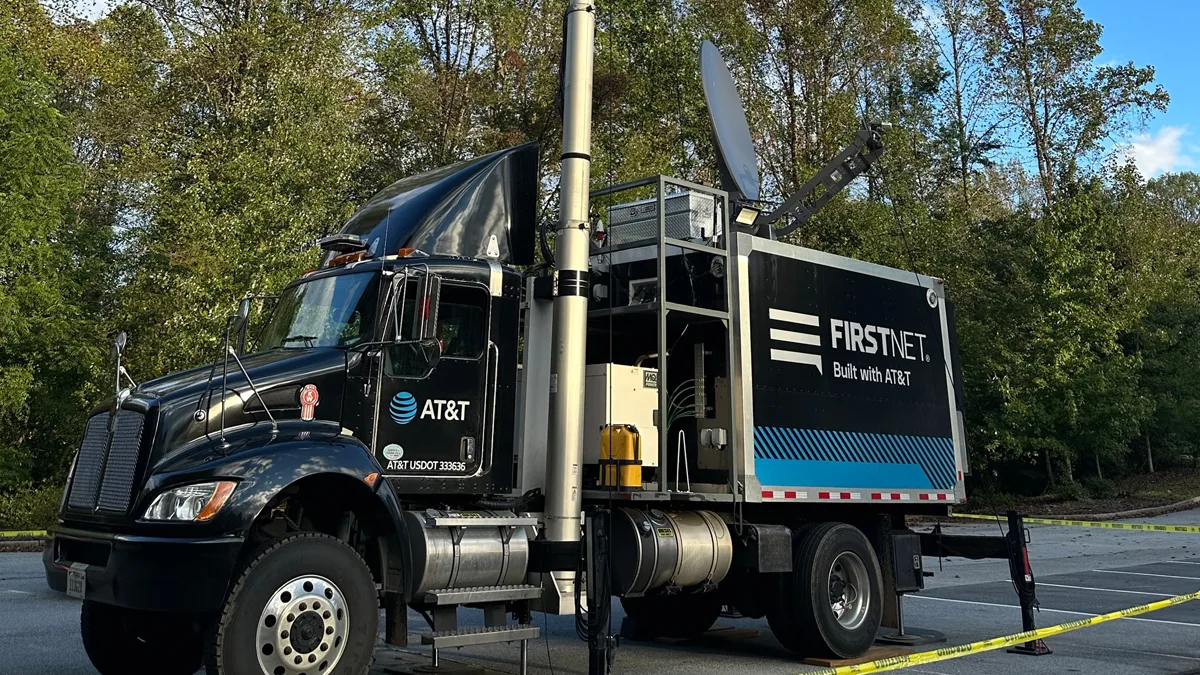
One of the first casualties of a natural disaster is the network and communications infrastructure needed for a coordinated, collaborative, and effective response. Peter Kibutu of TPP and Mohammad Baig of AT&T explain how D2D satellite connectivity can be a new tool in delivering ubiquitous connectivity to emergency and disaster response personnel when the lights go out.

While technically sound, sovereign constellations often face economic hurdles from underused global capacity versus focused national needs. International partnerships become vital for optimizing these LEO systems and ensuring their long-term financial viability.

The development of space as a sovereign domain is expanding. While space is inherently international, balancing the need for both security and collaboration can make it difficult for multi-national players to work together, and international regulation is one step on the path towards making space safe and sustainable for everyone.

The recent rise of small satellites that can be produced and launched quickly, in direct contrast to a space economy that has privileged unique, complex and expensive satellites for decades. Constellations spoke to space industry veteran Dr. David Hardy from TC Space Consulting about the industry-wide shift towards small, modular satellites.

Digital Transformation

A Digital Path Forward for WGS

With a focus on enabling next-generation interoperability and capabilities, the initiative aims to align certification standards with emerging technologies like electronically steerable antennas. This effort is a crucial step toward enhancing the resilience and effectiveness of mission-critical military communications.

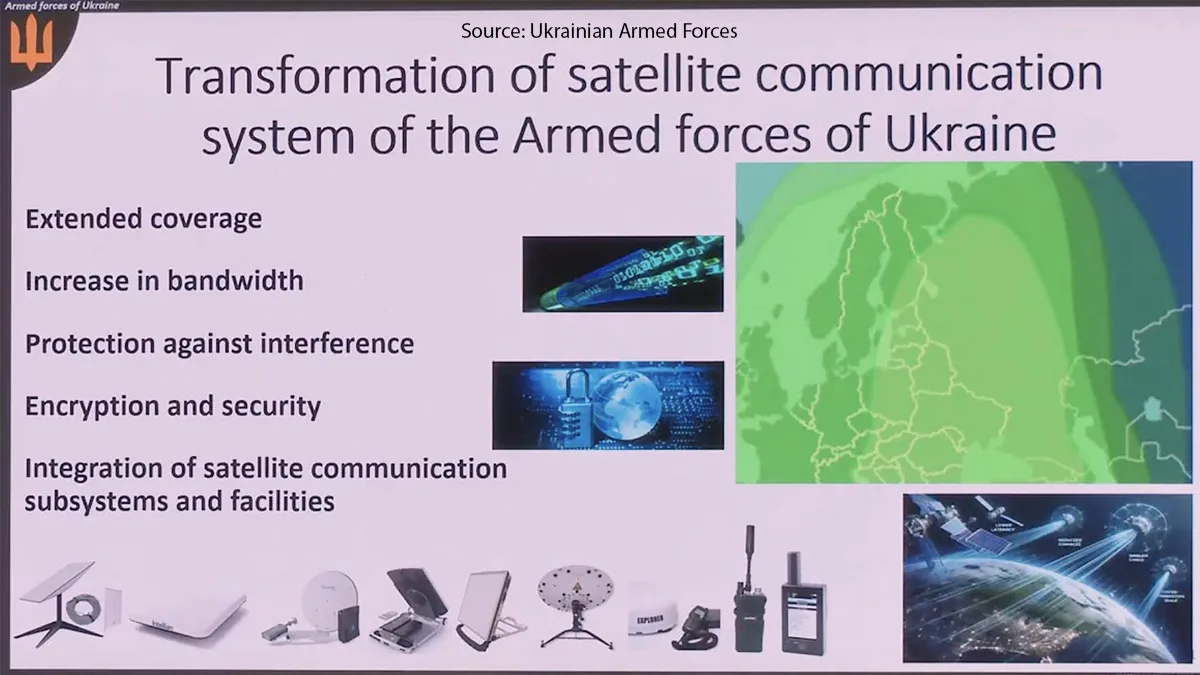
The war in Ukraine has highlighted the critical importance space and satellite services play in NATO and Europe’s defense and deterrence capabilities. NATO Support and Procurement Agency, Novaspace and SES Space & Defense examine how the conflict is shaping the future of NATO’s satcom capability requirements.

The growing amount of debris and meteorites in orbit put satellites at risk of collisions, therefore causing potential disruption to service providers. Subject matter experts define the challenges in anomaly detection and attribution when it comes to satellite failures.

The 5th Annual Value of Space Summit brought global leaders to Colorado Springs for critical discussions on the future of space security. Key takeaways highlighted the need for increased collaboration across government, industry, and academia to address growing cybersecurity threats. As space systems continue to evolve, the focus on threat intelligence and proactive defense strategies remains paramount.

This year has seen a surge in cyber and non-cyber threats targeting global space systems as space-faring nations race to secure dominance. The report highlights critical challenges, including the exploitation of zero-day vulnerabilities, ransomware attacks, and potential risks to space infrastructure due to advanced malware.

Novaspace consultant Gabriel Deville discusses the current state and outlook of Space Situational Awareness, the $3 billion government investment in in-orbit services, crucial for space operations' flexibility, sustainability, and safety, and the market's need for a substantial customer base before it becomes a true buyer's market.

When natural disasters strike and terrestrial networks are wiped out, first responders turn to satellite connectivity solutions to successfully execute search and rescue and other lifesaving operations. How can the emergence of software-defined satellite ground networks play in transforming satellite services and enhancing disaster response efforts?

Artificial Intelligence & Analytics

AI Underpins the Pentagon’s Space Ambitions

The U.S. Department of Defense has big ambitions for space, and making those plans a reality will depend on its ability to harness emerging data management and analysis technologies, including artificial intelligence.

Standardized cybersecurity frameworks are giving the space industry a common language to share threat intelligence, accelerate defenses and ultimately enable machine-to-machine protection against sophisticated attacks.

Former U.S. Air Force and Space Force General Counsel Peter Beshar explains why decades-old space treaties must evolve to address commercial space, lunar resource extraction and emerging security threats in an increasingly contested orbital environment.

Boston Consulting Group’s Alessio Bonucci explains why space sovereignty is reshaping global competition, with launch capability, industrial capacity and defense investment emerging as the defining factors in the next generation of national space strategies.

Colonel Eddie Gutierrez details how Mission Delta 3 is accelerating electronic warfare capabilities to keep pace with rapidly evolving space threats. He discusses Guardian readiness, improved targeting and the need for close coordination among operators, acquisition teams and industry to deliver effective EW systems at the speed of the mission.

Heather Pringle explores how emerging technologies, cross-sector collaboration and evolving mission design are shaping strategic advantage as activity expands into cislunar and deep-space environments.

As the United States reshapes its military space posture for a more contested orbital environment, it is emphasizing proliferated satellite architectures, closer integration with commercial industry and more flexible acquisition strategies to sustain operational advantage. At the same time, analysts warn that long-term strategic planning, industrial capacity in space and clearer capability signals to industry will be critical to ensuring resilience, deterrence and mission effectiveness in future conflicts.

In today’s threat environment, electronic warfare is as consequential as kinetic effects. Resilience is a going concern not only for national security space but for the commercial assets that underlie modern critical infrastructure.

AI is accelerating malware development, vulnerability discovery, and deepfake-driven social engineering—without needing fully autonomous attacks. For commercial space, this means faster, tailored intrusions that can pivot from cloud-based enterprise networks into mission-critical ground and operations systems.

The attribution of this failure to a micrometeorite strike bears a skeptical resemblance to the Inmarsat-6 F2 incident, where insurance underwriters questioned similar claims regarding an Airbus-built bus. Considering the tumbling and power loss issues previously suffered by its twin, SpainSat NG 1, it is worth scrutinizing whether this is truly bad luck with space debris or a recurring systemic fault in the satellite’s design.

GPS expert Lisa Dyer talks about why resilience, interoperability and innovation across multiple GNSS constellations are becoming essential for both national security and commerce.

Germany has pledged €35 billion for military space programs through 2030, putting a national broadband constellation on the table even as Berlin remains a major Iris2 contributor. The move raises questions about duplication versus interoperability between national and EU systems and underscores the push to balance sovereignty with European cooperation.

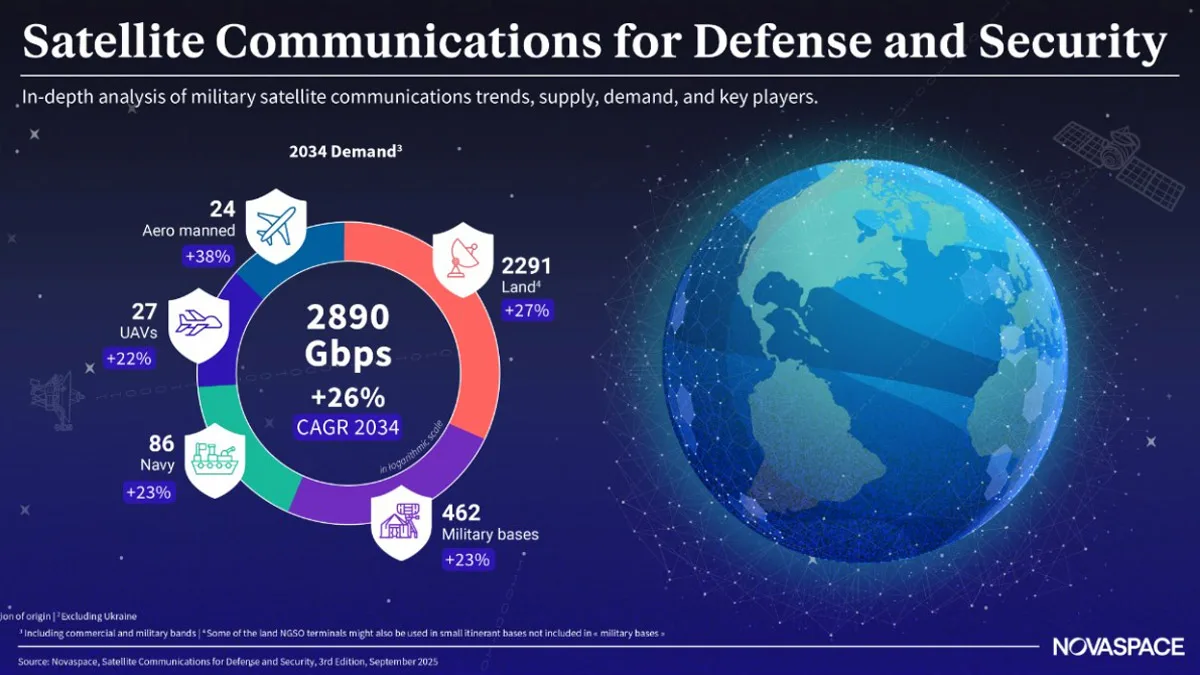
Rising global tensions and the need for resilient connectivity are driving a dramatic pivot from traditional geostationary satellites to more agile low-Earth orbit constellations. With demand growing at 26% annually, this transformation represents one of the fastest-growing segments in the defense technology sector.

Ahead of World Space Business Week, Constellations and Novaspace released a limited podcast series, featuring five space leaders. Each executive answered a handful of questions about the state of the industry, what drives their companies, and the challenges that lie ahead. Read our favorite quotes and takeaways from each conversation.

As satellite operators increasingly rely on Ground Station-as-a-Service (GSaaS) models, new vulnerabilities are emerging at the intersection of cloud and space infrastructure. Strengthening GSaaS security is becoming essential to protect data integrity, prevent signal hijacking and ensure mission resilience.

Multiple layers of resiliency are required to build a space environment that is tactically responsive. Jiral Shah, VP of Business Development at Gravitics, described the role of pre-positioned assets in orbit and the importance of mobility and power in space operations. Read our top four takeaways.

On May 13, 2025, the Interlock ransomware group attacked National Defense Corporation (NDC) and its subsidiary AMTEC, potentially exposing sensitive supply chain data. This incident underscores that ransomware is a national security concern with implications for the commercial space sector and the Defense Industrial Base, emphasizing the need for robust cybersecurity across the entire supplier ecosystem.

Initiatives like China’s Spacesail and Europe’s IRIS2 are emerging as key players, aiming to build sovereign alternatives to existing dominant systems. These developments underscore the increasing importance of space capabilities for national defense and economic interests worldwide.

Smallsat proliferation in LEO has significantly disrupted the satellite industry, and now they’re moving into the higher orbits. Read the top four takeaways from our discussion with Astranis CEO John Gedmark on their groundbreaking MicroGEO technology.

A recent tabletop exercise envisioned cybersecurity challenges in a 2035 lunar mining facility and orbital lab. The findings underscore the importance of collaboration and innovation to safeguard emerging space activities.

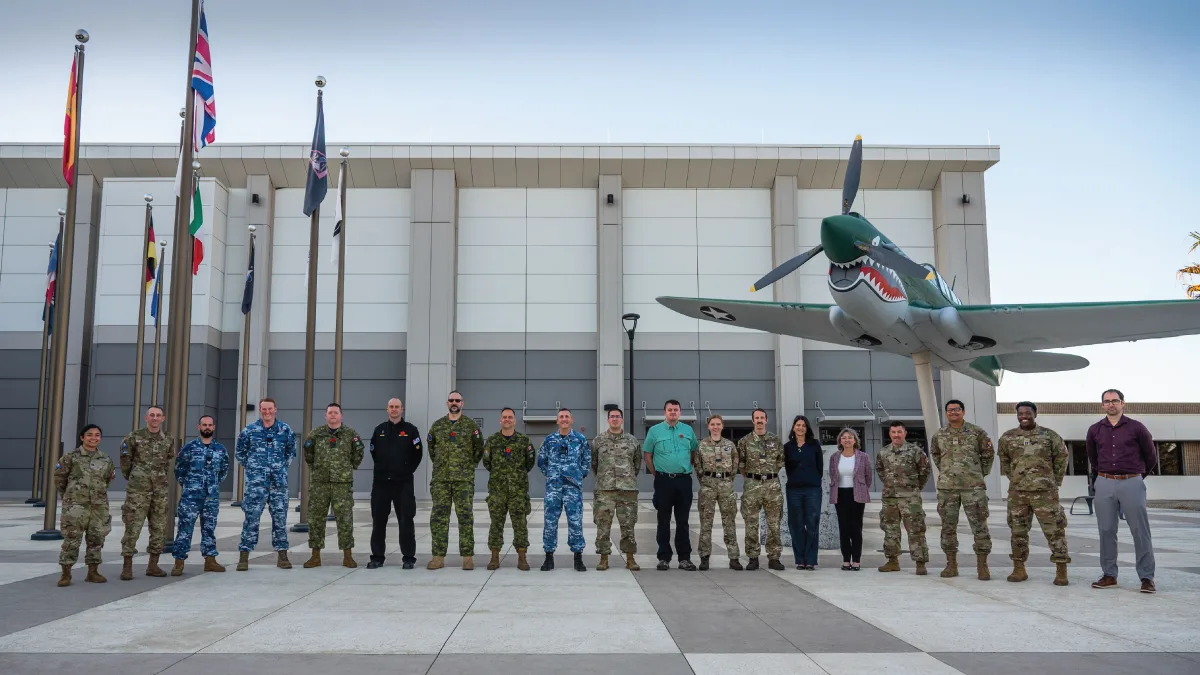
The militaries of France, Germany, and New Zealand have joined the U.S. and other nations as part of Operation Olympic Defender. Much of the initial mission appears to focus on SSA and information sharing, raising an interesting question: what role, if any, will industry partners play in Olympic Defender?

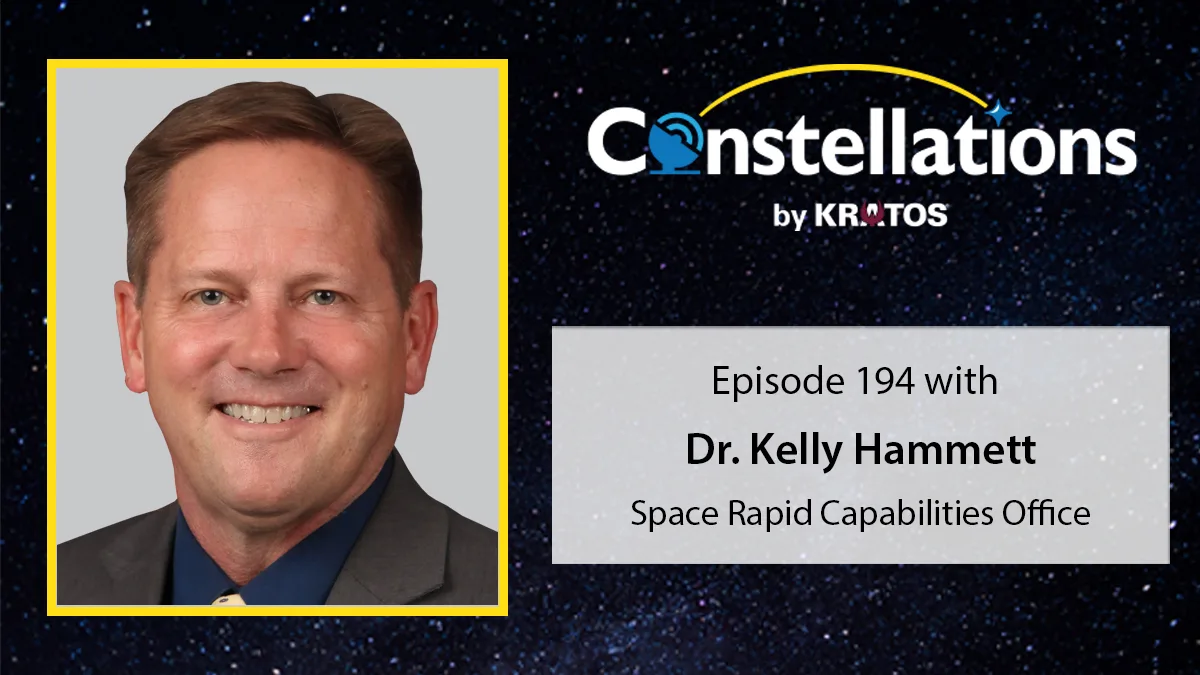
Constellations spoke with Dr. Kelly Hammett about the crucial role of the Space Rapid Capabilities Office (Space RCO), the challenge of delivering new capabilities quickly, and what the USSF is doing about the rise of adversarial threats in space. Read the major takeaways from the conversation now.

In medical emergencies, the time spent transporting a patient to receive care can significantly impact their outcome. To get specialty care to patients more quickly, the Mayo Clinic, OPTAC-X and Kymeta are running a pilot program that brings physicians into the field virtually via satellite-connected telemedicine solutions.

On the Constellations Podcast, we explore the Space Rapid Capabilities Office (Space RCO) and its mission to deliver rapid, combat-ready space and ground systems. Hear about key programs like SCAR and R2C2, leveraging commercial technologies, enhancing space operations, and collaboration with international partners to support the Space RCO.

OSINT, built from publicly available data, empowers timely, actionable intelligence essential in the dynamic landscape of space. With escalating satellite activity and a more contested space environment, OSINT provides crucial insights to navigate emerging challenges in space safety and security.

Constellations spoke with Ron Faith, President and CEO of RBC Signals, about how smallsat operators can overcome common obstacles on the road to launch, and the changing role of GSaaS in defense infrastructure.

TIDRONE campaign targets Taiwan’s satellite and drone industries, exposing critical vulnerabilities in the space supply chain. Trend Micro and Acronis report coordinated cyber espionage aimed at high-value military and aerospace technology. The campaign reveals an alarming overlap between drone production and space operations, underscoring the escalating cyber threat to global defense sectors.

As GSaaS continues to evolve, cybersecurity remains a critical concern, with hacking, malware, and vulnerabilities posing significant risks. Providers must balance flexibility with the need for strong encryption and adherence to best practices to safeguard sensitive data.

As nations increase their reliance on space-based assets, commercial players find themselves at the forefront of innovation and strategic partnerships. Discover the key opportunities and challenges as the commercial industry navigates its critical role in global security.

While the so-called “kill phase” of missile defense is critical, recent events demonstrate that defeating low-cost missiles with multimillion-dollar interceptors is not sustainable. There is growing recognition of the need for technology innovation, from directed energy to enhanced sensing and integration between the land, sea, air and space-based layers of the enterprise.

Colonel Michael Christensen discusses the importance of modeling and simulation in stress-testing space defense systems before construction begins.

In the face of evolving space dynamics and the military’s strategic embrace of orbital diversity, phased arrays are emerging as the preferred antenna technology.

Space ISAC’s review of 2026 threats examines how escalating geopolitical conflict, cyberattacks, AI-enabled threats, electronic warfare, supply chain vulnerabilities and increasingly contested orbits are reshaping the security and resilience of the global space sector.

As rivals build resilient positioning, navigation and timing (PNT) architectures beyond GPS, experts warn the United States is falling behind due to fragmented leadership, a lack of a national backup system and slow government action.

BCG Associate Director for Aerospace and Defense Alessio Bonucci looks at how countries are rethinking space sovereignty amid tightening industrial capacity, new geopolitical realities and evolving partnerships.

Missile defense systems and autonomous UAVs are converging around a shared need for tighter data integration, AI-driven decision-making and multi-layered network architectures to operate effectively in contested environments. Future resilience will depend on unifying sensing, communication and control into a single intelligent system, while overcoming persistent challenges in interoperability, policy and real-time coordination.

Rising geopolitical tensions and supply chain risks are driving nations to invest heavily in sovereign space capabilities, with thousands of government-backed satellites planned to ensure independent access, resilience and strategic advantage in both military and civilian domains. But while sovereignty strengthens national security, experts warn that fragmentation, interoperability challenges and overreliance on single providers could undermine efficiency and resilience unless balanced with smart alliances and coordinated investment.

Following lessons learned from the conflict in Ukraine, the 32-nation alliance is moving beyond traditional geostationary leases to integrate LEO, MEO, and HEO constellations for more resilient connectivity. This strategic evolution includes a revamped procurement policy designed to bypass bureaucracy and potentially return NATO to owning its own space-based transponders by 2034.

Steve Bochinger of Novaspace discusses the space sector development in the Middle East including the vision for space, investment opportunities, strategic partnerships and drive for sovereignty.

A threat actor known as Zestix recently used valid credentials stripped from infected machines to breach roughly 50 organizations, including a Turkish aerospace manufacturer and an Indonesian satellite operator. Instead of using complex exploits, these attackers simply logged in to steal military intellectual property and technical documentation, proving that basic identity hygiene remains a persistent failure point.

A new study reveals that many GEO satellites still transmit highly sensitive data without encryption, exposing government, commercial and critical-infrastructure communications to easy interception with low-cost equipment. Experts warn that fixing the problem will require not just stronger encryption, but deeper architectural changes and new platforms to provide more secure, sovereign communications layers.

This research marks a strategic pivot from traditional ground-based interference to adaptive, networked architectures that mirror the design of the networks they target. While currently a simulation, the data points to a future where commercial operators must defend against region-wide, persistent electronic warfare.

The campaign uses convincing recruiter profiles and malicious PDFs to deliver multi-stage malware that steals intellectual property and establishes long-term access. This blending of social engineering with developer-tool compromise raises direct risks for satellite communications firms, component manufacturers, and space-sector integrators.

Satellites are becoming more maneuverable and agile. As space becomes an increasingly contested landscape, resilience across orbital regimes will be paramount. Read our top four takeaways from our conversation with Tom Campbell, president of space missions at Redwire Space.

Business Strategy

What’s in Store at VOSS

VOSS VI brings together global partners for expanded Five Eyes–inclusive classified briefings and immersive “Lunar Lifeline” tabletop exercises, highlighting the critical role of collaboration in economic growth and workforce innovation. Attendees will gain actionable intelligence, forge new strategic alliances in the Member Showcase, and engage emerging talent through hands-on crisis simulations and community events.

Geopolitical tensions, state-sponsored espionage, and hacktivist campaigns drove a 118 percent surge in space-related cyber incidents between January and August 2025. Simultaneously, GNSS jamming, signal hijacking, and dynamic on-orbit maneuvers reveal how electronic warfare and proximity operations compound vulnerabilities across critical space infrastructure.

While SpaceX continues to dominate the launch landscape, other companies are getting creative in the way they get to orbit, from small rocket launches to reusable satellite buses. As Europe claims greater sovereignty over its space activities and launch becomes a more sustainable process, how the industry thinks about space access is changing.

Network Architecture & Infrastructure

Moving the Internet to Space

U.S. Department of Defense spokesperson Laura McAndrews and Rivada senior vice president Brian Carney explain the key components of an “outernet,” examine the benefits it will deliver to the DoD and discuss the role industry will play in making the concept a reality.

European nations are looking to expand their sovereign space capabilities while also collaborating with other European allies and NATO to strengthen the EU’s collective posture in the domain. Representatives from NATO and ICEYE discuss what is behind this growing space sovereignty trend and delve into the satellite capabilities European nations seek to acquire.

China and Russia have been developing and practicing techniques, tactics and procedures that are reshaping the operating environment in space and rapidly closing the capability gap in on-orbit maneuver warfare.

This episode explores the future of Position, Navigation, and Timing (PNT) with Xairos CEO David Mitlyng, who outlines the challenges of moving beyond our deep reliance on GPS. He explains how quantum time transfer provides a secure and highly precise alternative, using entangled photons in systems ready for integration with current satellite and ground infrastructure.

Experts from The Aerospace Corporation, Secured Quantum Services, and OrbiSky examine the threats quantum cyberattacks pose against satellites, how operators can prepare their systems to defend against quantum attacks and who is ahead in the quantum computing race.

In March, the Space Force awarded four pilot contracts of the Commercial Augmentation Space Reserve (CASR) program, which will integrate commercial capabilities into military infrastructure. Constellations spoke with Colonel Richard Kniseley, Senior Materiel Leader at the Commercial Space Office (COMSO) at Space Systems Command, to learn more.

Colonel Richard Kniseley from the Space Systems Command's Commercial Space Office discusses the U.S. military's strategy for leveraging commercial space capabilities. Col. Kniseley highlights the "buy before build" approach, the role of commercial services in military readiness, and the Commercial Augmentation Space Reserve (CASR) program. Learn how industry partnerships are shaping space domain awareness and driving innovation in defense.

APT41’s cyber espionage strikes at the heart of aerospace operational technology. The attackers exploited VPN vulnerabilities to infiltrate critical supply chains, deploying stealth malware and lateral movement techniques. The incident underscores the urgent need for robust cybersecurity measures to safeguard aerospace and aviation manufacturing operations.

In 2023, the U.S. Department of Defense awarded 16 companies IDIQ contracts for Proliferated LEO Satellite-Based Services. Just 15 months later, the contract expanded in scope and value, revolutionizing DoD access to LEO services and driving innovation.

Building on the success of VICTUS NOX, the mission will focus on rendezvous and proximity operations using cutting-edge commercial technologies. With partners Rocket Lab and True Anomaly, the USSF continues to push the boundaries of speed and operational readiness in a contested space domain.

In this episode, we explore the shift from large, custom satellites to smaller, standardized space vehicles and the need for rapid satellite launches. Our guest highlights how commercial space drives faster innovation and why swift satellite deployment is essential for the future of modern warfare and space technology.

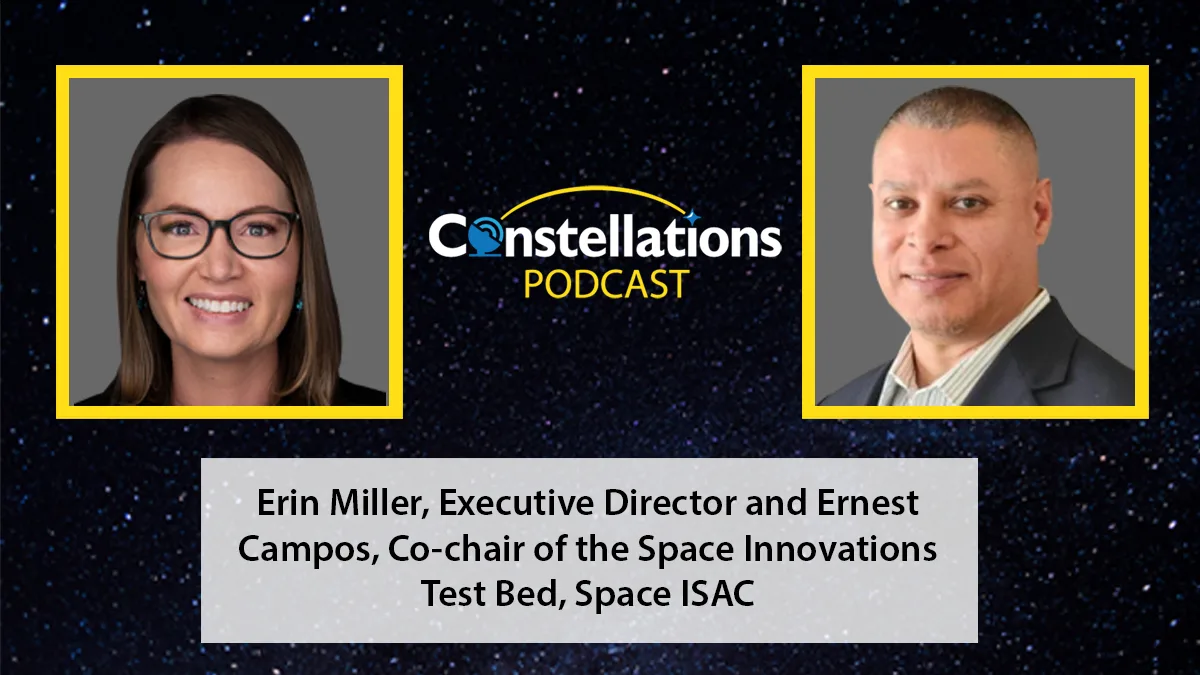
Erin Miller, Executive Director, Space ISAC, and Ernest Campos, Co-chair of the Space Innovations Test Bed (SITB) for Space ISAC and Senior Account Executive for Space Programs at AMERICAN SYSTEMS Corporation talk about the commercial industry facing an onslaught of cyber-attacks and other threats and ways that the Space ISAC is enabling a resource that can help.

With state-sponsored intrusions and open-source vulnerabilities threatening the space supply chain, cybersecurity standards must be strengthened. Collaboration among partners will be essential in mitigating risks and ensuring long-term resilience.

Cyberattacks against satellite infrastructure has increased by 300 percent over the last five years. One attack method that is being employed by cyber-adversaries is the Distributed Denial of Service attack. Explore the threat DDoS attacks pose to satellite and ground segment operators, the mitigation techniques they can deploy to bolster their defense, as well as the challenges they must overcome to effectively secure their networks.
Malicious cyber actors are persistently pursuing novel attack methods to disrupt commercial, military and government space assets. Industry is responding by exploring ZTA standardization to harden space systems’ cybersecurity postures, while simultaneously running tabletop wargaming exercises to prepare and ready attack mitigation responses.


Commercially monitoring satellite signals provides valuable information about military activities, as seen in the Ukraine conflict. Changes in satellite communication patterns can predict on-the-ground movements and reveal hidden transmitter locations, enhancing our understanding of modern warfare.

Constellations spoke with Col. Michael Christensen, Director of Test and Evaluation of the U.S. Space Force, about the pioneering efforts to ensure the space enterprise can counteract emerging threats and maintain its strategic position in space.

The U.S. Space Force took another step to improve industry collaboration with the release of its Commercial Space Strategy, highlighting criteria that will be used in evaluating industry proposals for technology solutions going forward.