



Space is a Network.
Constellations is Your Connection.

Policy & Regulation

Jesús Bernal Allende joins Constellations to explore how existing space law is being applied as autonomous systems take on a larger share of spacecraft decision making.

As interest in nuclear power for space accelerates, experts examine how advanced reactors could enable sustained lunar operations while introducing new challenges around cybersecurity, autonomy, proliferation, and governance in the emerging cislunar economy.

Satellite Connectivity & Technology

Sovereignty Without Borders

As the global space economy evolves, national autonomy is shifting from simple hardware ownership toward total control over the operational stack, including data and networks. Industry experts suggest that hybrid architectures are now the most pragmatic way for nations to maintain security and decision-making authority in an increasingly interconnected orbital landscape.

The SpaceRise consortium—led by industry heavyweights SES, Eutelsat, and Hispasat—has finally hammered out the compromises needed to secure a multi-billion euro green light for the secure multi-orbit network. While the roadmap includes some technical concessions to hit aggressive 2030 deadlines, the deal marks a massive leap forward for Europe’s strategic autonomy in space-based communications.

CEO Matt Desch is finally playing the valuation game, signaling openness to mergers or alliances to command the premium multiples currently assigned to direct-to-device hype. Beyond the spectrum positioning, the firm operates as the baseline fallback network for aviation and government infrastructure, offering an embedded hedge against broader market exuberance.

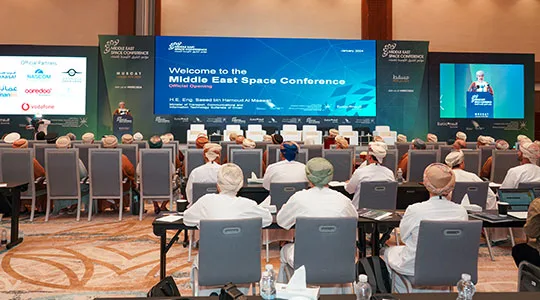
Steve Bochinger of Novaspace discusses the space sector development in the Middle East including the vision for space, investment opportunities, strategic partnerships and drive for sovereignty.

Germany has pledged €35 billion for military space programs through 2030, putting a national broadband constellation on the table even as Berlin remains a major Iris2 contributor. The move raises questions about duplication versus interoperability between national and EU systems and underscores the push to balance sovereignty with European cooperation.

Geopolitical tensions, state-sponsored espionage, and hacktivist campaigns drove a 118 percent surge in space-related cyber incidents between January and August 2025. Simultaneously, GNSS jamming, signal hijacking, and dynamic on-orbit maneuvers reveal how electronic warfare and proximity operations compound vulnerabilities across critical space infrastructure.

The satellite industry is positioned play a pivotal role in the U.S. Broadband Equity, Access and Deployment (BEAD) program, which aims to close the digital divide in underserved and rural areas. Can satellite compete with fiber providers?

European nations are looking to expand their sovereign space capabilities while also collaborating with other European allies and NATO to strengthen the EU’s collective posture in the domain. Representatives from NATO and ICEYE discuss what is behind this growing space sovereignty trend and delve into the satellite capabilities European nations seek to acquire.

These networks offer high-speed, low-latency internet, bridging the digital divide and bringing opportunities to underserved regions. By complementing terrestrial infrastructure, LEO constellations are poised to reshape how we connect and communicate.

The development of space as a sovereign domain is expanding. While space is inherently international, balancing the need for both security and collaboration can make it difficult for multi-national players to work together, and international regulation is one step on the path towards making space safe and sustainable for everyone.

Colonel Richard Kniseley from the Space Systems Command's Commercial Space Office discusses the U.S. military's strategy for leveraging commercial space capabilities. Col. Kniseley highlights the "buy before build" approach, the role of commercial services in military readiness, and the Commercial Augmentation Space Reserve (CASR) program. Learn how industry partnerships are shaping space domain awareness and driving innovation in defense.

Two experts from the International Telecommunications Union share their insights on the role of regulation in the rapidly growing and evolving small satellite world.

Novaspace consultant Gabriel Deville discusses the current state and outlook of Space Situational Awareness, the $3 billion government investment in in-orbit services, crucial for space operations' flexibility, sustainability, and safety, and the market's need for a substantial customer base before it becomes a true buyer's market.

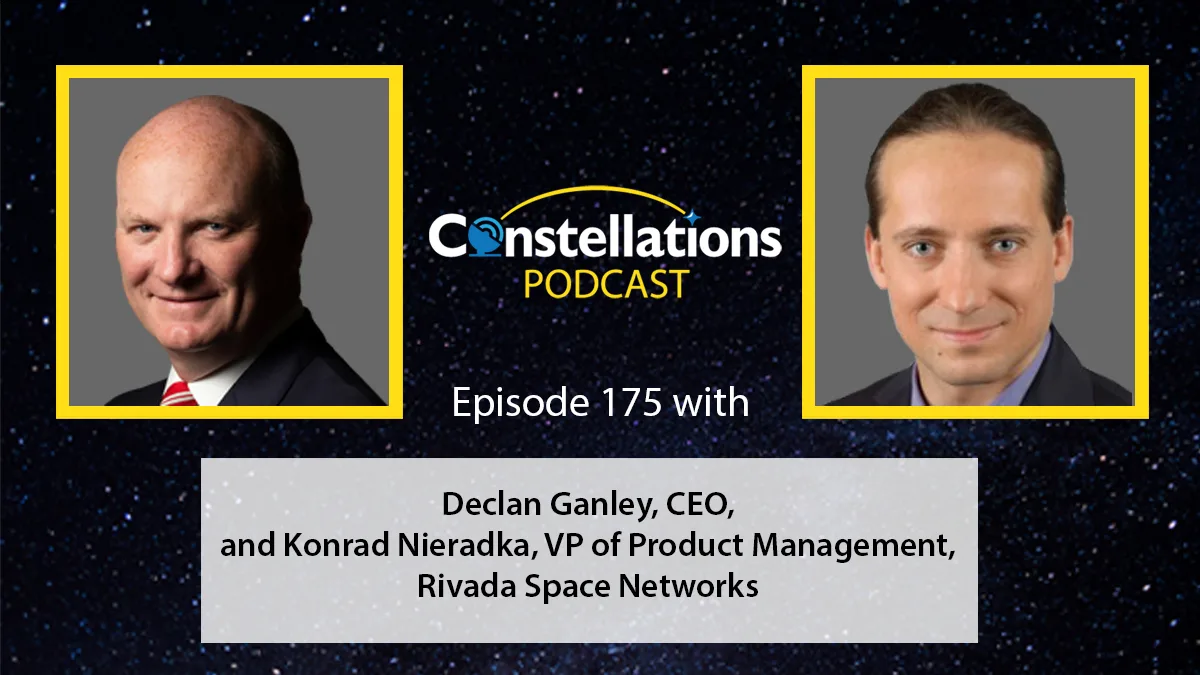
Declan Ganley, CEO of Rivada and Konrad Nieradka, Vice President of Product Management of Rivada discuss connected communications with a laser mesh network in space and how standards like Carrier Ethernet are shaping the future of enterprise communications.

The swift economic growth within the space sector is drawing attention from public and private entities eager to capitalize on its strategic and commercial prospects. The region of the Middle East and North African is no exception to this trend.

Two United Nations agencies appealed to international telecommunications regulators to block attempts by terrestrial mobile interests to get access to spectrum used by high-resolution radar satellites to assess climate change. It was eight years ago, that ITU delegations agreed to double the amount of spectrum allocated to radar Earth observation measurements, to 1,200 MHz. The new spectrum resulted in higher-resolution imagery.

In a wireless-connected world, confusion around access and connections is not uncommon but, regardless of the definitions, the story highlights the importance of factually assessing the performance of non-GEO satellite constellations at country levels, contrasting the analysis with the claims.

Space Infrastructure & Operations

Why Is the FBI Going to the Moon?

As a growing number of actors and interests make plans for the moon, the FBI is taking note.

BCG Associate Director for Aerospace and Defense Alessio Bonucci looks at how countries are rethinking space sovereignty amid tightening industrial capacity, new geopolitical realities and evolving partnerships.

Cloud Computing

Certifiable

The approval of a certification program for the DIFI 1.1 standard marks a key step toward greater interoperability and trust in digital IF equipment, enabling both standardized performance assurance and independent third-party validation. As virtualization and cloud-based ground systems expand, DIFI compliance and feature-based certification will make it easier for organizations to specify, deploy and scale interoperable solutions.

TransAstra’s innovative “Capture Bags” are designed to snag hazardous debris today, but the same inflatable technology is being built to harvest asteroids tomorrow. Discover how tackling the orbital debris crisis could ultimately unlock a massive new economy built on millions of tons of space-based materials.

Network Architecture & Infrastructure

China’s D2D Ambitions

ABI Research’s Rachel Kong breaks down mega-constellation filings, 5G NTN trials, and the coordinated state–telco model shaping D2D connectivity. Discover how this approach could influence spectrum access, handset interoperability, and Western operators’ competitive positioning.

Once focused on buying satellites, the region is now building sovereign capabilities that drive economic diversification, security, and technological leadership. Bold investments and local industry growth are positioning the Middle East as an emerging global hub for space innovation.

China’s delegates framed orbital crowding and collision avoidance as priorities for national regulation and international coordination, noting work on a national space traffic management and active debris-removal research. They emphasized using the UN framework and soft-law coordination rather than new treaties while acknowledging gaps in information-sharing and trust between major space powers.

Eleven satellite imaging firms have formed the Remote Sensing Collective to urge ITU members to preserve the 8.025–8.4 GHz band exclusively for Earth-observation satellites. With global regulators set to decide at Shanghai’s WRC-27, opening X-Band to terrestrial 5G could undermine future military surveillance and disaster-response imaging.

The alliance’s new Commercial Space Strategy aims to integrate private sector space capabilities for collective security. This policy focuses on making commercial space assets interoperable among the 32 member nations and with their own government satellites. However, it leaves open questions about future budgets and how the alliance will secure priority access to these commercial services during a crisis.

Space Solar Power (SSP), or power harvested from the sun via satellites and beamed to the Earth’s surface, could be a disruptive new source of energy. In January, China announced the launch of a kilometer-wide satellite solar array. In the U.S. and the UK, several start-ups also plan to put solar arrays into space in a bid to create the ultimate clean energy source.

Initiatives like China’s Spacesail and Europe’s IRIS2 are emerging as key players, aiming to build sovereign alternatives to existing dominant systems. These developments underscore the increasing importance of space capabilities for national defense and economic interests worldwide.

Spectrum & Regulatory Compliance

It’s Official, Verified DIFI Compliance

This milestone marks a critical advancement in interoperability standards for ground system products. The compliance framework includes self-testing (silver) and third-party validation (gold) phases to ensure robust and reliable solutions.

From orbital refueling to the rise of multi-orbit systems, innovations are set to redefine the satellite landscape. Discover Analysys Mason's top 10 predictions for the future of space technology and infrastructure.

China and the USA are reigniting a new space race to the Moon, creating major opportunities for space infrastructure developers. As both nations pursue ambitious lunar programs, commercial players with strong government ties stand to benefit. The lunar market is forecast to generate nearly $70 billion in revenue by 2033, driving innovation in satellite manufacturing and launch services.


With the backing of 35 engaged member organizations, including the U.S. Army, the push to enhance ESA interoperability is making significant strides. These efforts are essential for maximizing the potential of advanced multi-beam and multi-mission antenna technologies.

The U.S. Federal Communications Commission raised the standard for high-speed fixed broadband to 100/20 Mbps. The new benchmark, and an emphasis on latency, could lead to the exclusion of satellite services from federal funding programs.

Following the strategic unveiling by SES’s new CEO, the satellite giant hints at a paradigm shift towards embracing Low Earth Orbit (LEO) constellations, complementing its focus on the mPower high-throughput satellite expansion for global coverage and strategic partnerships, such as the collaboration with SpaceX’s Starlink.

European Commission embarks on pioneering mission to unify civil and military Earth observation across the EU. By signing study contracts with leading space companies, this initiative aims to bridge the gap between member states, fostering a new era of shared intelligence and surveillance capabilities.

Any company designing a data-relay or broadband satellite constellation would prefer to hold off selecting its laser communications terminal (LCT) supplier until the U.S. Space Development Agency (SDA) has performed in-orbit validation of at least two, if not all four, of the LCT providers it’s working with. Telesat, Rivada Space Networks, Kepler Communications, the European Commission and others have set deadlines coming up before the SDA has done its testing.

Former U.S. Air Force and Space Force General Counsel Peter Beshar explains why decades-old space treaties must evolve to address commercial space, lunar resource extraction and emerging security threats in an increasingly contested orbital environment.

Boston Consulting Group’s Alessio Bonucci explains why space sovereignty is reshaping global competition, with launch capability, industrial capacity and defense investment emerging as the defining factors in the next generation of national space strategies.

As direct-to-device satellite services move toward commercial scale, operators, regulators and mobile carriers are grappling with how spectrum rights, licensing frameworks and cross-border interference will shape the future of global connectivity. How hybrid use of terrestrial and MSS spectrum is emerging as the most practical path forward, even as questions around sovereignty, regulation and customer control remain unresolved.

The head of the Taiwan Space Agency recently proposed an Asia-Pacific answer to Starlink, kicking off a critical discussion about sovereignty, regional collaboration and the role of commercial partnerships in LEO.

Colonel Tim Trimailo, Director of the Commercial Space Office, drives the Space Force's integration of commercial capabilities into missions. Listen to Colonel Trimailo as he explores how the commercial industry is accelerating the future of military space operations.

Satellite Communications (SATCOM)

FCC Goes All-In on Satellite D2D

The FCC is pushing for U.S. leadership in direct-to-device but still needs a framework to harmonize satellite and mobile network operators’ interests within the constraints of finite spectrum resources.

As global LEO constellations reshape satellite economics through scale and speed, Middle Eastern operators are charting a different path rooted in sovereignty, regulatory alignment and national strategy. How regional satellite companies are leveraging close ties with governments, multi-orbit collaboration and spectrum stewardship to remain relevant and grow.

After its August 12 launch aboard Ariane 6, the $6.1 billion Metop-SG program enters a year-long commissioning phase, gearing up for over 20 years of polar-orbit data collection. In partnership with NOAA’s Joint Polar Satellite System, Eumetsat will share sensors and ground stations, enhancing global storm forecasting and ensuring mutual backup across the Arctic and Antarctic.

Satellite Connectivity & Technology

The Rules of Spectrum Are Changing As We Speak

Spectrum is limited, but dynamic spectrum sharing mechanisms could open up entire bands to new commercial users. Meanwhile, FCC has announced plans to open spectrum across twelve different bands, NGSO feuds with both GSO and wireless, and changing spectrum allocations are changing industry dynamics.

Industry officials believe Elon Musk’s recent controversial behavior presents a golden opportunity for Europe’s space sector to counter the threat from his companies, SpaceX and Starlink. As customers express concern about relying on a single American provider, European companies like Eutelsat and Arianespace are promoting their sovereign satellite and launch services as crucial, reliable alternatives.

Operators must choose between reusing terrestrial frequencies or using dedicated Mobile Satellite Services (MSS) spectrum, each presenting distinct challenges. This decision shapes service potential, device compatibility, partnerships, and the strategy for enhancing coverage and market growth.

Policy makers hold the key to unlocking AI’s potential in revolutionizing communications networks. Explore strategic initiatives designed to drive smarter, more resilient digital infrastructure for a sustainable future.

For small and emerging space companies and entrepreneurial startups, the cost to build a satellite and launch it into orbit may be too high to get off the ground. Thankfully, the CondoSat trend is making it easier and cheaper to get payloads into orbit. But what regulatory and liability challenges await companies entering this nascent marketplace?

A recent tabletop exercise envisioned cybersecurity challenges in a 2035 lunar mining facility and orbital lab. The findings underscore the importance of collaboration and innovation to safeguard emerging space activities.

Constellations spoke with two experts from the International Telecommunications Union about the rapidly changing world of smallsat, including regulatory management of large constellations and the sustainable use of in-orbit resources.

Operators must carefully manage the climb through debris-heavy regions, processing thousands of conjunction alerts daily. As regulations tighten, the balance between innovation and safety is becoming a critical focus in the evolving satellite industry.

A new satellite industry alliance aims to accelerate the rollout of direct satellite connectivity for smartphones and other devices using MSS frequencies, rather than sharing terrestrial spectrum with mobile network operators.

Dr. Ezinne Uzo-Okoro, Assistant Director for Space Policy at the White House OSTP, discusses the U.S. vision for future space exploration, focusing on microgravity research, novel space activities like ISAM, and the evolving role of public-private partnerships in the space sector.

Spencer Boyajian, Professional Research Assistant, Laboratory for Atmospheric and Space Physics (LASP) talks about the work and INSPIRE, an international program to train students to participate in internationally collaborative missions, and elaborates on the INSPIRE spacecraft bus being built as an open domain hardware architecture developed jointly by partner universities.