



Space is a Network.
Constellations is Your Connection.

Telecom & Connectivity

Digital Transformation

What’s in Store at VOSS

Constellations talked to the Space ISAC team about what to expect from the 2026 Value of Space Summit, what’s new about the event and what they most love about the location.

Digital Transformation

Space at the Speed of Software

As AI, cloud computing and cyber threats accelerate the pace of network operations, satellite communications must embrace software-defined, interoperable architectures to keep pace with modern defense and commercial requirements.

DIFI PlugFest USA 2026 will test the latest version of the DIFI standard in more realistic, end-to-end network environments, helping advance interoperability, certification and digital transformation across next-generation multi-orbit satcom systems.

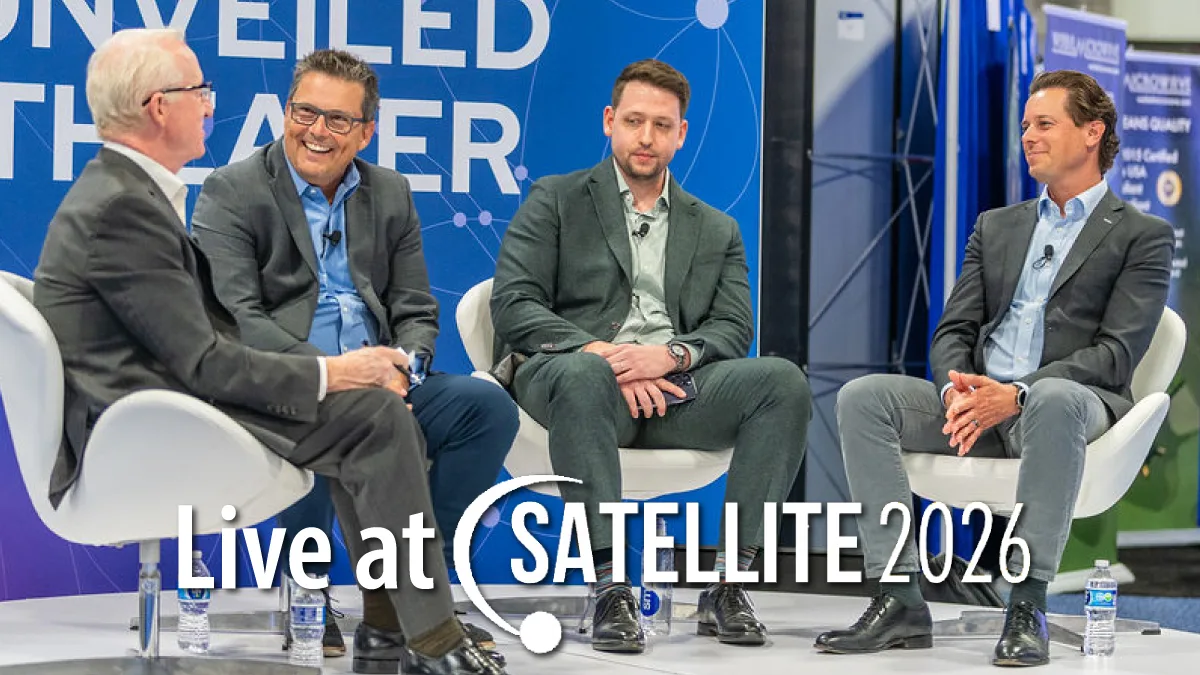
Live at SATshow 2026, Constellations speaks with Blane Boynton of SES, Andrew Cavalier of ABI Research and Greg Quiggle of Kratos on developing long-term 5G NTN strategies, the competitive forces driving ground-system evolution, and how early 5G implementations signal growing commercial readiness.

The head of the Taiwan Space Agency recently proposed an Asia-Pacific answer to Starlink, kicking off a critical discussion about sovereignty, regional collaboration and the role of commercial partnerships in LEO.

By securing Apple as a cornerstone partner, Amazon is officially launching a high-stakes challenge to Starlink’s orbital supremacy. The merger integrates Globalstar’s established spectrum with the “Amazon Leo” infrastructure to bring seamless, high-speed direct-to-device connectivity to the global market by 2028.

The satellite ground segment is evolving into a software-defined, cloud-native control layer that enables seamless integration with terrestrial 5G networks. Andrew Cavalier of ABI Research discusses the role of virtualization, AI-driven orchestration, and new consumption-based models in scaling NTN services and overcoming structural barriers to commercial deployment.

Following lessons learned from the conflict in Ukraine, the 32-nation alliance is moving beyond traditional geostationary leases to integrate LEO, MEO, and HEO constellations for more resilient connectivity. This strategic evolution includes a revamped procurement policy designed to bypass bureaucracy and potentially return NATO to owning its own space-based transponders by 2034.

Non-Terrestrial Networks (NTN) / 5G

The Next Phase of 5G NTN Deployment

In our latest interview, ABI Research’s Andrew Cavalier breaks down the latency, cost, and standardization hurdles the industry must overcome to make non-terrestrial networks (NTN) a seamless extension of mobile infrastructure. Discover which players are best positioned to capture value as operators and chipset vendors race to bring satellite connectivity to the mass market.

Operators transitioning to these software-based architectures can achieve nearly 40% in overall cost savings while significantly accelerating deployment cycles for new services. This technological shift is essential for capturing the $30 billion 5G NTN opportunity and ensuring long-term mission adaptability in a rapidly evolving orbital economy.

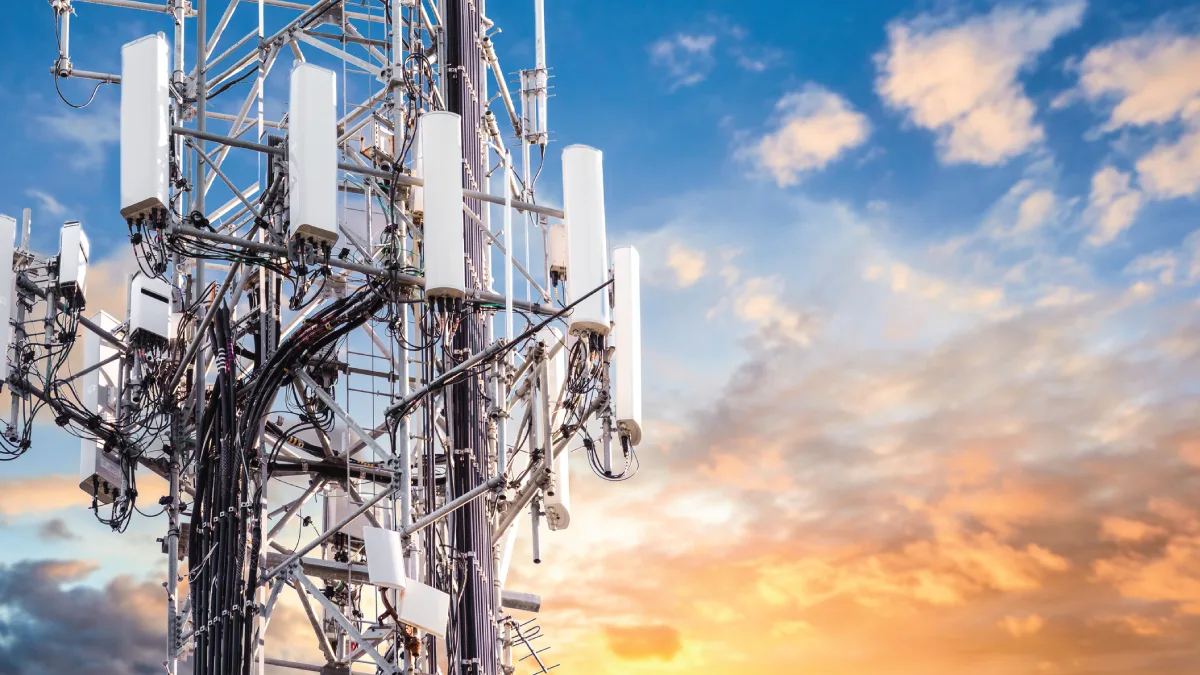
While off-the-shelf cellular modules offer an avenue for massive scale, merging static terrestrial towers with satellites moving at orbital velocities introduces severe routing, authentication, and latency hurdles. Overcoming these physical engineering barriers is required to build a resilient hybrid network that also satisfies strict national demands for infrastructure sovereignty.

This hybrid network utilizes Q- and V-band links to deliver speeds of 144 Gbps in LEO, while MEO optical links aim to provide throughput up to 6 Tbps. With a projected deployment start in late 2027, the system targets a capped capacity of roughly 100,000 customers, distinguishing itself from the broader consumer focus of Amazon Leo.

A new study reveals that many GEO satellites still transmit highly sensitive data without encryption, exposing government, commercial and critical-infrastructure communications to easy interception with low-cost equipment. Experts warn that fixing the problem will require not just stronger encryption, but deeper architectural changes and new platforms to provide more secure, sovereign communications layers.

The Mobile Satellite Services Association (MSSA) released the first non-terrestrial network (NTN) Reference Architecture in an effort to guide satellite operators, mobile network operators (MNOs), device makers and standards bodies toward a unified, interoperable NTN ecosystem.

DIFI settled on a streamlined VITA‑49 core to meet defense and commercial satcom needs while keeping implementation simple and widely adoptable. Because networks integrate at the IP level, satellite systems using DIFI/VITA‑49 can interoperate with terrestrial eCPRI‑based 5G, letting both ecosystems capitalize on NTN without compromise.

Industry leaders say true smartphone-grade broadband from satellites is still years away and will arrive first in specific verticals rather than as an immediate consumer replacement. Mobile network operators may be using D2D deployments as market probes, leaving business models and who ultimately pays for the service unresolved.

During a live demonstration, engineers pulled the plug on an antenna mid-transmission, yet the satellite link never faltered—automatically switching to a backup site without missing a beat. This breakthrough in digital IF technology promises more resilient communications for U.S. forces, with AI-powered insights emerging as the next frontier.

As satellite-based 5G evolves from concept to commercial reality, operators face a watershed moment: stay on their legacy paths or embrace the shared NTN vision. This year’s milestones show that strategic alliances and rapid rollouts will define the leaders in the race for ubiquitous connectivity.

By integrating satellite into private 5G architectures, businesses can achieve seamless, resilient connectivity across even the most remote locations. This hybrid approach not only boosts reliability but also helps mitigate cost and complexity barriers that have slowed adoption.

Network Architecture & Infrastructure

Moving the Internet to Space

U.S. Department of Defense spokesperson Laura McAndrews and Rivada senior vice president Brian Carney explain the key components of an “outernet,” examine the benefits it will deliver to the DoD and discuss the role industry will play in making the concept a reality.

Satellite Connectivity & Technology

The Rules of Spectrum Are Changing As We Speak

Spectrum is limited, but dynamic spectrum sharing mechanisms could open up entire bands to new commercial users. Meanwhile, FCC has announced plans to open spectrum across twelve different bands, NGSO feuds with both GSO and wireless, and changing spectrum allocations are changing industry dynamics.

While RF over Fiber has its place, the future of satellite communication lies in the flexibility and resilience of RF over IP. Common arguments against this digital transport method, from latency concerns to security implications, are directly confronted and addressed. For most new applications, a digital approach simply proves to be the more scalable and future-proof path forward.

While Europe’s HALO and IRIS² initiatives both aim to strengthen sovereign satellite communications, their ultimate success will depend on building interoperable, sovereign-controlled ground infrastructure that enables secure command, connectivity and cross-border operations.

At the 2026 Satellite Show, Constellations spoke with Blane Boynton of SES, Andrew Cavalier of ABI Research and Greg Quiggle of Kratos about developing long term 5G NTN strategies, the competitive forces driving ground system evolution and how early 5G implementations signal growing commercial readiness.

The growing shift toward virtualized, software-defined ground systems is accelerating adoption of interoperability standards like DIFI, enabling satellite operators to reduce dependence on proprietary hardware while supporting scalable multi-orbit networks, 5G NTN integration and future AI-native architectures.

Satellite Connectivity & Technology

Sovereignty Without Borders

As the global space economy evolves, national autonomy is shifting from simple hardware ownership toward total control over the operational stack, including data and networks. Industry experts suggest that hybrid architectures are now the most pragmatic way for nations to maintain security and decision-making authority in an increasingly interconnected orbital landscape.

While consumer interest in satellite-backed safety features is high, success hinges on moving past “one-size-fits-all” data pricing and industrializing hardware for the high-volume assembly line. Explore how aligning satellite capabilities with automotive roadmaps will finally turn global connectivity into a standard feature rather than a premium option.

The SpaceRise consortium—led by industry heavyweights SES, Eutelsat, and Hispasat—has finally hammered out the compromises needed to secure a multi-billion euro green light for the secure multi-orbit network. While the roadmap includes some technical concessions to hit aggressive 2030 deadlines, the deal marks a massive leap forward for Europe’s strategic autonomy in space-based communications.

The facility will begin limited deliveries for Telesat’s Lightspeed constellation later this year before reaching full production in 2027. Built around MDA’s adaptable Aurora platform, the factory aims to drive further orders by churning out both broadband and direct-to-device (D2D) satellites for major clients like Globalstar.

Automation and AI are becoming foundational to 5G non-terrestrial networks, enabling self-optimizing satellite constellations, real-time spectrum coordination, and cloud-native operations that can scale across multi-operator and multi-orbit environments.

Jake Saunders of ABI Research presents key satellite IoT data including the biggest untapped commercial opportunities, the competitive landscape and the evolving relationship between satellite and terrestrial.

Satellite Communications (SATCOM)

FCC Goes All-In on Satellite D2D

The FCC is pushing for U.S. leadership in direct-to-device but still needs a framework to harmonize satellite and mobile network operators’ interests within the constraints of finite spectrum resources.

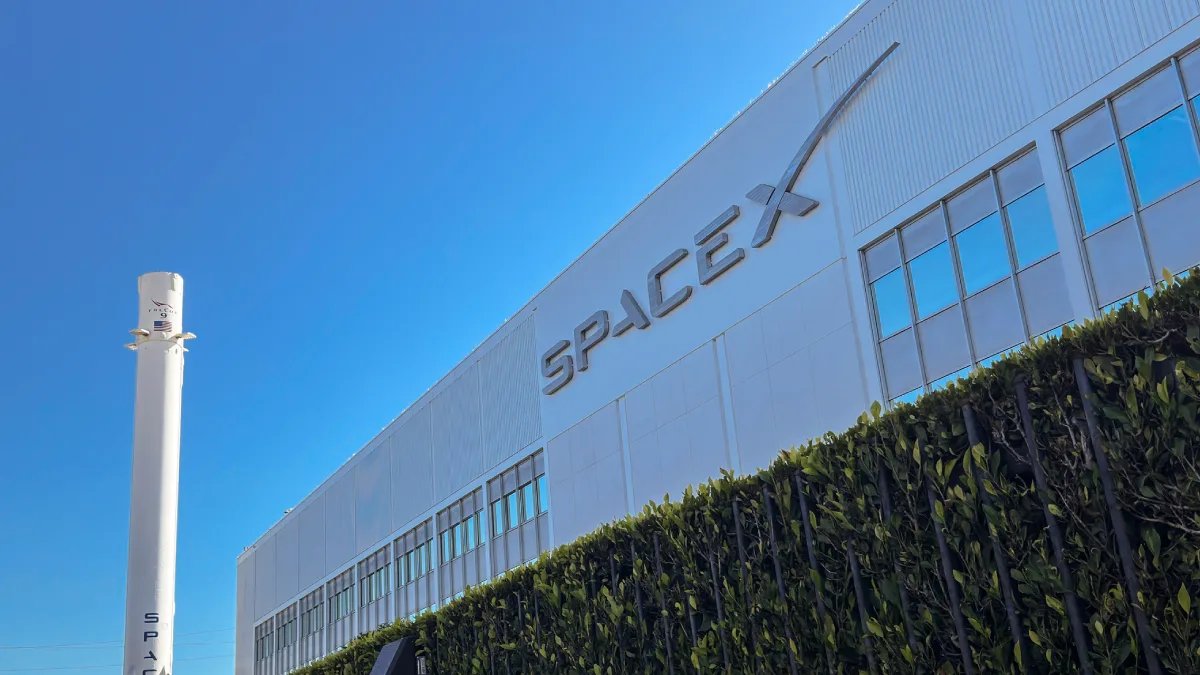
Despite a deployment of over 650 satellites, the service currently faces brief visibility outages and a limited aggregate downstream capacity of approximately 10Gbit/s. To ensure a successful rollout, mobile network operators must utilize detailed analytics to align these technical realities with realistic user expectations and pricing models.

Backed by significant financing from Apple, the upcoming “C-3” network will utilize dynamic beam-forming technology to enhance mobile satellite services and expand coverage. While the company navigates manufacturing delays and regulatory hurdles in the US and France, it is proactively upgrading its ground infrastructure with 90 new antennas across 25 nations.

This research marks a strategic pivot from traditional ground-based interference to adaptive, networked architectures that mirror the design of the networks they target. While currently a simulation, the data points to a future where commercial operators must defend against region-wide, persistent electronic warfare.

Eutelsat unifies GEO and LEO to deliver resilient network solutions for government and commercial users. The rebrand reflects a shift from wholesale capacity to end-to-end, mission-focused services that combine constellations, terminals and third-party tech for secure, redundant connectivity. Expect continued investment in multi-orbit resilience, PNT alternatives and new product rollouts that support complex operational environments.

Artificial Intelligence & Analytics

Agentic AI for the Satellite Operator

Agentic AI is a highly evolved LLM that can leverage reason and decision making, be instructed with language rather than coding, and is highly scalable across large networks. Because of this, it is an ideal solution for complex satcom capacity planning, especially in contested and congested areas.

Ahead of World Space Business Week, Constellations and Novaspace released a limited podcast series, featuring five space leaders. Each executive answered a handful of questions about the state of the industry, what drives their companies, and the challenges that lie ahead. Read our favorite quotes and takeaways from each conversation.

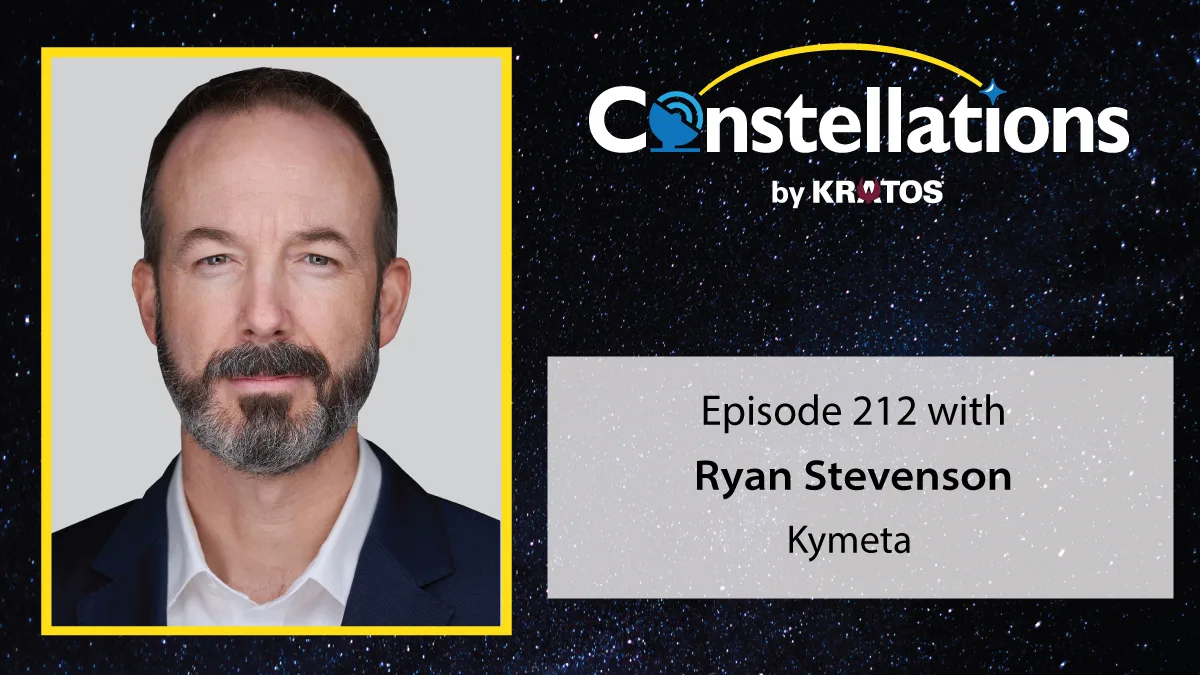
New multi-band antenna technology could redefine satcom by making connectivity seamless and automated. Ryan Stevenson, senior vice president and chief scientist at Kymeta, explained how ESAs can roam across different bands and different orbits, and what this technology means for the satellite industry. Read our top four takeaways.

Satellite Communications (SATCOM)

MNOs and OEMs Need To Adopt Satellite D2D Now

This article explains how satellite direct-to-device (D2D) is a viable commercial opportunity for mobile network operators (MNOs) to grow their subscriber base and for original equipment manufacturers (OEMs) to create new products and expand their customer base.

GPS and PNT signals rely on a weak RF signal that is highly vulnerable to jamming and spoofing. One alternative is quantum communication technology, which uses entangled photons to deliver a highly accurate timing signal. Read our top four takeaways.

This episode explores the future of Position, Navigation, and Timing (PNT) with Xairos CEO David Mitlyng, who outlines the challenges of moving beyond our deep reliance on GPS. He explains how quantum time transfer provides a secure and highly precise alternative, using entangled photons in systems ready for integration with current satellite and ground infrastructure.

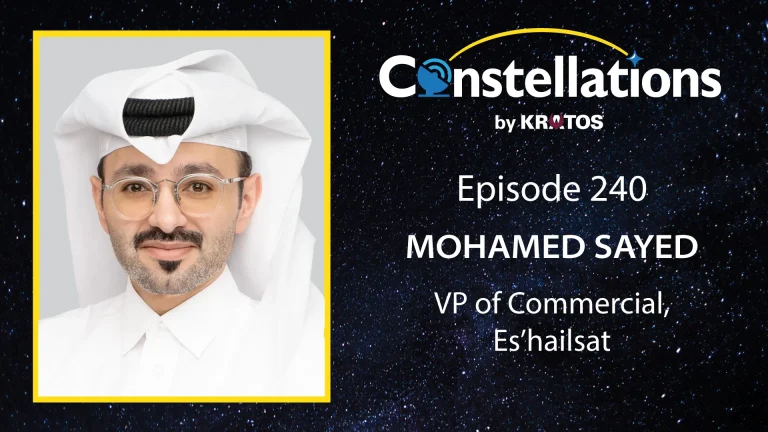
Mohamed Sayed, VP of Commercial at Es’hailsat joins Constellations to discuss how regional operators are navigating a new era of mega-constellations, as governments across the Middle East invest in sovereign space capabilities and secure communications-regional operators will start playing a bigger role.

Univity’s proposed broadband and direct-to-device constellation reflects a new approach to satellite connectivity by putting telecom operators—not satellite providers—at the center of the value chain through a shared, wholesale space infrastructure that seamlessly extends terrestrial 5G networks into space.

As direct-to-device satellite services move toward commercial scale, operators, regulators and mobile carriers are grappling with how spectrum rights, licensing frameworks and cross-border interference will shape the future of global connectivity. How hybrid use of terrestrial and MSS spectrum is emerging as the most practical path forward, even as questions around sovereignty, regulation and customer control remain unresolved.

Market Competition & Strategy

What’s in Store at Space Industry Forum

Novaspace’s Nathan de Ruiter shares why the industry is moving past speculation toward real-time execution in areas like sovereign connectivity and multi-orbit strategies. Read the full interview to understand how operators are navigating a fragmented landscape defined by local regulation and the convergence of satellite and terrestrial networks.

Cloud Computing

Certifiable

The approval of a certification program for the DIFI 1.1 standard marks a key step toward greater interoperability and trust in digital IF equipment, enabling both standardized performance assurance and independent third-party validation. As virtualization and cloud-based ground systems expand, DIFI compliance and feature-based certification will make it easier for organizations to specify, deploy and scale interoperable solutions.

As the United States reshapes its military space posture for a more contested orbital environment, it is emphasizing proliferated satellite architectures, closer integration with commercial industry and more flexible acquisition strategies to sustain operational advantage. At the same time, analysts warn that long-term strategic planning, industrial capacity in space and clearer capability signals to industry will be critical to ensuring resilience, deterrence and mission effectiveness in future conflicts.

Ground Segment & Telemetry

Making Gateways More Resilient

The physical attack on an SES gateway in Israel marks a turning point in how we view satellite infrastructure, shifting the focus from cyber threats to the urgent need for kinetic resilience. By adopting standards like DIFI to virtualize and distribute ground segment operations, organizations can ensure connectivity remains seamless even if a specific physical site is compromised.

This article breaks down four vital takeaways driving the industry's next growth curve, from fierce spectrum land grabs to the game-changing scale of Low Earth Orbit (LEO) deployments. Click the link to uncover how the clash between proprietary systems and emerging 6G standards will reshape global connectivity.

CEO Matt Desch is finally playing the valuation game, signaling openness to mergers or alliances to command the premium multiples currently assigned to direct-to-device hype. Beyond the spectrum positioning, the firm operates as the baseline fallback network for aviation and government infrastructure, offering an embedded hedge against broader market exuberance.

Network Architecture & Infrastructure

China’s D2D Ambitions

ABI Research’s Rachel Kong breaks down mega-constellation filings, 5G NTN trials, and the coordinated state–telco model shaping D2D connectivity. Discover how this approach could influence spectrum access, handset interoperability, and Western operators’ competitive positioning.

Deployment of operational optical inter-satellite links is reshaping multi-orbit data flow by enabling continuous, low-latency, cloud-like routing in space. Kepler Communications CEO Mina Mitry discusses how optical relays, on-orbit processing and interoperability standards are laying the foundation for scalable, real-time space networking.

With major players like Starlink and Eutelsat expanding their constellations, the 3GPP’s adaptable 5G NTN standard supports diverse network architectures by allowing the radio base station to reside either on the ground or on the satellite itself. This flexibility enables operators to balance proprietary mission requirements with the strict interoperability needed for direct-to-device connectivity.

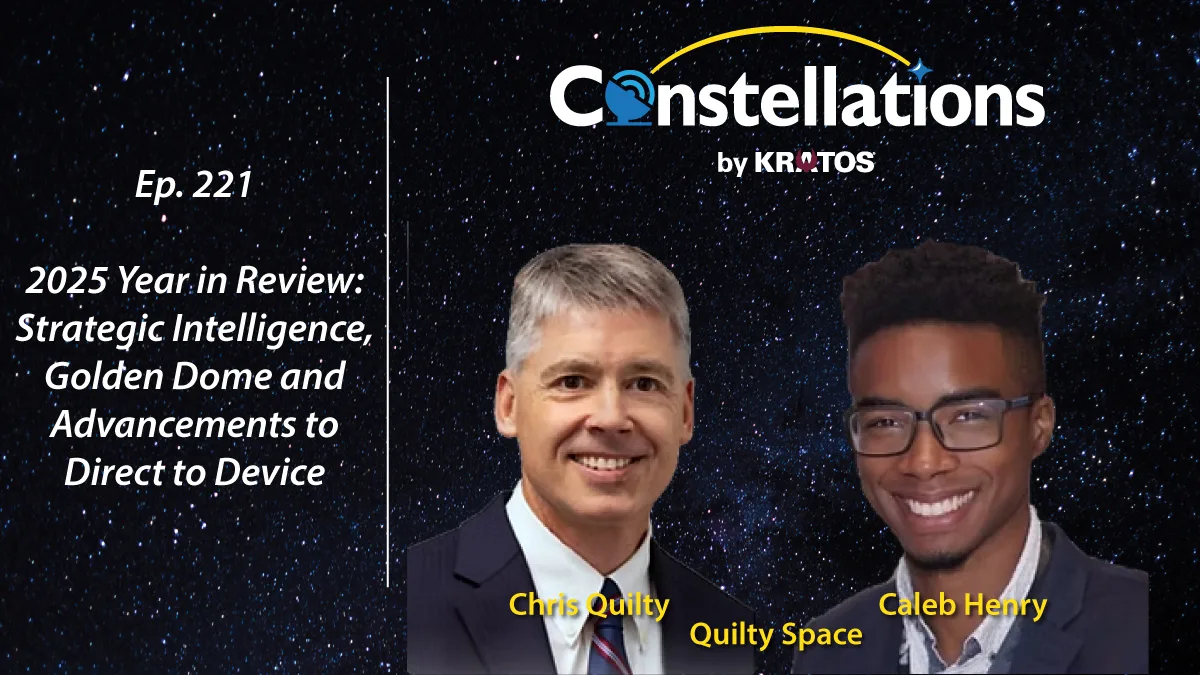
In a year defined by Golden Dome, Starlink’s unprecedented scale, direct-to-device disruption and rising demands for sovereignty, 2025 marked a strategic inflection point. Quilty Space take a look back at the year’s milestones.

Non-Terrestrial Networks (NTN) / 5G

Where is NTN IoT Headed Next?

The market is fragmenting across GEO, LEO and proprietary paths, each with distinct trade-offs in latency, hardware readiness and long‑term viability. As 3GPP standardization gains momentum, expect faster scale in verticals like drones, aviation, maritime and agriculture — but silicon and partner stability will decide who wins.

Market Competition & Strategy

Satcom Market Shifting to Data Applications

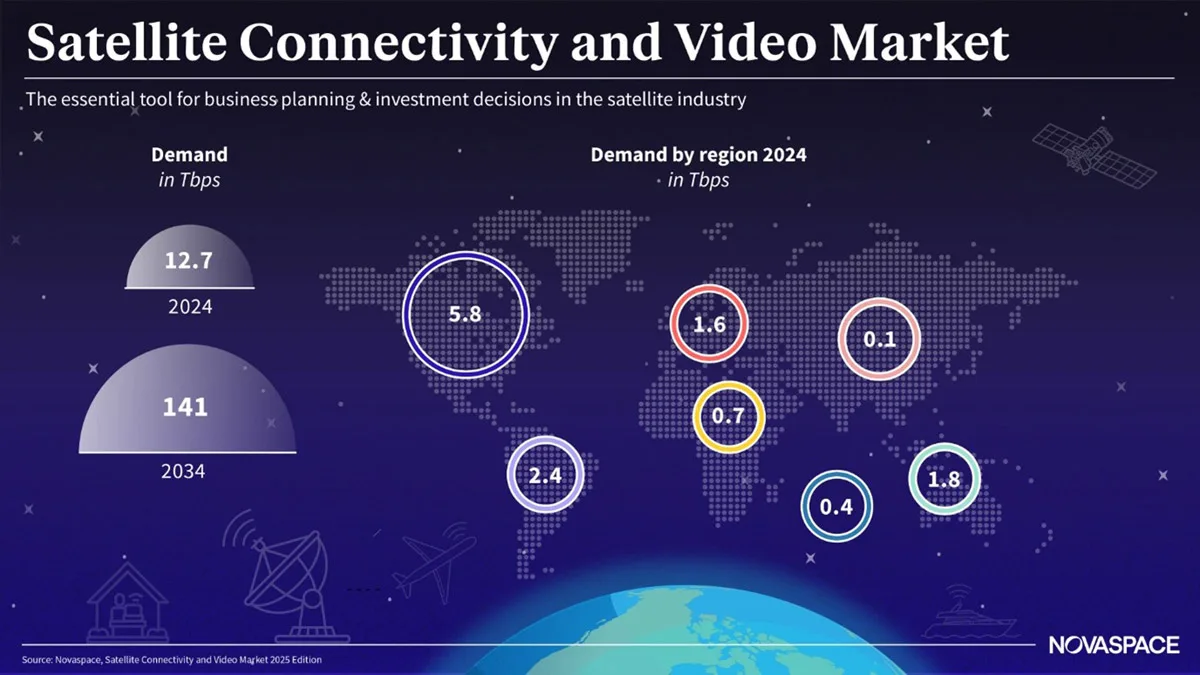
Data applications are projected to rise from 21% to 55% of service revenues by 2034, nearly tripling to $67B and driving total market expansion to $122B. This shift will push capacity demand from 12.7 Tbps to 141 Tbps, reshaping revenue models and opening new opportunities across commercial, government, and consumer segments.

Starlink’s Priority guarantees are changing the game for backhaul, enterprise, and maritime connectivity in ways Christopher Baugh and Lluc Palerm unpack in this episode. Traditional providers must now sharpen differentiation, defend quality in niche verticals, and translate service-level commitments into clear commercial value.

Satellite direct-to-device (D2D) technology—originally designed for commercial connectivity—is emerging as a valuable complement to military communications, offering resilient, low-bandwidth links for logistics, IoT, and situational awareness in contested environments. How battle-tested commercial systems are evolving to meet defense needs, from PNT-enabled sensors to S-band architectures that can operate “hidden in plain sight.”

Virtualized, cloud-native ground systems let AI adapt quickly and secure operations through live telemetry. Standards and interoperability make training data consistent and scalable across diverse satellite and terrestrial elements.

Discover how the new Inbound Link Establishment protocol enables automatic link monitoring and rapid failover in seconds, minimizing mission disruption across satellites and ground segments. From NATO’s PlugFest evaluations to MILCOM 2025 workshop sessions, dive into the interoperability and scalability solutions shaping tomorrow’s resilient networks.

The satellite industry is positioned play a pivotal role in the U.S. Broadband Equity, Access and Deployment (BEAD) program, which aims to close the digital divide in underserved and rural areas. Can satellite compete with fiber providers?

The addition of satellite connectivity to private 5G environments is helping transform enterprise networking by making networks more adaptable and resilient. The convergence of private 5G with non-terrrestrial network infrastructure is driving enterprises and mobile network operators to rethink network resilience and how traffic can be prioritized.

The company must launch over 1,500 satellites by July 2026 to meet its first regulatory milestone, a feat made difficult by launch vehicle availability. This uncertainty, and competition from players like Starlink, raises questions about Kuiper's ability to fulfill its global internet ambitions.

Kratos and industry leaders showcased how telco/satcom integration can deliver uninterrupted data access during disasters. Their award-winning demo at DTW Ignite proves that hybrid networks aren’t just possible—they’re lifesaving. This Catalyst project sets a new benchmark for resilient, mission-critical communications. It’s a blueprint for how technology can serve humanity when it matters most.

One of the first casualties of a natural disaster is the network and communications infrastructure needed for a coordinated, collaborative, and effective response. Peter Kibutu of TPP and Mohammad Baig of AT&T explain how D2D satellite connectivity can be a new tool in delivering ubiquitous connectivity to emergency and disaster response personnel when the lights go out.