



Space is a Network.
Constellations is Your Connection.

Digital Infrastructure

Artificial Intelligence & Analytics

AI Becomes Mission Control

AI is emerging as a critical tool for more resilient space operations, helping operators manage growing constellations, detect cyber threats, avoid collisions, predict failures and enable greater spacecraft autonomy.

Decades of satellite missions have generated vast amounts of dark data that remain largely unprocessed due to technical complexity, limited funding and a growing gap between data collection and analysis capabilities. Unlocking this data will require AI, improved onboard processing, open-source collaboration and stronger investment in academia and national labs to turn archived information into scientific, commercial and strategic value.

Advances in AI and onboard computing are gradually enabling satellites to take on more autonomous functions, particularly in processing data and managing operations in orbit. While autonomy can improve efficiency, technical constraints, connectivity limits and policy concerns mean this shift will be incremental rather than immediate.

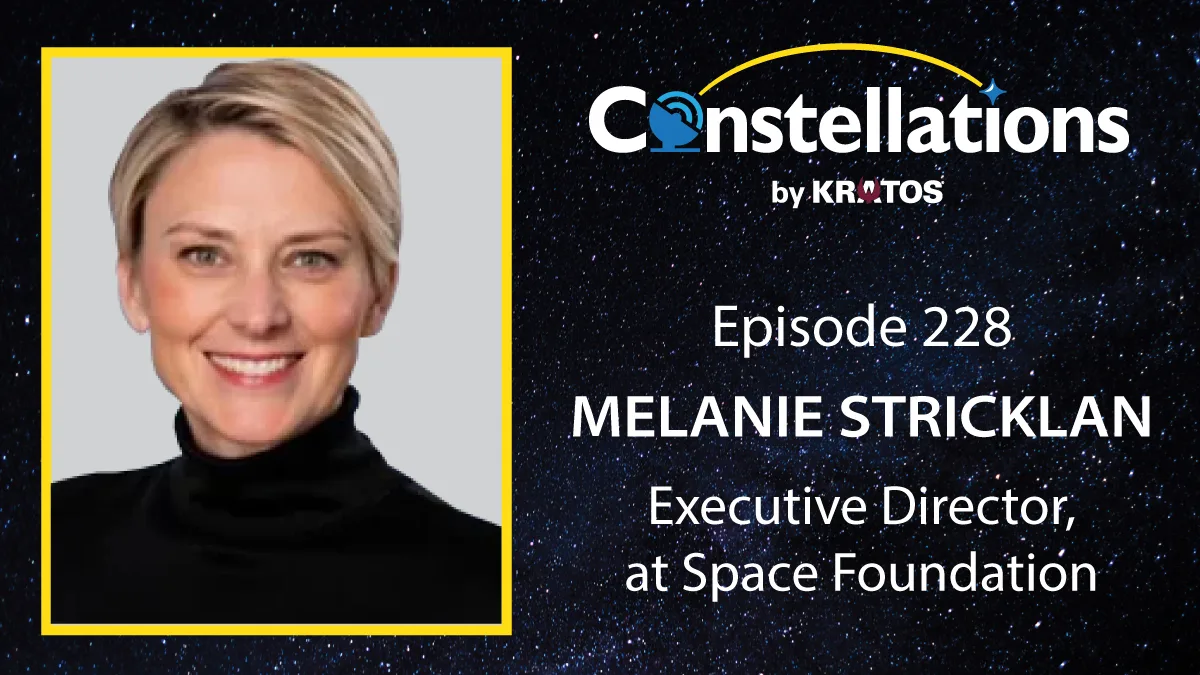
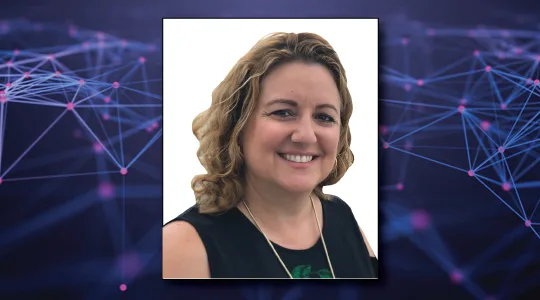
Melanie Stricklan of Space Foundation examines the growing complexity of modern space operations, showing how orchestrating space, ground, and cloud systems-and tackling issues like semantic misalignment and AI-driven autonomy-is redefining how missions succeed.

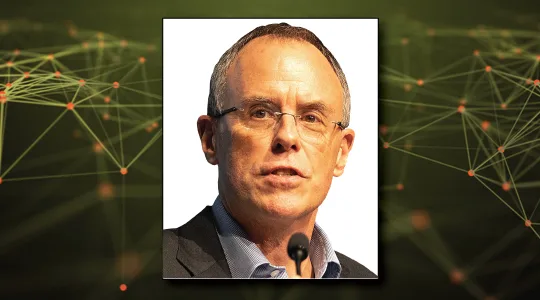
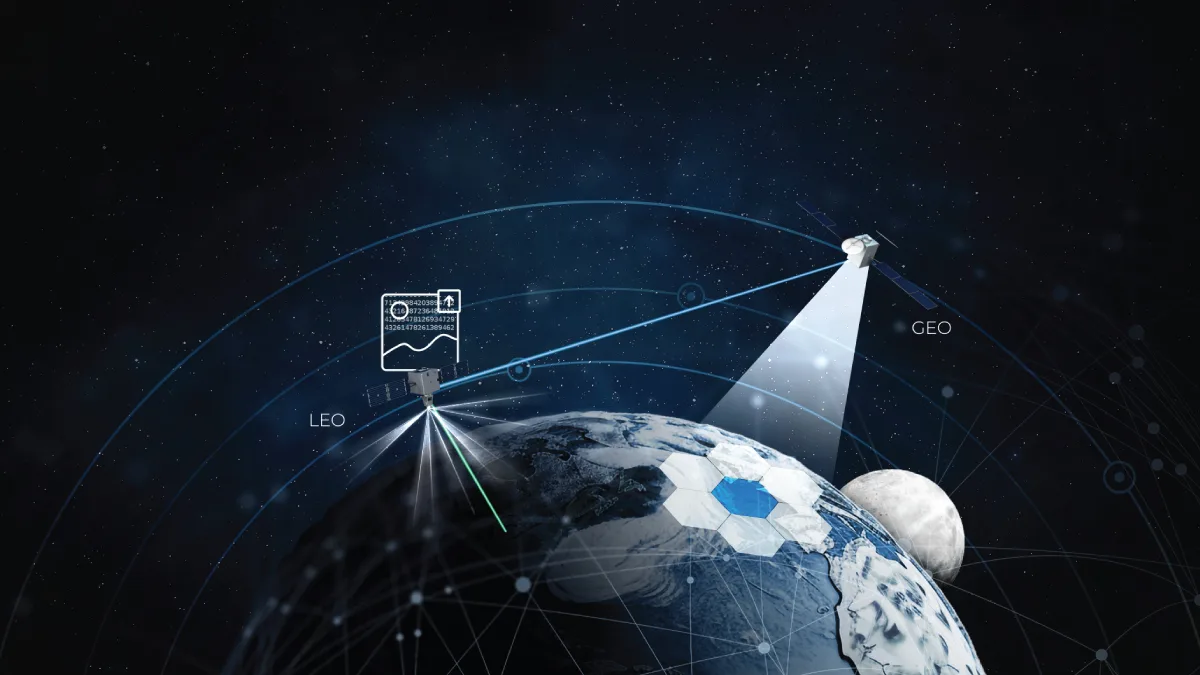
Deployment of operational optical inter-satellite links is reshaping multi-orbit data flow by enabling continuous, low-latency, cloud-like routing in space. Kepler Communications CEO Mina Mitry discusses how optical relays, on-orbit processing and interoperability standards are laying the foundation for scalable, real-time space networking.

By harvesting continuous solar power and utilizing the vacuum of space for passive cooling, these facilities offer a way to bypass the water and power limitations currently straining terrestrial grids. This shift not only supports heavy AI training loads but also enables “orbital data vaults” that process sensitive information outside the reach of regional regulations.

Space is more crowded than ever as new satellites and old debris complicate navigation and overwhelm satellite data systems. Quantum machine learning (QML) can speed hyperspectral image processing and optimize satellite scheduling and routing, and deserves urgent exploration.

A graphing calculator has more processing power than most satellites. To pursue the next generation of space missions, operators will need better and faster compute capabilities in orbit. Read the top four takeaways from our conversation with Edward Ge, co-founder and CEO of Aethero.

With satellites facing growing cyber and physical threats, AI-driven intrusion detection systems are now enabling real-time monitoring and autonomous response in orbit. These intelligent platforms strengthen resilience by identifying anomalies faster and protecting spacecraft integrity.

New multi-band antenna technology could redefine satcom by making connectivity seamless and automated. Ryan Stevenson, senior vice president and chief scientist at Kymeta, explained how ESAs can roam across different bands and different orbits, and what this technology means for the satellite industry. Read our top four takeaways.

In this podcast, hear Yudhajeet Dasgupta, Head of Solutions Architecture Aerospace and Satellite at AWS, share his knowledge on cloud computing for space and all the ways generative AI can help make life on earth more efficient for humanity.

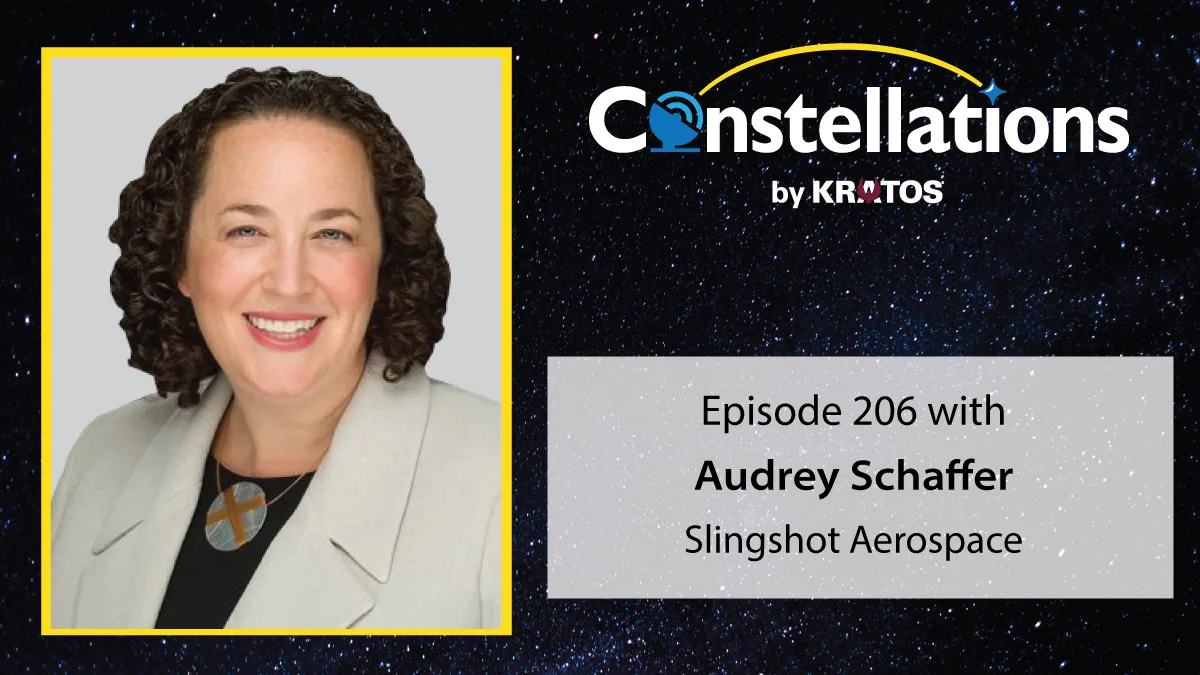
With mega-constellations, the number of satellites in LEO is rapidly rising—as well as the number of threats in space. To address this, Audrey Schaffer, VP of Strategy and Policy at Slingshot Aerospace, described the role of AI for building better Space Domain Awareness. Read our top four takeaways.

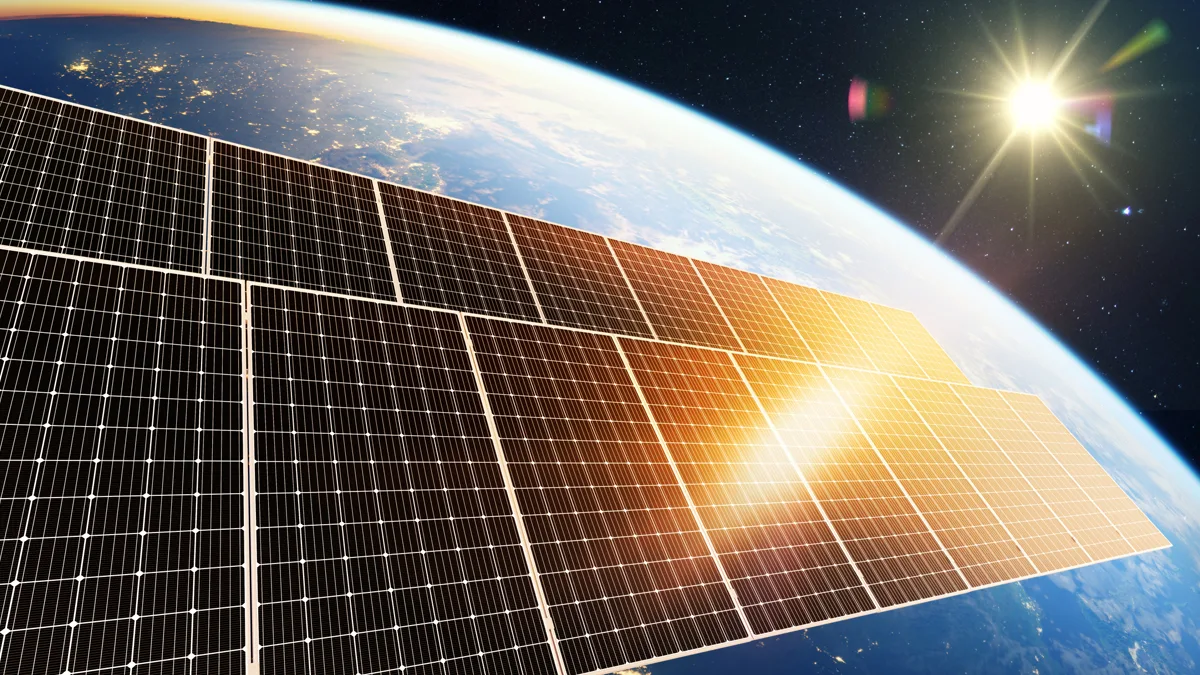
Space Solar Power (SSP), or power harvested from the sun via satellites and beamed to the Earth’s surface, could be a disruptive new source of energy. In January, China announced the launch of a kilometer-wide satellite solar array. In the U.S. and the UK, several start-ups also plan to put solar arrays into space in a bid to create the ultimate clean energy source.

Policy makers hold the key to unlocking AI’s potential in revolutionizing communications networks. Explore strategic initiatives designed to drive smarter, more resilient digital infrastructure for a sustainable future.

APT41’s cyber espionage strikes at the heart of aerospace operational technology. The attackers exploited VPN vulnerabilities to infiltrate critical supply chains, deploying stealth malware and lateral movement techniques. The incident underscores the urgent need for robust cybersecurity measures to safeguard aerospace and aviation manufacturing operations.

Carmel Ortiz, Senior VP of Technology and Innovation at Intelsat, discusses how software-defined networking enables on-demand capacity and dynamic business models. Hear about the benefits of these satellites in tackling modern market challenges and the future of connectivity with this innovation.

Generative AI is just one piece of a much larger AI puzzle, including tools like predictive analytics and computer vision. Explore how a balanced approach can transform operations and customer experiences across industries.

The telecom industry is embracing autonomous networks that can troubleshoot and automate the restoration of service when equipment fails. Can the satellite industry follow suit? The CEOs and Founders of Cognitive Space and ReOrbit examine the potential benefits of autonomous satcom networks and discuss the challenges that remain to be solved to achieve satellite autonomy.

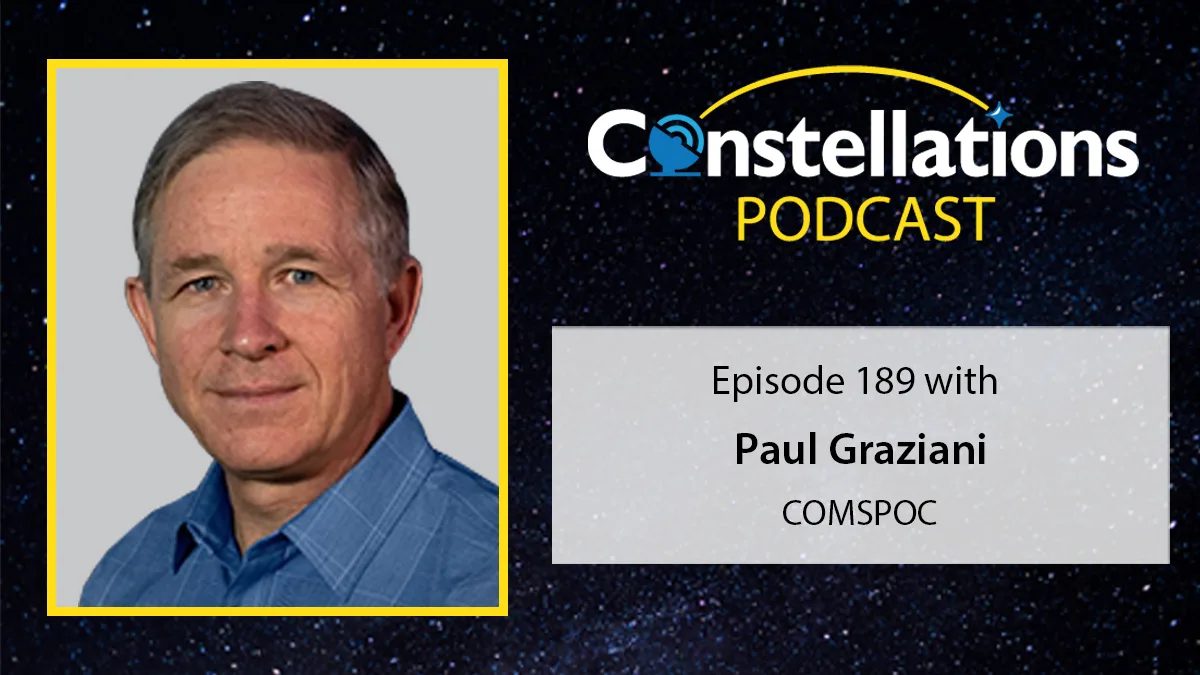
Satellite orbits are crowded and hard to navigate. Constellations spoke with Paul Graziani of COMSPOC about the role of multiple data sources and data fusion in helping satellite operators tackle space situational awareness.

As GSaaS continues to evolve, cybersecurity remains a critical concern, with hacking, malware, and vulnerabilities posing significant risks. Providers must balance flexibility with the need for strong encryption and adherence to best practices to safeguard sensitive data.

In this episode, Paul Graziani, CEO of COMSPOC, talks about Space Situational Awareness (SSA) and the value of data fusion in enhancing SSA. Paul describes the various data sources for SSA, such as optical data from telescopes, RF data from sensors, and radar data from ground-based or transmitter sources. He also explains how these sources differ.

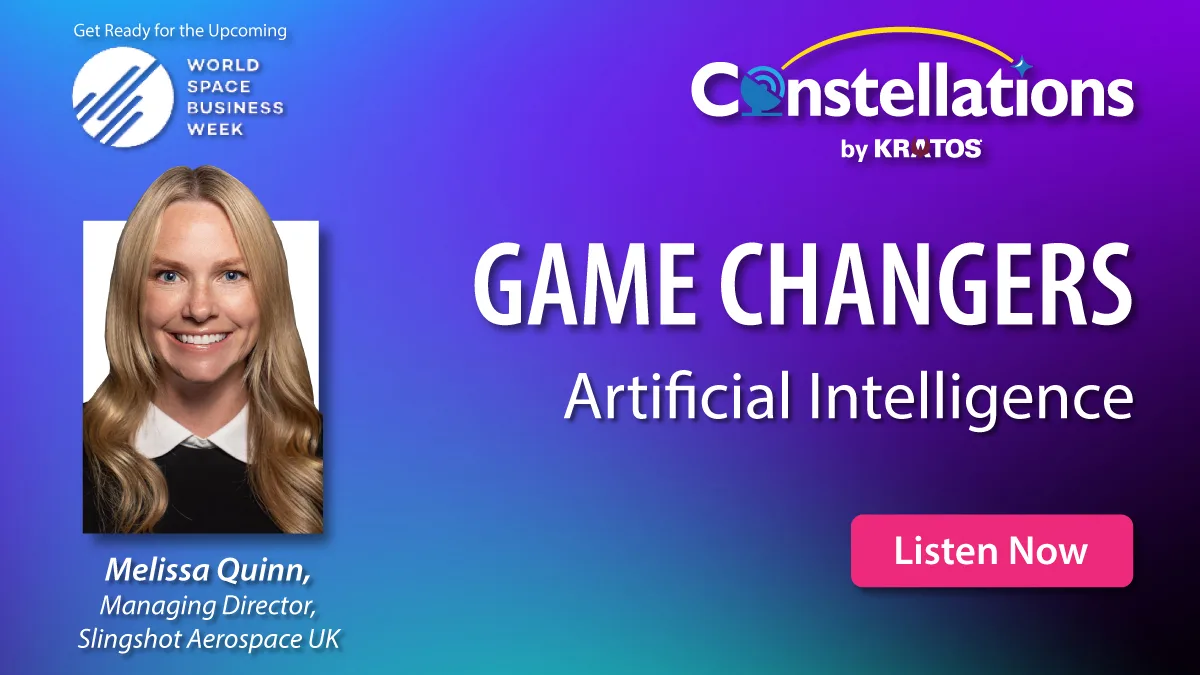
Game Changers is a limited series of short podcasts focused on pivotal new technologies or trends. In this episode, Melissa Quinn of Slingshot Aerospace walks us through the impact of artificial intelligence on the satellite and space industries. This limited series is brought to you by Constellations and Novaspace and highlights some of the key innovative topics that will be addressed at the upcoming World Space Business Week.

Constellations spoke with Florian Thirion, Senior Product and Portfolio Marketing Manager at Airbus Defence and Space, about the transformative potential of software-defined satellites—including the ability to adapt resources every 15 minutes.

Constellations spoke with Nathan de Ruiter of Novaspace, Amina Boubendir of Airbus Defence and Space and Stuart Daughtridge from Kratos about the capabilities of software-defined ground systems and the variety of applications within the satellite industry.

Network Architecture & Infrastructure

Network Operators Anchor on 5G

Facing fierce competition from SpaceX, traditional satellite network operators see the urgent call to secure their relevance in the 5G era.

Artificial Intelligence & Analytics

Space and Generative AI: Believe the Hype

An in-depth exploration of how GenAI will create value in space, its potential use cases and applications being developed today to harness GenAI technologies.

Artificial Intelligence & Analytics

DoD’s Increasing Demand for Data Fusion in Space

Experts examine data fusion as a powerful predictive decision-making tool for mapping a crowded space environment, and the imperative of tying it to specific requirements versus viewing it as a be-all solution.

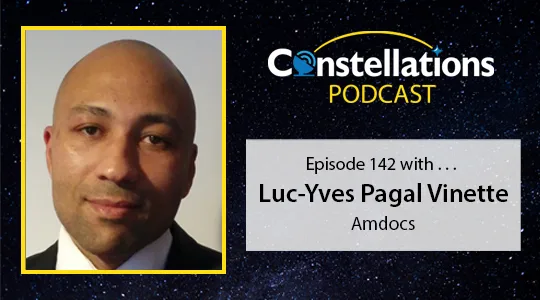
Virtualization, software-defined networking and orchestration can enable ground networks to become much more agile to meet the new capabilities in space. Luc-Yves Pagal Vinette is an expert in networking concepts such as SDN/NFV, the edge and disaggregated networks.

At an online event produced by GVF, executives from Intelsat, Kratos, SES and ST Engineering iDirect discussed the partnerships taking hold between cloud and satellite service providers and how moving to the cloud will impact service offerings in the future. Panelists agreed that cloud adoption was positively transforming the industry.

In an exclusive interview, Constellations spoke with Dr. Frank Turner, Technical Director of the Space Development Agency at the Smallsat Conference on how SDA is turning acquisition on its head to deliver new space-based capabilities to the joint warfighter on aggressive new cycles. Labeled by the Department of Defense as the ‘constructive disruptor in acquisition,’ Turner related how SDA has “a completely different model. We're doing things differently on different timelines, at different speeds.”

On this episode of the Constellations Podcast, we'll discuss the business of being an end-to-end spacecraft company. A lot of the actual hardware being deployed in smallsats, had its start in ground-based IT. We'll also talk about the unique opportunities in smallsat, including the ability to rideshare.

Over the last few years cheaper launch technology and miniaturization of satellites have opened the path to space computing, the latest dimension of edge computing that brings computation and data storage closer to the sources of data. Looking to the future, what will supercomputers do for space?

Listen to Nicolas Chaillan, U.S. Air Force Chief Software Officer, describe the importance of the U.S. DoD to bring relevant software features to the warfighter in a timely manner.

How can the satellite communication and larger space industry improve operation efficiency, while remaining competitive? The Satcoms Innovation Group (SIG) hosted a webinar explaining how adapting to the cloud may be the answer.

The space industry can take some cues from telecommunications. Considering 5G networks send and receive data using a virtualized network, why shouldn’t space networks – a network with a satellite in it – take note? Industry experts weigh in.

Listen as we discuss how Ursa bridges the gap between information-rich data and those companies that are breaking new ground in global intelligence with their vision to "turn data into impact".

Robert provides his insights on how satellite and teleport operators can preserve and strengthen their competitive advantages when going head-to-head with the cloud for specific services, or when integrating the cloud into their operations is the preferred approach.

Listen to Matthew Desch, CEO of Iridium as he discusses how their low-Earth orbit satellites provide global coverage for tracking of maritime vessels, equipment monitoring, and automatic vehicle location, across a variety of sectors from agriculture, to mining, energy, oil and gas, to transport.

Skot Butler shares his thoughts on new space discussing HTS, IoT, big data, mobility and much more. Find out how satellite connectivity is making airline flights more productive, auto manufacturers increasingly efficient, enabling big data on the move and supporting disaster recovery efforts.

Jesús Bernal Allende joins Constellations to explore how existing space law is being applied as autonomous systems take on a larger share of spacecraft decision making.

As orbital activity accelerates, the challenge for space situational awareness is shifting from collecting more data to ensuring its accuracy, interoperability and trustworthiness through advanced data fusion and greater collaboration among operators, governments and commercial providers.

Cloud Computing

Certifiable

The approval of a certification program for the DIFI 1.1 standard marks a key step toward greater interoperability and trust in digital IF equipment, enabling both standardized performance assurance and independent third-party validation. As virtualization and cloud-based ground systems expand, DIFI compliance and feature-based certification will make it easier for organizations to specify, deploy and scale interoperable solutions.

The satellite ground segment is evolving into a software-defined, cloud-native control layer that enables seamless integration with terrestrial 5G networks. Andrew Cavalier of ABI Research discusses the role of virtualization, AI-driven orchestration, and new consumption-based models in scaling NTN services and overcoming structural barriers to commercial deployment.

Routing this data directly into public clouds allows operators to clear the massive hurdle of machine learning ingestion while avoiding prohibitive egress fees. As NGSO constellations and vHTS architectures expand, applying these localized algorithms across deployed sensors will become mandatory for maintaining situational dominance and service quality.

Despite a deployment of over 650 satellites, the service currently faces brief visibility outages and a limited aggregate downstream capacity of approximately 10Gbit/s. To ensure a successful rollout, mobile network operators must utilize detailed analytics to align these technical realities with realistic user expectations and pricing models.

Artificial Intelligence & Analytics

Agentic AI for the Satellite Operator

Agentic AI is a highly evolved LLM that can leverage reason and decision making, be instructed with language rather than coding, and is highly scalable across large networks. Because of this, it is an ideal solution for complex satcom capacity planning, especially in contested and congested areas.

Virtualized, cloud-native ground systems let AI adapt quickly and secure operations through live telemetry. Standards and interoperability make training data consistent and scalable across diverse satellite and terrestrial elements.

Small satellites are imaging and collecting observational data using dozens of different methods. At the annual SmallSat conference, all types of EO players, including start-ups, established players and university programs discussed their unique approaches to gathering information about the planet we live on—but translating that data into actionable insight remains a challenge.

Hyperspectral imagery can give us a wealth of information about the world around us. To take advantage of this, Earth observation company Pixxel gathers a vast amount of data on environmental issues like deforestation, pollution, and oil and gas leaks. Read our top four takeaways.

Experts from The Aerospace Corporation, Secured Quantum Services, and OrbiSky examine the threats quantum cyberattacks pose against satellites, how operators can prepare their systems to defend against quantum attacks and who is ahead in the quantum computing race.

Software-defined satellite systems offer dynamic capacity and coverage that can be tailored to the end users’ specific needs. To learn more, Constellations spoke with a panel of experts: Park Boonyubol of Thaicom; Dallas Kasaboski of Analysys Mason; and John Chay of Kratos. Read our four takeaways from the discussion.

AI is accelerating telecom innovation, as operators leverage digital IF architectures to modernize legacy systems and enhance network performance. Integrating AI across satellite, mobile, and terrestrial networks offers the potential for improved efficiency and cost reductions.

The exponential growth of sensor-generated data from satellites is currently surpassing the capacity of current transmission infrastructures for space-based data to be processed on the ground. The experts from Avalanche Technology and Kepler Communications explain why datacenters in space are the future of processing data collected from satellites.

Could smarter satellites be on the horizon? How edge computing in space could generate more rapid, actionable insights from EO satellites, and deliver the autonomy needed to enable next generation space capabilities – from on-orbit transport to in-space assembly.

Constellations spoke with Redwire’s Chief Technology Officer Al Tadros, about how artificial intelligence is enhancing Space Domain Awareness (SDA). The discussion covered a wide range of topics, from the ability to put machine vision in orbit to ensuring data fidelity in AI algorithms.

In this episode, Al Tadros, Chief Technology Officer at Redwire discusses artificial intelligence (AI) and how it enhances Space Domain Awareness (SDA). Hear him describe datasets and simulations to train on so that characterization and intent can be determined.

As AI continues to optimize satellite operations and data processing, industry players must develop a clear strategy to maximize its benefits. The integration of AI with space technology promises improved efficiency and profitability, but a comprehensive approach is essential to fully realize its potential.

As commercial activity in low-Earth orbit (LEO) and lunar markets intensifies, the demand for in-space data centers is set to soar. These advancements will not only drive innovation in space technology but also revolutionize how data is processed and stored beyond Earth.

With AI’s precision and rapid data processing, satellite networks could see improved efficiency and reliability. Dive into the challenges and potential of integrating AI into satellite operations.

On this Constellations Podcast, we explore the evolution of the satellite terminals. Join our panel of experts to understand how the digital transformation of satellite networks has opened the door to orchestrated and automated operations across multiple orbits.

In this Constellations Podcast, we have with us an outstanding panel of experts that will discuss the “softwarization” of satellites and ground systems and the increasing integration between the two.

Artificial Intelligence & Analytics

Leaf Space Shares 3 Keys to GSaaS Success

Constellations spoke with Giovanni Pandolfi Bortoletto, the Co-founder and Chief Strategy Officer of Leaf Space, headquartered in Milan, Italy, at the Small Sat conference in Logan, Utah. While as-a-Service offerings have been around for some time in the IT world, it is a concept relatively new to space and even newer to European space.

The AFRL is focused on the next generation of autonomous spacecraft. One of its research scholars from the University of Florida recently investigated methods to help predict satellite system failures. Constellations spoke to the student as part of a spotlight on university research.

Quantum key distribution for secure communications across optical fiber networks. The technology has yet to be applied across a constellation of small satellites in Low Earth Orbit. Dr. Mark Adams, Associate Professor, Electrical & Computer Engineering, Auburn University explains how quantum key distribution (QKD) works.

Today’s space ‘renaissance’ resembles little of the era that preceded it 50+ years ago. To understand the trends driving the proliferation in space, Constellations spoke with Josh Duncan, Principal Systems Engineer at Blue Canyon Technologies, a subsidiary of Raytheon Technologies that makes spacecraft and other products supporting many types of space missions, about recent notable developments.

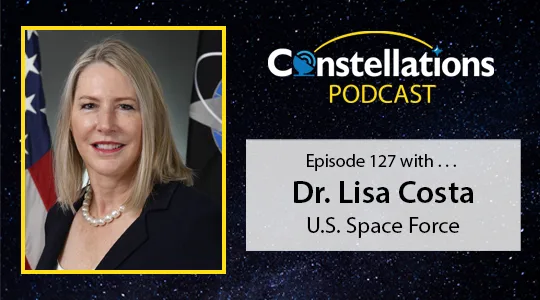
The U.S. Space Force's office is focused on disruptive and asymmetric capabilities. Dr. Costa describes the challenge of commercial companies designing an asset to do different things that were not necessarily envisioned for that asset. The more innovative industry can be, the more the Space Force can partner with them.

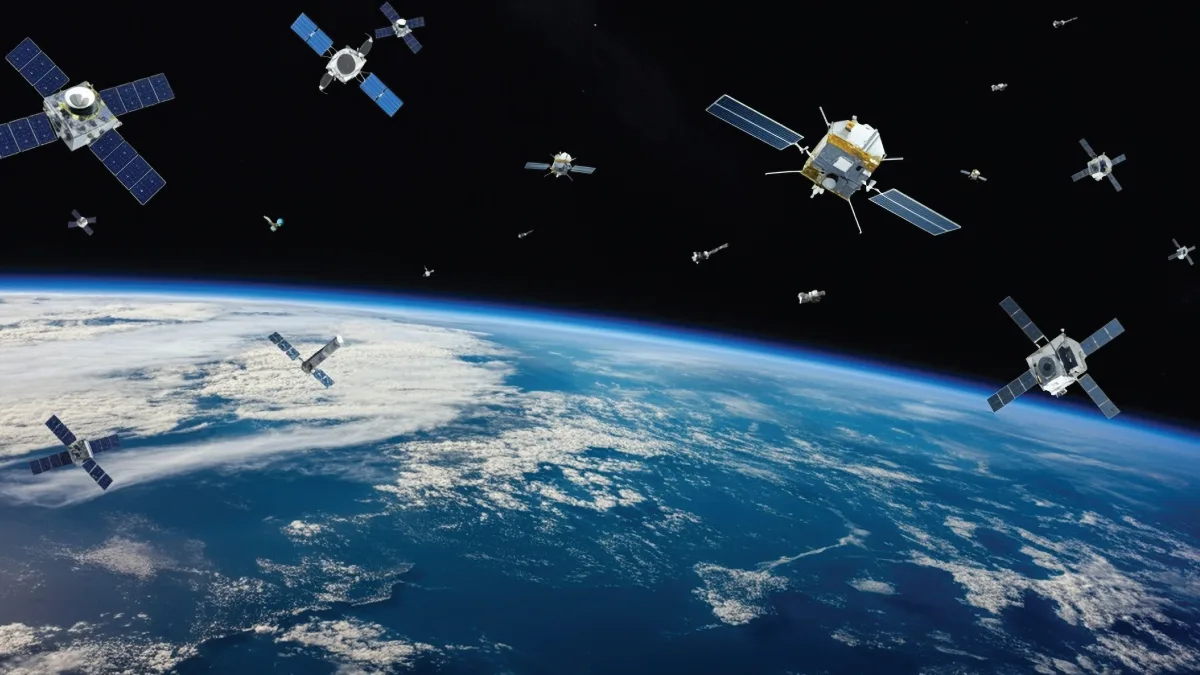
A projected 50,000 satellite constellation will turn to AI to manage and enhance constellation management, security and utilization. In this Constellations Podcast, we examine the growing impact Artificial Intelligence is having on LEO constellations and how they can help satellites understand what they can and cannot do.

Read our conversation with Geoffrey Carrigan, Program Manager at Bluestaq, on the Unified Data Library (UDL) that will be used by the U.S. Air Force and Space Force. The library has been built to handle multiple types of data and data sources with the end goal to have data available to all applicable users across domains.

Although virtualization is already an established concept in other industries, the space industry is now starting to catch up. WTA’s The Virtual Teleport webinar is a follow-on to its report, explaining the benefits of virtualizing the ground segment.

As AI pushes terrestrial data centers toward their power and capacity limits, researchers and industry leaders are exploring orbital data centers as a potential long-term solution for scalable, resilient computing despite significant technical and economic hurdles.

Missile defense systems and autonomous UAVs are converging around a shared need for tighter data integration, AI-driven decision-making and multi-layered network architectures to operate effectively in contested environments. Future resilience will depend on unifying sensing, communication and control into a single intelligent system, while overcoming persistent challenges in interoperability, policy and real-time coordination.

Melanie Stricklan of Space Foundation examines the growing complexity of modern space operations, showing how orchestrating space, ground, and cloud systems—and tackling issues like semantic misalignment and AI-driven autonomy—is redefining how missions succeed.

By moving AI processing directly onto satellites, the industry is shifting from slow, massive data dumps to real-time “event” detection at the edge. This evolution allows orbital sensors to filter through the noise and send instant, actionable insights—like a wildfire alert—instead of making analysts wait hours for a full downlink.

Paul Lasserre of Loft Orbital discusses how AI is quietly expanding its role in determining what satellites notice, flag and send home and weighs how this progression could reshape long-standing assumptions.

AI is accelerating malware development, vulnerability discovery, and deepfake-driven social engineering—without needing fully autonomous attacks. For commercial space, this means faster, tailored intrusions that can pivot from cloud-based enterprise networks into mission-critical ground and operations systems.

By detecting and discarding cloudy pixels before transmission, this technology saves crucial bandwidth and can slash downlink costs by up to $150,000 a year. This dynamic targeting allows even power-constrained CubeSats to operate more autonomously, ensuring they focus solely on delivering the highest-value data back to Earth.

In 2024, a geomagnetic storm resulted in the largest satellite migration in history. While the effects of space weather are increasingly well-understood, the systems in place to protect satellites are still disjointed. Commercial companies, government organization, and JHPL’s recent Space Weather Tabletop Exercise are working to change that.

Satellites are becoming more maneuverable and agile. As space becomes an increasingly contested landscape, resilience across orbital regimes will be paramount. Read our top four takeaways from our conversation with Tom Campbell, president of space missions at Redwire Space.

While technically sound, sovereign constellations often face economic hurdles from underused global capacity versus focused national needs. International partnerships become vital for optimizing these LEO systems and ensuring their long-term financial viability.

The number of satellites in Low Earth Orbit (LEO) is rapidly expanding due to new mega-constellations, introducing potential new threats in space. Slingshot Aerospace’s VP of Strategy and Policy, Audrey Schaffer, discusses how artificial intelligence is becoming essential for managing this complexity and improving space domain awareness.

We may have only scratched the surface of potential AI uses in satellite ground systems. As more teleport operators deploy AI, they are uncovering new possibilities, from hybrid network management to the development of proprietary AI models and APIs.

While GEO is seemingly falling out of favor among commercial satellite operators, almost 600 essential and costly satellites currently reside in that orbit. Unfortunately, GEO is increasingly congested – filled with spacecraft and space debris – and has inherent challenges regarding space domain and situational awareness. Analyze the importance of SSA and SDA in GEO and explore how advanced AI and ML technologies could open the door to better awareness in that critically important orbit.

A recent tabletop exercise envisioned cybersecurity challenges in a 2035 lunar mining facility and orbital lab. The findings underscore the importance of collaboration and innovation to safeguard emerging space activities.

Constellations spoke with two experts from the International Telecommunications Union about the rapidly changing world of smallsat, including regulatory management of large constellations and the sustainable use of in-orbit resources.

Starlink is dominating the satellite communications sector, but can competitors create an Android-like ecosystem to challenge its lead? The analogy highlights the potential for diverse strategies, as competitors focus on innovation and collaboration. The key lies in building a flexible, open ecosystem that fosters market growth for all.

The 5th Annual Value of Space Summit brought global leaders to Colorado Springs for critical discussions on the future of space security. Key takeaways highlighted the need for increased collaboration across government, industry, and academia to address growing cybersecurity threats. As space systems continue to evolve, the focus on threat intelligence and proactive defense strategies remains paramount.

Network Infrastructure

Network APIs Gaining Traction

From global API competitions to cross-network collaborations, the telecom industry is expanding opportunities for developers. This month saw groundbreaking announcements from Deutsche Telekom and Korea’s top telcos, signaling a global push toward common API standards. As these efforts grow, they could reshape connectivity for industries worldwide.

Artificial Intelligence & Analytics

Data Fusion Leverages All Datasets for Better SDA

The DoD is looking to improve space situational awareness by integrating data from various sources like optical sensors, radar, and RF signals. A new pilot program is set to harness AI and machine learning for better decision-making and threat detection in space. This initiative highlights the growing need for collaboration between defense and commercial sectors to fully unlock the power of data fusion.

As industries recognize the value of EO data for enhancing operational efficiency, the market for tailored solutions continues to grow. This shift is powered by advancements in satellite technology and the accessibility of big data analytics.

Achieving practical interoperations that meet efficiency and SWAP demands (not to mention economics) will also require digitally transforming ground systems/space networks with virtualized, standards-compliant modems and other components.

Artificial Intelligence & Analytics

AI Underpins the Pentagon’s Space Ambitions

The U.S. Department of Defense has big ambitions for space, and making those plans a reality will depend on its ability to harness emerging data management and analysis technologies, including artificial intelligence.

In the space industry, the adoption of software-defined networking and software-defined wide area networks is one of the changes helping to drive the digital transformation of today’s satellite networks.

Constellations is waving goodbye to 2023 and saying hello to our 7th year as a leading source of insights for the satellite industry.

Earth observation (EO) is unequivocally a critical asset in understanding and safeguarding our planet. The ever-increasing capacity to collect, transmit, and analyze data from space offers unparalleled insights but also presents profound challenges.

Join Steve Good, Chief Business Officer at Ramon.Space, to learn how space resilient computing infrastructure is transforming fixed satellites into flexible ones, the applications for "earth-like" computing on orbit, and how a smart satellite can leverage artificial intelligence and machine learning to contribute to humankind's knowledge of space and space operations.

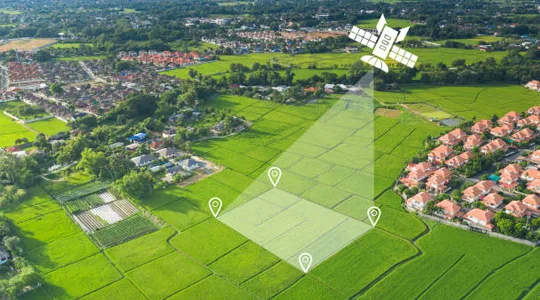
Constellations spoke with Ken Campbell, President of Edgybees Inc., about geo-registration, which takes geospatial imagery to the next level of accuracy for applications that range from disaster response and precision agriculture to military and intelligence planning.

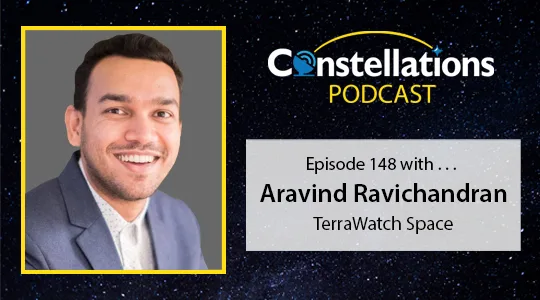
The EO industry has been projected to grow at a 7.2% clip through 2031 before reaching $11.3 billion. Constellations spoke with Aravind Ravichandran, founder of TerraWatch Space about the growing importance of earth observation data and its value to more and more markets in the future, along with some of the advances and challenges ahead.

Guillaume Tanier, CEO and Co-founder of Leanspace, joined Constellations to discuss the benefits of software for space and satellite operations. Hear Mr. Tanier discuss the digitalization of the satellite ground segment including an explanation of the concept of digital continuity, the challenges of interfaces between providers, and how it is possible for developers to build their own ground segment in weeks, rather than years.

The head of U.S. Space Systems Command (SSC), Lt. Gen. Michael Guetlein called for improved information sharing with allies during a keynote speech at the Advanced Maui Optical and Space Surveillance Technologies (AMOS) conference. “We’ve got to free the data,” Guetlein said, referring to space domain awareness (SDA) information shared between commercial partners and allied nations.

Artificial Intelligence & Analytics

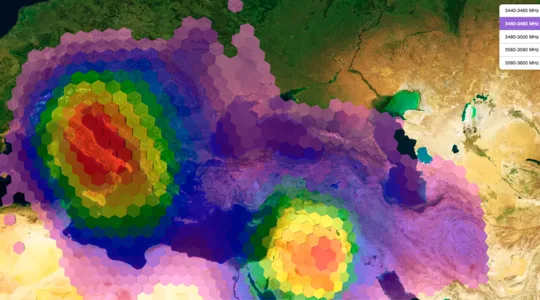
Aurora Insight: Mapping Spectrum Use from Space

Aurora Insight, based in Denver, Co., has documented the growth of wireless network activity, infrastructure deployment and spectrum use across frequencies. Since deploying its first satellite in 2018, Aurora Insight has documented a global map of spectrum use that is “agnostic” to specific signal frequencies.

Which side of the geospatial imagery industry should be more afraid of commoditization: Satellite fleet owners of providers of geospatial analytics? As multiple fleet owners move toward once-a-day coverage or better, with satellite sensors providing ever-sharper imagery, the pixel makers do appear exposed, especially as customers place higher value on the package of data provided, and not just the picture.

The communications industry is being overhauled. With the introduction of 5G and lower earth orbit, the way we deliver services is about to change. Adapting cleverly to these changes will help satellite businesses reap the benefits of new opportunities being made available to the satcom industry. The ground segment is no exception.


In this follow-on interview, Constellations spoke to Jeff Freedman, CEO of Kythera Space Solutions to dive into the complex topic of software-defined satellites, and how these will interact with ground systems.

Listen to Stacy Kubicek talk about mission critical solutions that benefit the warfighter and support national defense.
In this podcast, Robert Bell the Executive Director of the World Teleport Association (WTA) talks about how the explosion in satellite capacity is dramatically changing the dynamics on the ground.

Marshall Culpepper is the CEO and CTO of Kubos, a venture backed start-up that is building the first comprehensive software platform for the satellite industry.

Listen to Dave Mihelcic, former CTO of DISA and current Federal CTO of Juniper Networks, talk about self-driving networks, artificial intelligence and machine learning tools such as bots – tools to both defend the network (whether on the ground or in the cloud) and keep it healthy in the future.