



Space is a Network.
Constellations is Your Connection.

Space & Orbital Operations

From falling launch costs to the rise of multi-orbit architectures, the sector is reshaping how capital flows into space infrastructure. Explore the four biggest trends driving this transition and what they mean for operators and investors.


NASA’s new lunar base plans could generate billions in commercial opportunities, but Artemis delays, technical challenges and continued dependence on government funding are likely to push large-scale growth of the lunar economy deeper into the 2030s.

While Europe’s HALO and IRIS² initiatives both aim to strengthen sovereign satellite communications, their ultimate success will depend on building interoperable, sovereign-controlled ground infrastructure that enables secure command, connectivity and cross-border operations.

ABI Research Principal Analyst Andrew Cavalier explains how Rocket Lab’s acquisition of Iridium signals a new era of vertically integrated space companies, reshaping competition, resilient PNT, spectrum strategy, and the future structure of the satellite services market.

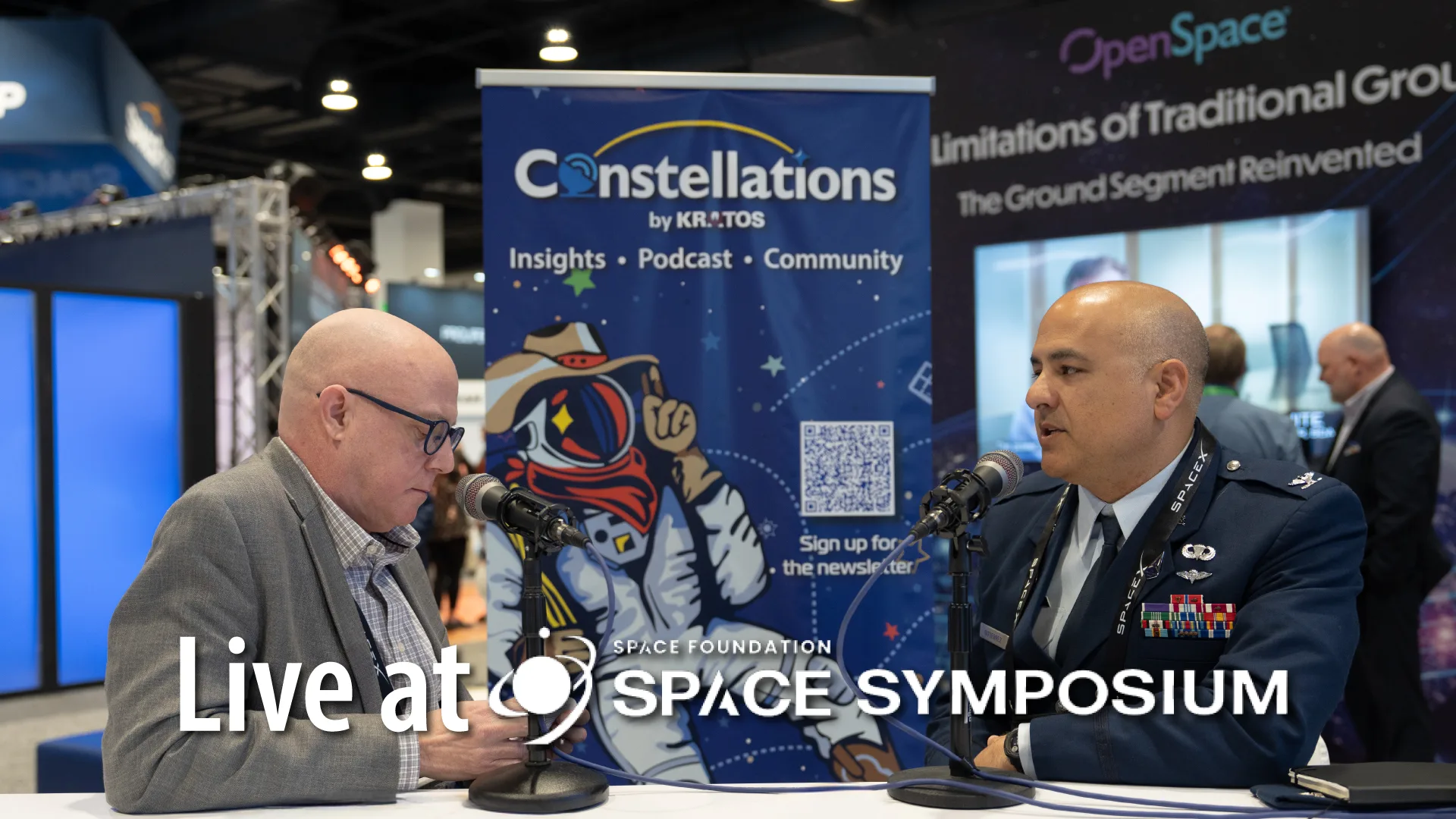
Colonel Eddie Gutierrez details how Mission Delta 3 is accelerating electronic warfare capabilities to keep pace with rapidly evolving space threats. He discusses Guardian readiness, improved targeting and the need for close coordination among operators, acquisition teams and industry to deliver effective EW systems at the speed of the mission.

By transitioning to software-defined systems, operators can slash costs by over 50% and accelerate deployment times from weeks to just a single day. This shift not only streamlines multi-orbit management but also provides a critical competitive edge in the emerging $30 billion 5G NTN market.

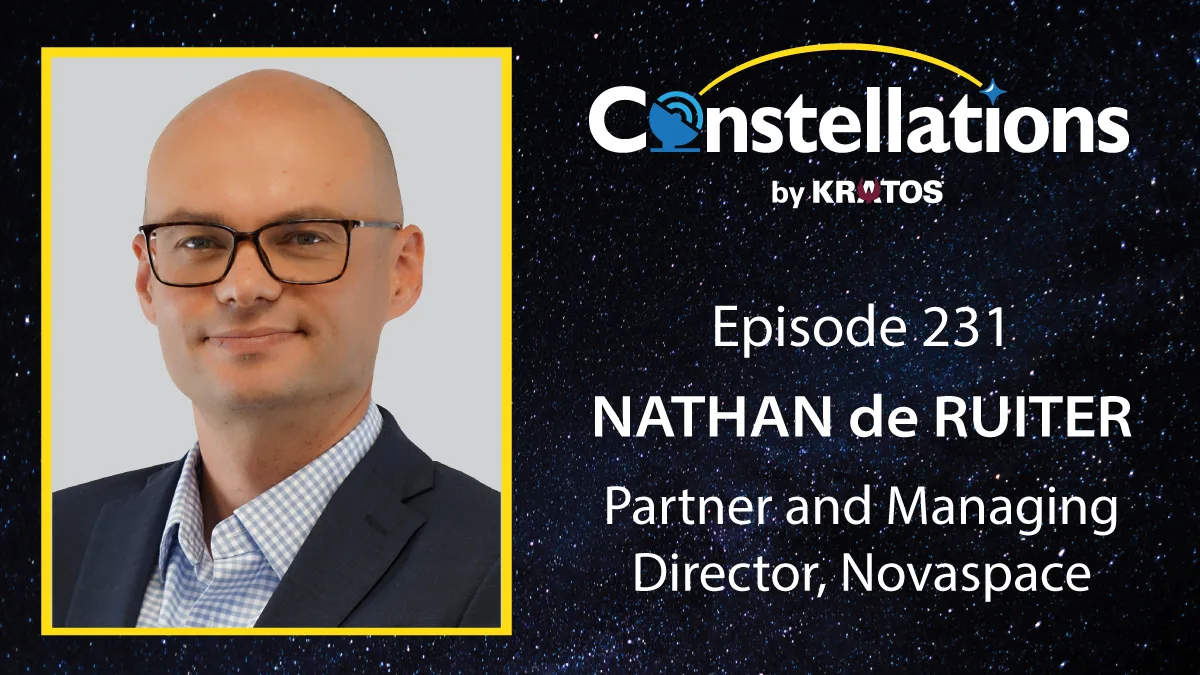
Nathan de Ruiter, Partner and Managing Director at Novaspace, breaks down the shifting supply-and-demand landscape for satellite capacity in Asia. Hear Nathan explain how pricing, competition, government programs and network evolution are reshaping operator strategy across one of the industry’s fastest-changing regions.

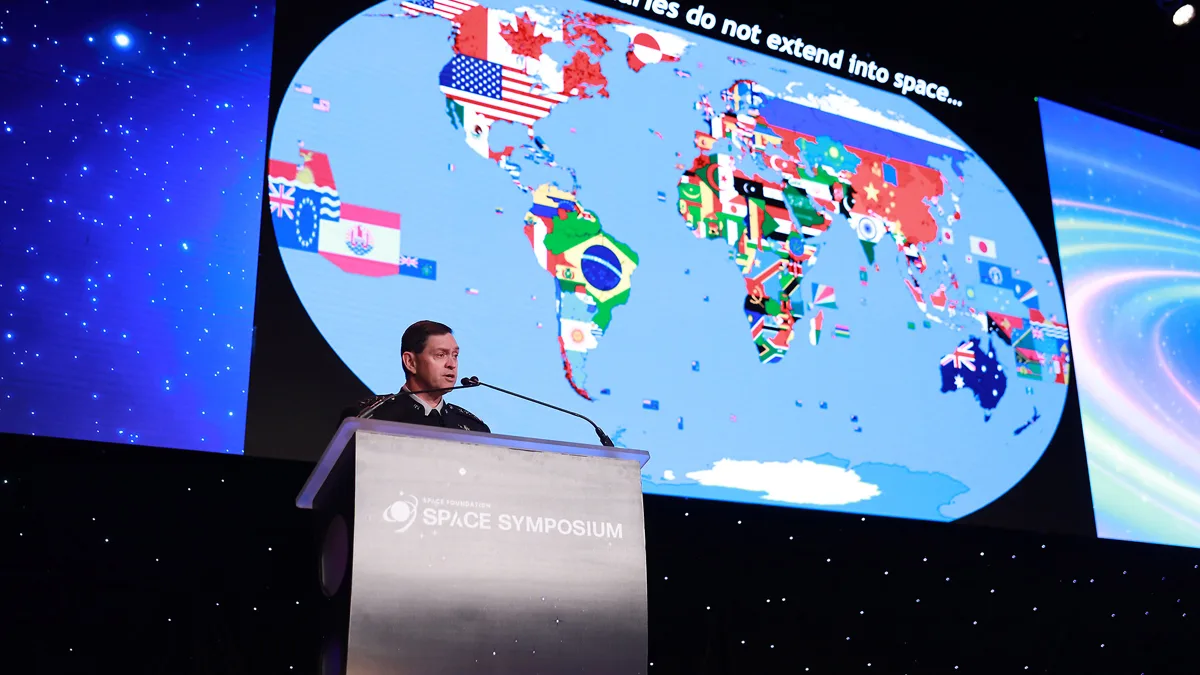
Melanie Stricklan of Space Foundation examines the growing complexity of modern space operations, showing how orchestrating space, ground, and cloud systems—and tackling issues like semantic misalignment and AI-driven autonomy—is redefining how missions succeed.

Smaller geostationary satellites are emerging as a flexible, lower-cost complement to both large GEO platforms and proliferated LEO constellations, enabling new commercial models and sovereign access while reshaping how operators deploy and manage capacity. At the same time, their adoption is driving more dynamic, disaggregated architectures and faster technology refresh cycles, reinforcing GEO’s continued strategic relevance in a multi-orbit future.

As threat actors shift from attacking perimeters to exploiting the implicit trust within CI/CD pipelines, the space sector faces an increasingly sophisticated software supply chain risk. This latest briefing analyzes how malicious libraries and compromised developer tools are bypassing traditional defenses to threaten mission-critical infrastructure and overall mission assurance.

Highlights from a webinar on the business case for virtual ground systems explain how software-defined architectures are helping satellite operators scale constellations more efficiently while reducing costs and speeding deployment. The discussion outlines how virtualization supports multi-orbit operations, cloud integration, and evolving 5G-NTN capabilities, strengthening flexibility and return on investment for modern satellite networks.

TransAstra’s innovative “Capture Bags” are designed to snag hazardous debris today, but the same inflatable technology is being built to harvest asteroids tomorrow. Discover how tackling the orbital debris crisis could ultimately unlock a massive new economy built on millions of tons of space-based materials.

The facility will begin limited deliveries for Telesat’s Lightspeed constellation later this year before reaching full production in 2027. Built around MDA’s adaptable Aurora platform, the factory aims to drive further orders by churning out both broadband and direct-to-device (D2D) satellites for major clients like Globalstar.

Bringing manufacturing in-house grants these companies the strategic advantage of controlling the entire stack, though it introduces substantial capital risk and threatens market fragmentation. To maintain optionality and outpace competition, vendors must pursue targeted M&A to navigate the rising geopolitical demand for sovereign data solutions.

This hybrid network utilizes Q- and V-band links to deliver speeds of 144 Gbps in LEO, while MEO optical links aim to provide throughput up to 6 Tbps. With a projected deployment start in late 2027, the system targets a capped capacity of roughly 100,000 customers, distinguishing itself from the broader consumer focus of Amazon Leo.

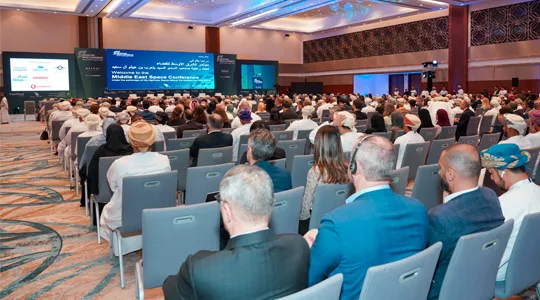
As global LEO constellations reshape satellite economics through scale and speed, Middle Eastern operators are charting a different path rooted in sovereignty, regulatory alignment and national strategy. How regional satellite companies are leveraging close ties with governments, multi-orbit collaboration and spectrum stewardship to remain relevant and grow.

In a year defined by Golden Dome, Starlink’s unprecedented scale, direct-to-device disruption and rising demands for sovereignty, 2025 marked a strategic inflection point. Quilty Space take a look back at the year’s milestones.

Peter Krauss of Terran Orbital talks about the importance of rapid iteration and accelerated development to build and deploy on-orbit assets more efficiently to support commercial innovation and national defense needs.

The campaign uses convincing recruiter profiles and malicious PDFs to deliver multi-stage malware that steals intellectual property and establishes long-term access. This blending of social engineering with developer-tool compromise raises direct risks for satellite communications firms, component manufacturers, and space-sector integrators.
In a discussion at World Space Business Week, leading Earth observation market executives discussed their exposure to, and reliance on defense markets. While some were more confident than others, do the deep pockets and enduring demands of governments and militaries wed Earth observation to defense, and what does that mean for the developmental future of the technology?

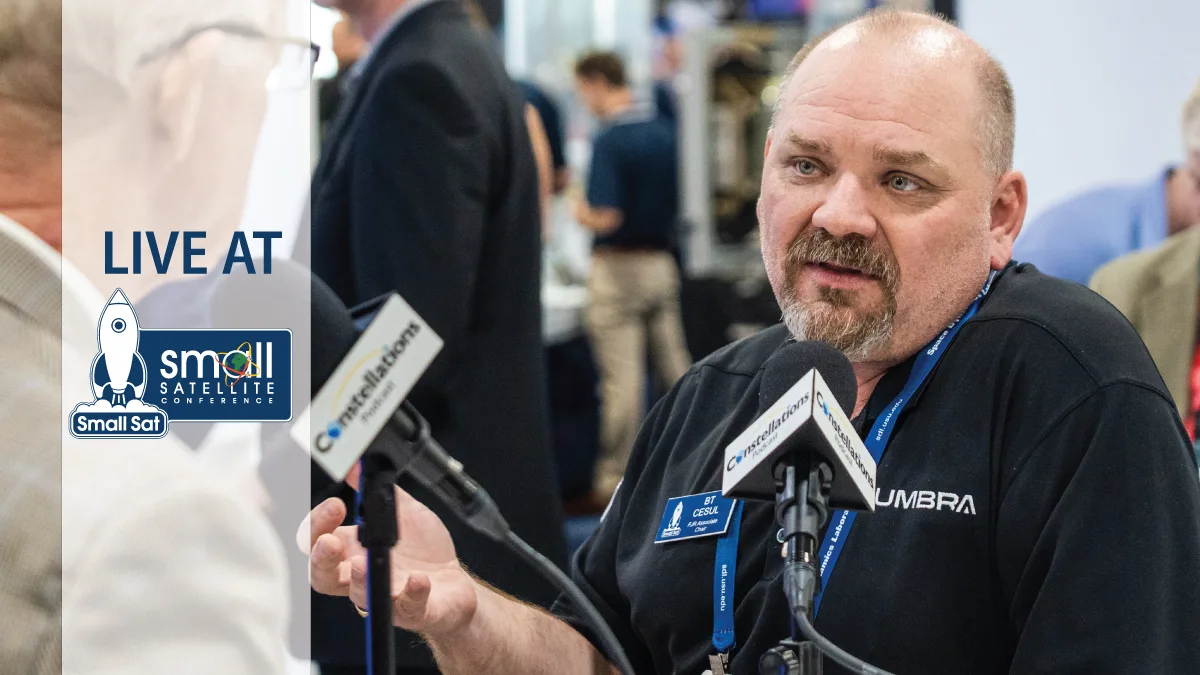
The combination of smallsat innovation, cost reduction and vertical integration is pushing the boundaries of what’s possible with synthetic aperture radar (SAR) imaging. Read our top four takeaways from our conversation with Brandon (BT) Cesul of Umbra.

Space is more crowded than ever as new satellites and old debris complicate navigation and overwhelm satellite data systems. Quantum machine learning (QML) can speed hyperspectral image processing and optimize satellite scheduling and routing, and deserves urgent exploration.

Satellites are becoming more maneuverable and agile. As space becomes an increasingly contested landscape, resilience across orbital regimes will be paramount. Read our top four takeaways from our conversation with Tom Campbell, president of space missions at Redwire Space.

A graphing calculator has more processing power than most satellites. To pursue the next generation of space missions, operators will need better and faster compute capabilities in orbit. Read the top four takeaways from our conversation with Edward Ge, co-founder and CEO of Aethero.

Discover how the new Inbound Link Establishment protocol enables automatic link monitoring and rapid failover in seconds, minimizing mission disruption across satellites and ground segments. From NATO’s PlugFest evaluations to MILCOM 2025 workshop sessions, dive into the interoperability and scalability solutions shaping tomorrow’s resilient networks.

With orbital traffic surging and debris proliferating, integrating real-time satellite tracking, space weather monitoring and threat characterization has become essential for both civil safety and national security. Investing in dual-use sensor networks and advanced analytics will empower nations to detect adversary intent, maintain freedom of action and secure the next decade of space assets.

Ahead of World Space Business Week, Constellations and Novaspace released a limited podcast series, featuring five space leaders. Each executive answered a handful of questions about the state of the industry, what drives their companies, and the challenges that lie ahead. Read our favorite quotes and takeaways from each conversation.

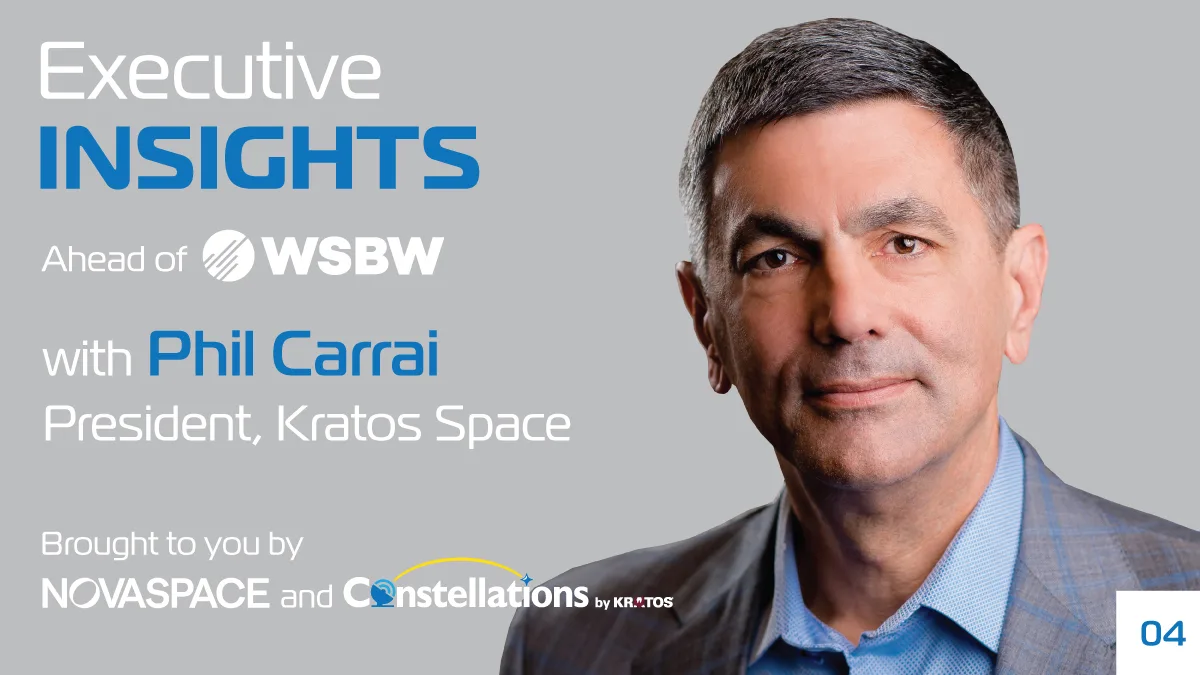
In this Executive Insights limited series, Phil Carrai is focused on 5G as the future of satcom! Phil tells us about recent 5G NTN developments from Kratos and identifies the emergence of mega constellations and better access to space as two major disruptors in our industry.

Small satellites are imaging and collecting observational data using dozens of different methods. At the annual SmallSat conference, all types of EO players, including start-ups, established players and university programs discussed their unique approaches to gathering information about the planet we live on—but translating that data into actionable insight remains a challenge.

While SpaceX continues to dominate the launch landscape, other companies are getting creative in the way they get to orbit, from small rocket launches to reusable satellite buses. As Europe claims greater sovereignty over its space activities and launch becomes a more sustainable process, how the industry thinks about space access is changing.

Multiple layers of resiliency are required to build a space environment that is tactically responsive. Jiral Shah, VP of Business Development at Gravitics, described the role of pre-positioned assets in orbit and the importance of mobility and power in space operations. Read our top four takeaways.

The company must launch over 1,500 satellites by July 2026 to meet its first regulatory milestone, a feat made difficult by launch vehicle availability. This uncertainty, and competition from players like Starlink, raises questions about Kuiper's ability to fulfill its global internet ambitions.

Space Domain Awareness (SDA)

Constructing the Next Space Age

Frequent satellite launches, regular lunar missions and new capabilities like on-orbit repair and refueling all precipitate the next big step in space technology: building large-scale infrastructure in space. Welcome to the world of on-orbit construction.

The alliance’s new Commercial Space Strategy aims to integrate private sector space capabilities for collective security. This policy focuses on making commercial space assets interoperable among the 32 member nations and with their own government satellites. However, it leaves open questions about future budgets and how the alliance will secure priority access to these commercial services during a crisis.

GPS and PNT signals rely on a weak RF signal that is highly vulnerable to jamming and spoofing. One alternative is quantum communication technology, which uses entangled photons to deliver a highly accurate timing signal. Read our top four takeaways.

Industry officials believe Elon Musk’s recent controversial behavior presents a golden opportunity for Europe’s space sector to counter the threat from his companies, SpaceX and Starlink. As customers express concern about relying on a single American provider, European companies like Eutelsat and Arianespace are promoting their sovereign satellite and launch services as crucial, reliable alternatives.

This episode explores the future of Position, Navigation, and Timing (PNT) with Xairos CEO David Mitlyng, who outlines the challenges of moving beyond our deep reliance on GPS. He explains how quantum time transfer provides a secure and highly precise alternative, using entangled photons in systems ready for integration with current satellite and ground infrastructure.

While technically sound, sovereign constellations often face economic hurdles from underused global capacity versus focused national needs. International partnerships become vital for optimizing these LEO systems and ensuring their long-term financial viability.

Space Solar Power (SSP), or power harvested from the sun via satellites and beamed to the Earth’s surface, could be a disruptive new source of energy. In January, China announced the launch of a kilometer-wide satellite solar array. In the U.S. and the UK, several start-ups also plan to put solar arrays into space in a bid to create the ultimate clean energy source.

The development of space as a sovereign domain is expanding. While space is inherently international, balancing the need for both security and collaboration can make it difficult for multi-national players to work together, and international regulation is one step on the path towards making space safe and sustainable for everyone.

We may have only scratched the surface of potential AI uses in satellite ground systems. As more teleport operators deploy AI, they are uncovering new possibilities, from hybrid network management to the development of proprietary AI models and APIs.

Software-defined satellite systems offer dynamic capacity and coverage that can be tailored to the end users’ specific needs. To learn more, Constellations spoke with a panel of experts: Park Boonyubol of Thaicom; Dallas Kasaboski of Analysys Mason; and John Chay of Kratos. Read our four takeaways from the discussion.

We all rely on GPS and GNSS capabilities in our day-to-day lives, but GPS systems are vulnerable to jamming and spoofing. Ian Canning, CEO of EACOWT, broke down how LEO constellations can add a layer of resiliency to GPS. Read our takeaways from the discussion.

Insurers argue that SES’s claim anticipates future losses rather than covering observed anomalies, challenging traditional boundaries of satellite insurance coverage. The outcome of this dispute could significantly reshape risk assessment and claims processing practices in the satellite insurance industry.

For small and emerging space companies and entrepreneurial startups, the cost to build a satellite and launch it into orbit may be too high to get off the ground. Thankfully, the CondoSat trend is making it easier and cheaper to get payloads into orbit. But what regulatory and liability challenges await companies entering this nascent marketplace?

Learn how Direct-to-Device (D2D) satellite connectivity is bridging connectivity gaps, with insights from Jacques Leduc, CEO of Terrestar Solutions. He explores the impact of 3GPP 5G standards, spectrum access, and strategic partnerships on the D2D market's future growth.

Smallsat proliferation in LEO has significantly disrupted the satellite industry, and now they’re moving into the higher orbits. Read the top four takeaways from our discussion with Astranis CEO John Gedmark on their groundbreaking MicroGEO technology.

The exponential growth of sensor-generated data from satellites is currently surpassing the capacity of current transmission infrastructures for space-based data to be processed on the ground. The experts from Avalanche Technology and Kepler Communications explain why datacenters in space are the future of processing data collected from satellites.

Satellite Connectivity & Technology

HAPS Expert: The Stratospheric Satellite Alternative

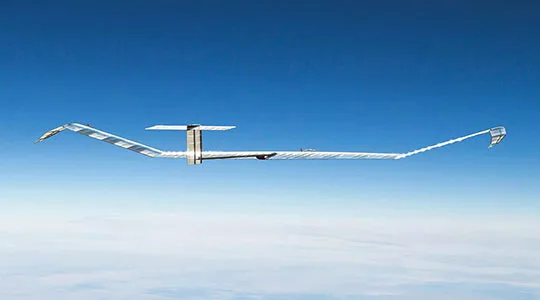
While satellite providers continue to build large constellations in LEO, continuous connectivity to the ground remains difficult and expensive. High altitude platform stations, or HAPS, could be one alternative. Read the takeaways from our discussion with Russ Van Der Werff, Vice President of the HAPS Alliance and VP of Stratospheric Solutions at Aerostar.

The militaries of France, Germany, and New Zealand have joined the U.S. and other nations as part of Operation Olympic Defender. Much of the initial mission appears to focus on SSA and information sharing, raising an interesting question: what role, if any, will industry partners play in Olympic Defender?

Modular satellites could drastically reduce the time and cost of satellite assembly, fostering faster deployment in commercial and military applications. By embracing modularity, the space industry is opening doors to enhanced agility, interoperability, and global accessibility.

With satellite launches predicted to increase in the coming decade, as well as an expanding smallsat market, the demand for ground station as-a-service is also on the rise. Constellations recently spoke with Brad Bode, CTO of ATLAS Space Operations, about what satellite operators can expect from a GSaaS provider and how the market is shaping up for the coming years.

The proliferation of RPOD and On-Orbit Servicing missions is driving a need for sophisticated propulsion systems on satellites. SETS, IENA SPACE, Thales Alenia Space and Dawn Aerospace examine the current challenges of satellite propulsion systems and what the future of propulsion will look like for RPOD and OOS missions.

In this podcast, Brad Bode, CTO at ATLAS Space Operations, explains why GSaaS providers are resisting consolidation, the growing applications beyond Earth Observation (EO), and the critical role of software in ground systems.

The advent of affordable commercial space launch opened the door to numerous exciting new satellite companies and constellations – including on orbit transport companies. Learn about the technologies enabling on orbit transport, why the service is needed, and how it could kick the door open for a new space economy further from Earth.

Constellations spoke with Redwire’s Chief Technology Officer Al Tadros, about how artificial intelligence is enhancing Space Domain Awareness (SDA). The discussion covered a wide range of topics, from the ability to put machine vision in orbit to ensuring data fidelity in AI algorithms.

Satellite orbits are crowded and hard to navigate. Constellations spoke with Paul Graziani of COMSPOC about the role of multiple data sources and data fusion in helping satellite operators tackle space situational awareness.

Operators must carefully manage the climb through debris-heavy regions, processing thousands of conjunction alerts daily. As regulations tighten, the balance between innovation and safety is becoming a critical focus in the evolving satellite industry.

This year has seen a surge in cyber and non-cyber threats targeting global space systems as space-faring nations race to secure dominance. The report highlights critical challenges, including the exploitation of zero-day vulnerabilities, ransomware attacks, and potential risks to space infrastructure due to advanced malware.

As AI continues to optimize satellite operations and data processing, industry players must develop a clear strategy to maximize its benefits. The integration of AI with space technology promises improved efficiency and profitability, but a comprehensive approach is essential to fully realize its potential.

Novaspace consultant Gabriel Deville discusses the current state and outlook of Space Situational Awareness, the $3 billion government investment in in-orbit services, crucial for space operations' flexibility, sustainability, and safety, and the market's need for a substantial customer base before it becomes a true buyer's market.

There were three SmallSat acquisitions in the first few weeks of August. Were these three acquisitions a sign of consolidation in the SmallSat industry, or a sign of multiple, smaller trends? Analysts from ABI Research, Analysys Mason, and Quilty Space look at the factors driving acquisition in the SmallSat industry.

As many as 40,000 small satellites are projected to enter LEO in the next decade. Constellations spoke with Kevin Lausten, President of Morpheus Space, about the mobility and propulsion tech behind the smallsat takeover.

In this episode, Igor Alonso Portillo and Eliot Nelson from KSAT explore the dynamic landscape of satellite constellations, the impact of recent market consolidation, and spectrum allocation.

As industries recognize the value of EO data for enhancing operational efficiency, the market for tailored solutions continues to grow. This shift is powered by advancements in satellite technology and the accessibility of big data analytics.

Non-Earth Imagery is not just a capability of government and military organizations anymore. Experts from HEO, Maxar, and Kratos explain the technology advancements and regulatory changes driving the emergence of commercial NEI, and the many use cases for government and commercial satellite operators.
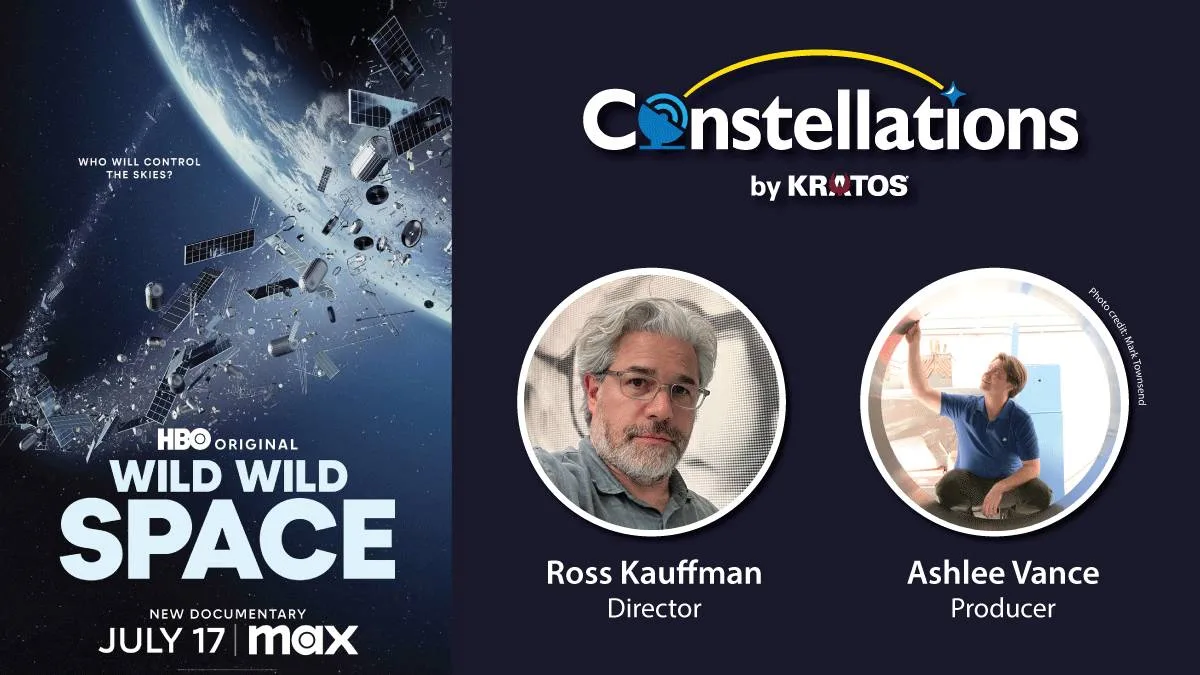
In an exclusive interview, the makers of HBO’s newest documentary Wild Wild Space discuss the commercial space race to LEO—and what it was like watching rockets explode from mission control. Read the highlights of our discussion with producer Ashlee Vance and Oscar-winning director Ross Kaufmann.

Malicious cyber actors are persistently pursuing novel attack methods to disrupt commercial, military and government space assets. Industry is responding by exploring ZTA standardization to harden space systems’ cybersecurity postures, while simultaneously running tabletop wargaming exercises to prepare and ready attack mitigation responses.

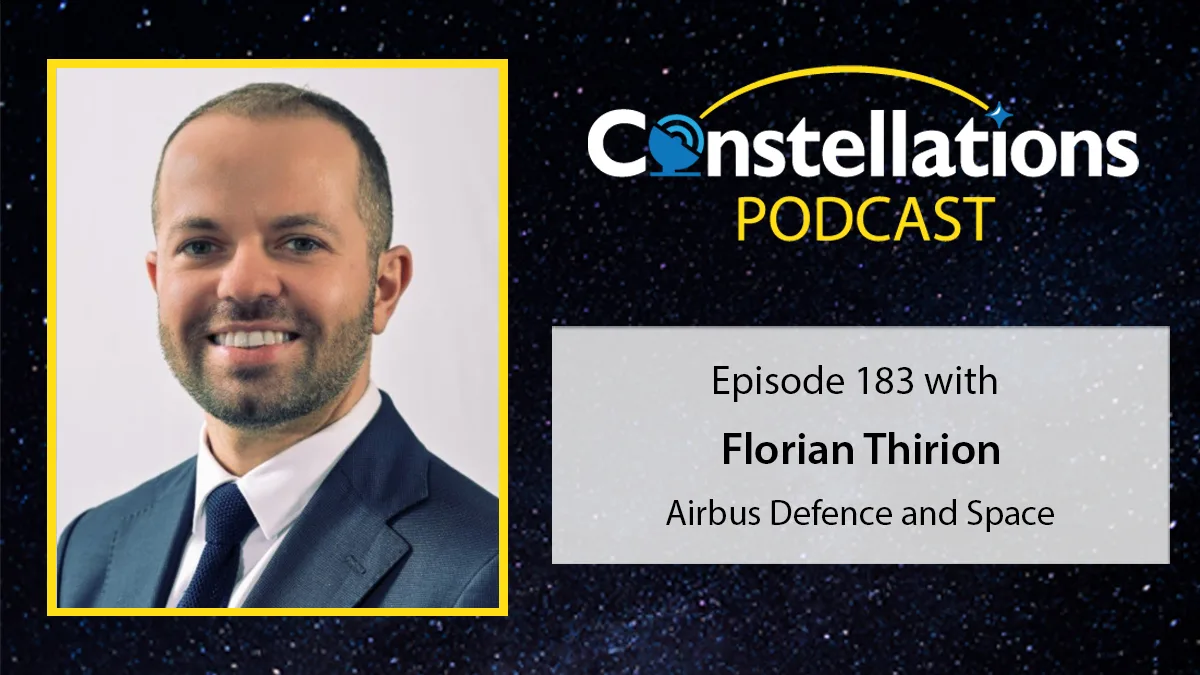
Constellations spoke with Florian Thirion, Senior Product and Portfolio Marketing Manager at Airbus Defence and Space, about the transformative potential of software-defined satellites—including the ability to adapt resources every 15 minutes.

In a world where a handful of vertically integrated mega-constellations are concentrating and retaining in-house most of the demand, the manufacturing landscape is rapidly changing to secure its future. From software-defined payloads to cost-effective smaller GEO satellites and low-cost launch options, these new offerings are deemed to roll out tomorrow’s space segment.

Constellations spoke with Nathan de Ruiter of Novaspace, Amina Boubendir of Airbus Defence and Space and Stuart Daughtridge from Kratos about the capabilities of software-defined ground systems and the variety of applications within the satellite industry.

While the so-called “kill phase” of missile defense is critical, recent events demonstrate that defeating low-cost missiles with multimillion-dollar interceptors is not sustainable. There is growing recognition of the need for technology innovation, from directed energy to enhanced sensing and integration between the land, sea, air and space-based layers of the enterprise.

The U.S. Space Force took another step to improve industry collaboration with the release of its Commercial Space Strategy, highlighting criteria that will be used in evaluating industry proposals for technology solutions going forward.

Constellations spoke with Sethu Saveda Suvanam, Founder and CEO of ReOrbit, about the digital transformation of the satellite industry. With the increasing prevalence of software-defined satellites and increased capacity for onboard computing, the landscape of the entire sector is changing quickly.

Why is the Middle East considered one of the most dynamic regions for space worldwide? Regional players are finding a diverse commercial ecosystem where they can leverage cutting-edge technologies into advanced capabilities.

As Middle East space powers develop more upstream capabilities, downstream applications, like data, imagery and other satellite services will continue to have the greatest bearing on non-space industries and end-users.

Two United Nations agencies appealed to international telecommunications regulators to block attempts by terrestrial mobile interests to get access to spectrum used by high-resolution radar satellites to assess climate change. It was eight years ago, that ITU delegations agreed to double the amount of spectrum allocated to radar Earth observation measurements, to 1,200 MHz. The new spectrum resulted in higher-resolution imagery.

Satellite Connectivity & Technology

Satellites, Cell Towers and HAPS?

Revolutionizing Global Connectivity: AALTO HAPS CEO Samer Halawi on Bridging the Digital Divide with Innovative High Altitude Platforms.

Any company designing a data-relay or broadband satellite constellation would prefer to hold off selecting its laser communications terminal (LCT) supplier until the U.S. Space Development Agency (SDA) has performed in-orbit validation of at least two, if not all four, of the LCT providers it’s working with. Telesat, Rivada Space Networks, Kepler Communications, the European Commission and others have set deadlines coming up before the SDA has done its testing.

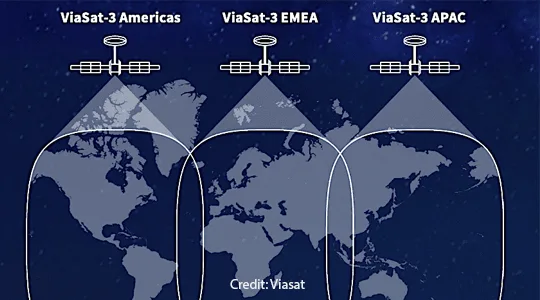
The Viasat-3 Americas satellite has definitively lost more than 90% of its expected terabit-per-second of throughput but Viasat Inc. has concluded that capacity it has leased from third parties, plus fleet additions from its Inmarsat acquisition, will mean the satellite will not be replaced.

Challenges in the satellite launch industry affect even major players like Amazon. Operators with satellites in the 100-500kg mass range face the most severe bottlenecks due to limited options and licensing constraints.

Ahead of World Satellite Business Week, satellite industry leaders from across the space value chain offer their thoughts on the issues and technologies impacting the sector.

Artificial Intelligence & Analytics

Leaf Space Shares 3 Keys to GSaaS Success

Constellations spoke with Giovanni Pandolfi Bortoletto, the Co-founder and Chief Strategy Officer of Leaf Space, headquartered in Milan, Italy, at the Small Sat conference in Logan, Utah. While as-a-Service offerings have been around for some time in the IT world, it is a concept relatively new to space and even newer to European space.

Over the last 18 months, cyberattacks on space networks have become more common. Space operators and security professionals alike are aware of the vulnerabilities posed to ground-based architecture, including satellite terminals that can be exploited by a variety of cyberattacks.

To delve deeper into the GSaaS market and its future, we have with us today, Giovanni Pandolfi Bortoletto, Co-Founder and Chief Strategy Officer of Leaf Space – a GSaaS provider that operates a fully owned, globally distributed network of ground stations.

As we journey into an era of rapidly advancing technology, the future of Intelligence, Surveillance, and Reconnaissance (ISR) lies in exploring novel approaches that can provide greater accuracy, extensive coverage, and real-time data. High-Altitude Pseudo-Satellites (HAPs) emerge as a compelling addition providing transformative solutions for ISR and remote sensing challenges.

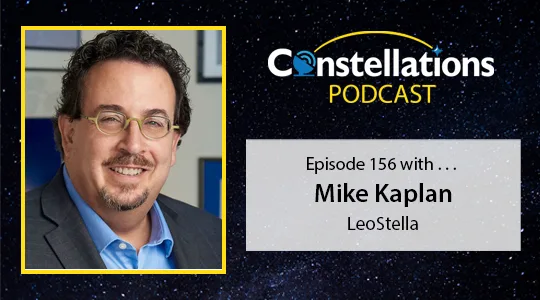
Explore the booming smallsat industry with Mike Kaplan, Vice President of LeoStella, as we delve into the challenges and innovations in satellite manufacturing amid a forecasted average launch of one ton of smallsats per day over the next decade.

A consortium led by ArianeGroup with satellite fleet operator Eutelsat and image-processing expert Magellium will start work on space situational awareness camera placed on a Eutelsat satellite in geostationary orbit, likely as a hosted payload, or in geostationary transfer orbit as a dedicated small satellite.

A spy is among us. This is no ordinary satellite but one that exhibits unusual behavior and close approaches that betray its mission.

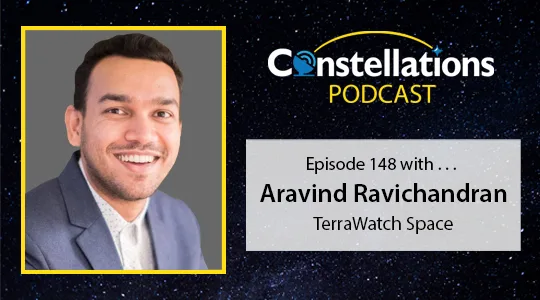
The EO industry has been projected to grow at a 7.2% clip through 2031 before reaching $11.3 billion. Constellations spoke with Aravind Ravichandran, founder of TerraWatch Space about the growing importance of earth observation data and its value to more and more markets in the future, along with some of the advances and challenges ahead.

It’s often said government cannot keep up with private-sector technology advances. But when it comes to restricting exports, it’s a different story. The outpouring of NewSpace companies in recent years has created these new markets, and most of them are internationally competitive.

The need to match the emerging capabilities of non-geostationary orbit (NGSO) constellations has been a driving force and source of inspiration for ground and user segment providers. This is particularly true for antenna and ground terminal manufacturers.

Satcom LEO constellations are often assessed through the lens of the last-mile, end-user perspective. This side of the business is where constellations’ missions are ultimately realized so focus is rightly put on deliverables such as user IP bandwidth, visible satellites and the cost of terminals. Nevertheless, having a good understanding of the end-to-end architecture can.

The AFRL is focused on the next generation of autonomous spacecraft. One of its research scholars from the University of Florida recently investigated methods to help predict satellite system failures. Constellations spoke to the student as part of a spotlight on university research.

Digital Transformation

What’s in Store at VOSS

Constellations talked to the Space ISAC team about what to expect from the 2026 Value of Space Summit, what’s new about the event and what they most love about the location.

Mohamed Sayed, VP of Commercial at Es’hailsat joins Constellations to discuss how regional operators are navigating a new era of mega-constellations, as governments across the Middle East invest in sovereign space capabilities and secure communications-regional operators will start playing a bigger role.

Financing in the space industry is often overlooked, yet a critical aspect to growth within the industry. Joining Constellations is Phaedra Chrousos and Max Yergan of SLI Aerospace, who will discuss how innovative financing models could accelerate the commercialization of space and reshape the economics of the industry for years to come.

As interest in nuclear power for space accelerates, experts examine how advanced reactors could enable sustained lunar operations while introducing new challenges around cybersecurity, autonomy, proliferation, and governance in the emerging cislunar economy.

DIFI PlugFest USA 2026 will test the latest version of the DIFI standard in more realistic, end-to-end network environments, helping advance interoperability, certification and digital transformation across next-generation multi-orbit satcom systems.

NASA is accelerating its return-to-the-Moon strategy by relying more heavily on commercial transportation and logistics as competition with China intensifies. Long-term success in cislunar space will depend less on any single technology and more on the ability to integrate transportation, communications, autonomy, power and surface infrastructure into a sustainable lunar ecosystem.

Market Competition & Strategy

What’s in Store at Space Industry Forum

Novaspace’s Nathan de Ruiter shares why the industry is moving past speculation toward real-time execution in areas like sovereign connectivity and multi-orbit strategies. Read the full interview to understand how operators are navigating a fragmented landscape defined by local regulation and the convergence of satellite and terrestrial networks.

Decades of satellite missions have generated vast amounts of dark data that remain largely unprocessed due to technical complexity, limited funding and a growing gap between data collection and analysis capabilities. Unlocking this data will require AI, improved onboard processing, open-source collaboration and stronger investment in academia and national labs to turn archived information into scientific, commercial and strategic value.

Increasing solar-weather volatility is exposing weaknesses in LEO constellation models, accelerating orbital decay, disrupting traffic management and forcing operators to rethink propulsion, lifecycles and autonomy. In response, the industry is shifting toward more resilient architectures to maintain reliability and reduce systemic risk.

Colonel Tim Trimailo, Director of the Commercial Space Office, drives the Space Force's integration of commercial capabilities into missions. Listen to Colonel Trimailo as he explores how the commercial industry is accelerating the future of military space operations.

The satellite ground segment is evolving into a software-defined, cloud-native control layer that enables seamless integration with terrestrial 5G networks. Andrew Cavalier of ABI Research discusses the role of virtualization, AI-driven orchestration, and new consumption-based models in scaling NTN services and overcoming structural barriers to commercial deployment.

By moving AI processing directly onto satellites, the industry is shifting from slow, massive data dumps to real-time “event” detection at the edge. This evolution allows orbital sensors to filter through the noise and send instant, actionable insights—like a wildfire alert—instead of making analysts wait hours for a full downlink.

Paul Lasserre of Loft Orbital discusses how AI is quietly expanding its role in determining what satellites notice, flag and send home and weighs how this progression could reshape long-standing assumptions.

Routing this data directly into public clouds allows operators to clear the massive hurdle of machine learning ingestion while avoiding prohibitive egress fees. As NGSO constellations and vHTS architectures expand, applying these localized algorithms across deployed sensors will become mandatory for maintaining situational dominance and service quality.

The attribution of this failure to a micrometeorite strike bears a skeptical resemblance to the Inmarsat-6 F2 incident, where insurance underwriters questioned similar claims regarding an Airbus-built bus. Considering the tumbling and power loss issues previously suffered by its twin, SpainSat NG 1, it is worth scrutinizing whether this is truly bad luck with space debris or a recurring systemic fault in the satellite’s design.

By harvesting continuous solar power and utilizing the vacuum of space for passive cooling, these facilities offer a way to bypass the water and power limitations currently straining terrestrial grids. This shift not only supports heavy AI training loads but also enables “orbital data vaults” that process sensitive information outside the reach of regional regulations.

GPS expert Lisa Dyer talks about why resilience, interoperability and innovation across multiple GNSS constellations are becoming essential for both national security and commerce.

Kayhan Space CEO discusses how satellite operators can stay ahead of risk as the orbital environment grows more crowded and complex.

By detecting and discarding cloudy pixels before transmission, this technology saves crucial bandwidth and can slash downlink costs by up to $150,000 a year. This dynamic targeting allows even power-constrained CubeSats to operate more autonomously, ensuring they focus solely on delivering the highest-value data back to Earth.

Satellite direct-to-device (D2D) technology—originally designed for commercial connectivity—is emerging as a valuable complement to military communications, offering resilient, low-bandwidth links for logistics, IoT, and situational awareness in contested environments. How battle-tested commercial systems are evolving to meet defense needs, from PNT-enabled sensors to S-band architectures that can operate “hidden in plain sight.”

China’s delegates framed orbital crowding and collision avoidance as priorities for national regulation and international coordination, noting work on a national space traffic management and active debris-removal research. They emphasized using the UN framework and soft-law coordination rather than new treaties while acknowledging gaps in information-sharing and trust between major space powers.

In today’s space environment, cislunar space is the ultimate high ground. Elvis Silva of Blue Canyon Technologies, RTX’s smallsat manufacturer, explained why building infrastructure in cislunar space will soon be critical. Read our top four takeaways.

Space-as-a-service has a simple value proposition: Why build infrastructure that doesn’t differentiate your mission? While there is still a market for custom builds, the availability of on-demand infrastructure is expanding the size and reach of the global space economy.

New entrants in the space industry have sprung up across the globe on the strength of venture capital investment, hardware commoditization, reduced launch costs, electronic component miniaturization and software advances. Something else many of these newcomers share in common: a focus on government markets.

Geopolitical tensions, state-sponsored espionage, and hacktivist campaigns drove a 118 percent surge in space-related cyber incidents between January and August 2025. Simultaneously, GNSS jamming, signal hijacking, and dynamic on-orbit maneuvers reveal how electronic warfare and proximity operations compound vulnerabilities across critical space infrastructure.

After its August 12 launch aboard Ariane 6, the $6.1 billion Metop-SG program enters a year-long commissioning phase, gearing up for over 20 years of polar-orbit data collection. In partnership with NOAA’s Joint Polar Satellite System, Eumetsat will share sensors and ground stations, enhancing global storm forecasting and ensuring mutual backup across the Arctic and Antarctic.

Timely delivery, cost efficiency, and technical competitiveness will be key to securing contracts under this ambitious initiative. Christopher Baugh and Dallas Kasaboski unpack the strategic and operational hurdles satellite players must overcome.

The addition of satellite connectivity to private 5G environments is helping transform enterprise networking by making networks more adaptable and resilient. The convergence of private 5G with non-terrrestrial network infrastructure is driving enterprises and mobile network operators to rethink network resilience and how traffic can be prioritized.

In this podcast, hear Yudhajeet Dasgupta, Head of Solutions Architecture Aerospace and Satellite at AWS, share his knowledge on cloud computing for space and all the ways generative AI can help make life on earth more efficient for humanity.

Earth Observation & Remote Sensing

Satellite IoT: Connecting Farming’s Future

Satellite-enabled IoT could transform farming operations in remote locations by automating manual functions like water and crop monitoring and equipment maintenance. Will the satellite industry settle on standardization and connect with agricultural opportunities?

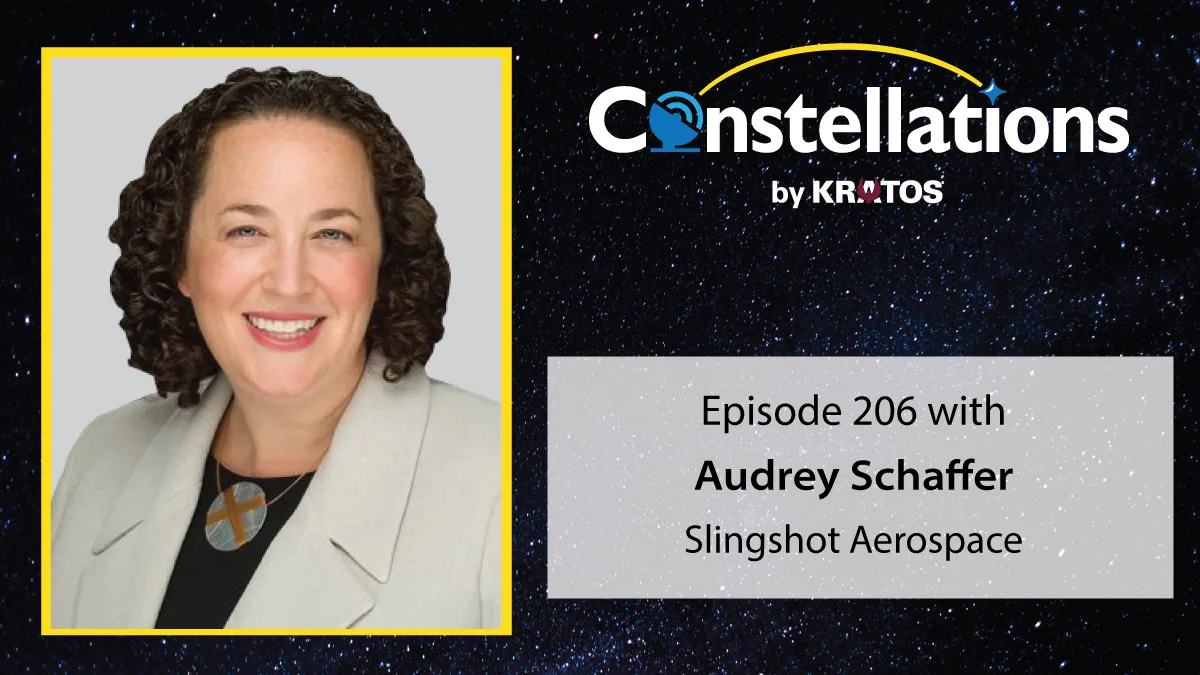
With mega-constellations, the number of satellites in LEO is rapidly rising—as well as the number of threats in space. To address this, Audrey Schaffer, VP of Strategy and Policy at Slingshot Aerospace, described the role of AI for building better Space Domain Awareness. Read our top four takeaways.

5G is driving the integration of satellite and telecom networks. To learn more about the standards that are making it possible and the business cases that will make it viable, Constellations spoke with a panel of experts from VIAVI Solutions, ABI Research and Kratos. Read our top four takeaways.

Software-ground systems can help legacy players compete with mega-constellations. Lluc Palerm, Research Director at Analysys Mason, broke down a recent white paper on the strategies that can help operators thrive in a highly disrupted space industry. Read our top four takeaways.

Initiatives like China’s Spacesail and Europe’s IRIS2 are emerging as key players, aiming to build sovereign alternatives to existing dominant systems. These developments underscore the increasing importance of space capabilities for national defense and economic interests worldwide.

Discover how software-defined satellites are transforming the satellite industry by offering dynamic capacity and coverage adjustments to meet customer demand. Hear how flexible ground systems enable these innovations, unlocking new revenue opportunities and competitive advantages for operators.
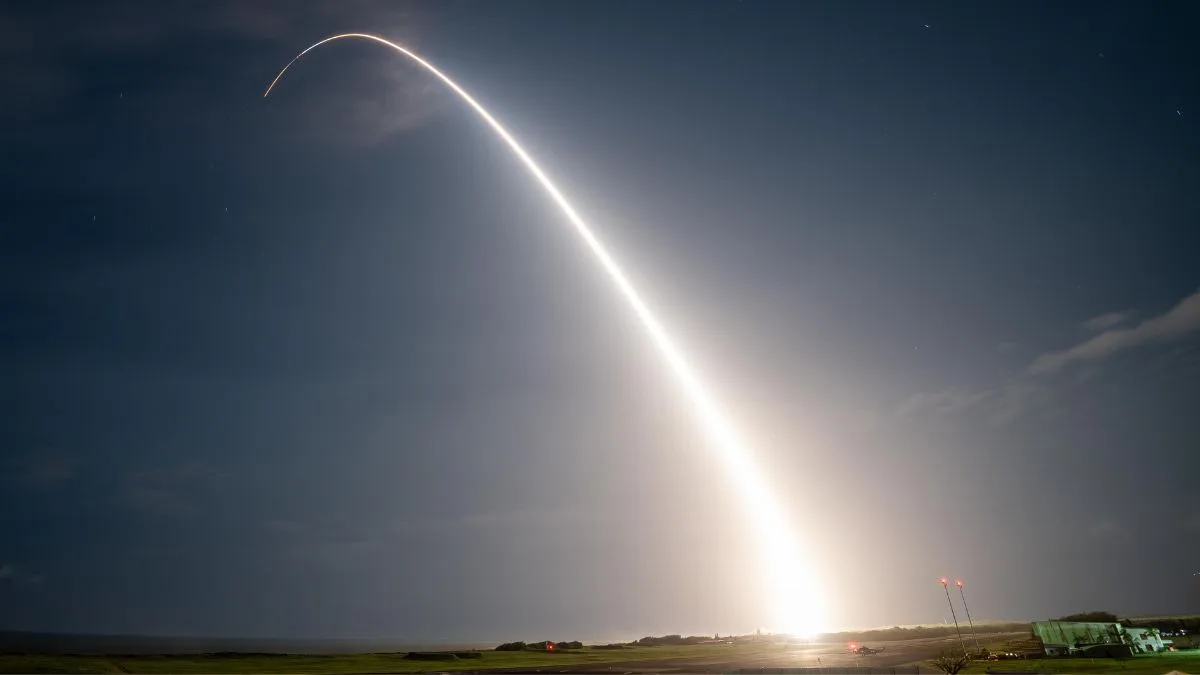
On the Constellations Podcast, Ian Canning, CEO of Eutelsat America and OneWeb Technologies, explores the vital role of GPS for commercial and military applications. Hear how LEO constellations enhance resiliency in GPS/GNSS-challenged environments and transform U.S. military satellite communication by offering faster connectivity and improved security.

Airbus CEO Guillaume Faury is pushing for scale and speed as discussions begin to consolidate the satellite divisions of Airbus, Thales, and Leonardo. This move could reshape Europe’s space industry, positioning it to better compete with major U.S. players in low-orbit constellations. The consolidation aims to unlock faster innovation and more robust investments in satellite production and services.

Infracos have been a pillar of the telecom industry for quite some time, but they are now beginning to be adopted in the space and satellite industries, as satcom providers are starting to consider expanding their business models to include Ground-as-a-Service (GaaS) offerings.

Network Architecture & Infrastructure

When in Doubt, Get Horizontal

Open standards like 3GPP and DIFI could unlock innovation, collaboration, and flexible solutions at scale. By focusing on interoperability and ecosystem growth, traditional operators can reclaim their competitive edge.

Before the ISS can be retired, NASA and other partnering nations need an alternative for conducting microgravity scientific research and experiments. To meet this need, NASA is turning to its commercial partners, who are anxious to usher in a new era in space – the commercial space station era.

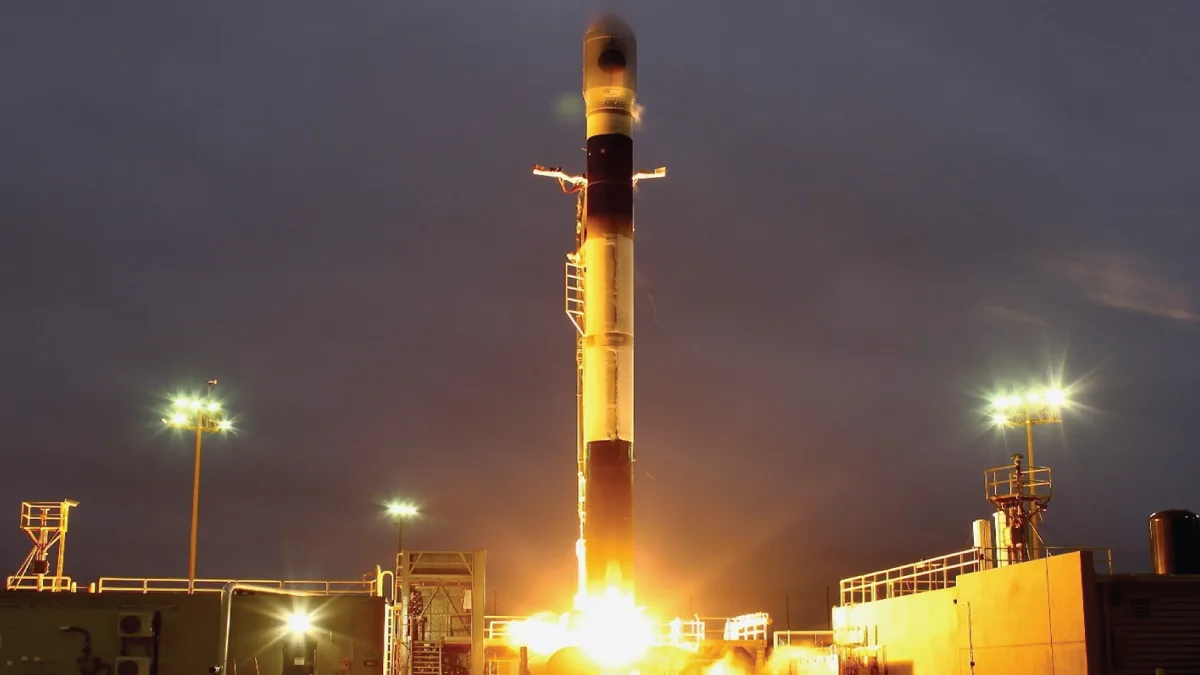
Building on the success of VICTUS NOX, the mission will focus on rendezvous and proximity operations using cutting-edge commercial technologies. With partners Rocket Lab and True Anomaly, the USSF continues to push the boundaries of speed and operational readiness in a contested space domain.

On the Constellations Podcast, we explore the Space Rapid Capabilities Office (Space RCO) and its mission to deliver rapid, combat-ready space and ground systems. Hear about key programs like SCAR and R2C2, leveraging commercial technologies, enhancing space operations, and collaboration with international partners to support the Space RCO.

The growing amount of debris and meteorites in orbit put satellites at risk of collisions, therefore causing potential disruption to service providers. Subject matter experts define the challenges in anomaly detection and attribution when it comes to satellite failures.

Constellations spoke with Ron Faith, President and CEO of RBC Signals, about how smallsat operators can overcome common obstacles on the road to launch, and the changing role of GSaaS in defense infrastructure.

China and the USA are reigniting a new space race to the Moon, creating major opportunities for space infrastructure developers. As both nations pursue ambitious lunar programs, commercial players with strong government ties stand to benefit. The lunar market is forecast to generate nearly $70 billion in revenue by 2033, driving innovation in satellite manufacturing and launch services.

Ron Faith, CEO and President of RBC Signals, talks all things GSaaS and smallsats and explains why satellite operators and service providers need to start thinking of the ground segment first rather than last.

Access to earth observation data is spreading to sectors outside space and satellite. Constellations spoke with Igor Alonso Portillo and Eliot Nelson of KSAT about the changing landscape of SmallSat, including increased private sector involvement and growing global dependence on satellite data.

As GSaaS continues to evolve, cybersecurity remains a critical concern, with hacking, malware, and vulnerabilities posing significant risks. Providers must balance flexibility with the need for strong encryption and adherence to best practices to safeguard sensitive data.

Artificial Intelligence & Analytics

Data Fusion Leverages All Datasets for Better SDA

The DoD is looking to improve space situational awareness by integrating data from various sources like optical sensors, radar, and RF signals. A new pilot program is set to harness AI and machine learning for better decision-making and threat detection in space. This initiative highlights the growing need for collaboration between defense and commercial sectors to fully unlock the power of data fusion.

Constellations: Game Changers is a limited series of short podcasts focused on pivotal new technologies or trends. In this episode, Alexandre Tisserant of Kinéis explains satellite IoT and the multiple applications and benefits that come from it. This limited series is brought to you by Constellations and Novaspace and highlights some of the key innovative topics that will be addressed at the upcoming World Space Business Week.

Cyberattacks against satellite infrastructure has increased by 300 percent over the last five years. One attack method that is being employed by cyber-adversaries is the Distributed Denial of Service attack. Explore the threat DDoS attacks pose to satellite and ground segment operators, the mitigation techniques they can deploy to bolster their defense, as well as the challenges they must overcome to effectively secure their networks.

Game Changers is a limited series of short podcasts focused on pivotal new technologies or trends. In this episode, Phil Carrai of Kratos Space walks us through the impact of virtual ground systems on the satellite and space industries. This limited series is brought to you by Constellations and Novaspace and highlights some of the key innovative topics that will be addressed at the upcoming World Space Business Week.

Our guest Kevin Lausten, President of Morpheus Space, is joining us today to talk about the technology behind satellite mobility, how it is evolving with smallsat designs and how its applications are growing beyond collision avoidance to support an emerging need for understanding what satellites are doing in space.

Globally recognized organizations are exploring different advanced communication technologies from RF to laser links. Hear Jean Francois Morizur, Founder and CEO of Cailabs, share insights on the market for laser communications and how lasers complement the role of RF signals in satellite connectivity.

Highly-anticipated WILD WILD SPACE brings the space industry into your home! Constellations spoke with Ross Kauffman and Ashlee Vance, the team behind the upcoming HBO original documentary WILD WILD SPACE. The original HBO documentary follows three rocket and satellite companies – Astra, Rocket Lab, and Planet – and the quests of their idiosyncratic founders to conquer the burgeoning space industry.

From RF to RF-over-IP to cloud and lasers, functions that once only used to happen in “ground” systems are coming to be spread out across space and cyberspace as well.

Democratizing access to Earth observation data is critical to a growing number of governments and industries that rely on actionable insights on climate change, global conflict and other events.

European companies’ advancements are not only meeting but exceeding the needs of current global standards, paving the way for the future of space communications.

One reason is that they’re not parabolic antennas. Most industry standards for satellite terminals that cover antenna functions are based upon the legacy scenario in which a single-purpose parabolic antenna is controlled by a single modem.

My recent post about satellite D2D service triggered a flashback for Reino Tantilla, who replied remembering the days when flip phones, digital assistants and cameras were three separate devices. “What’s the next step in convergence?” he wondered.

A set of predictions about the ground segment market shows massive changes in the sector, highlighting its criticality, as well as its strengths and weaknesses.

Constellations is waving goodbye to 2023 and saying hello to our 7th year as a leading source of insights for the satellite industry.

New Earth Observation sensors have the potential to either expand the satellite imagery market or eat into the profits of existing providers, depending on their ability to complement or compete with traditional imaging.

Telecom Industry Embraces Disaggregation: Telefónica and MTN Group Lead Shift Towards Separating Hardware and Software, Promoting Innovation and Cost Efficiency in Global Networks

Network Architecture & Infrastructure

SpaceX-RAYing In-Flight Wi-Fi via Starlink

Qatar Airways partners with SpaceX’s Starlink for groundbreaking high-speed, low-latency in-flight Wi-Fi, marking a significant step in non-geo, low-latency in-flight entertainment and connectivity. This pivotal agreement, leveraging Starlink’s extensive satellite network, aims to enhance passenger experience across Qatar Airways’ vast global network of over 160 destinations.

Earth observation (EO) is unequivocally a critical asset in understanding and safeguarding our planet. The ever-increasing capacity to collect, transmit, and analyze data from space offers unparalleled insights but also presents profound challenges.

Space Infrastructure & Operations

Why Is the FBI Going to the Moon?

As a growing number of actors and interests make plans for the moon, the FBI is taking note.

Constellations spoke with Dr. Rachit Bhatia, Space Safety Analytics and Research Lead at LeoLabs. about space situational awareness (SSA), a growing issue specifically in low Earth orbit and the role of radar technology in tracking objects in LEO.

Constellations spoke with non-space industry leaders about their strategy for using satellite data, how it’s changing their business and where they hope to see improvements from space service providers.

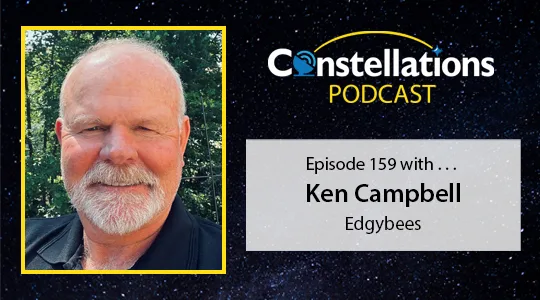
Constellations spoke with Ken Campbell, President of Edgybees Inc., about geo-registration, which takes geospatial imagery to the next level of accuracy for applications that range from disaster response and precision agriculture to military and intelligence planning.

Artificial Intelligence & Analytics

Space and Generative AI: Believe the Hype

An in-depth exploration of how GenAI will create value in space, its potential use cases and applications being developed today to harness GenAI technologies.

Satellite networks have revolutionized connectivity on a global scale, but the demand for faster, more secure, and reliable communication has led to growing interest in adoption of optical satellite communications. However, space-to-ground links pose a series of challenges that have stymied progress.

Constellations spoke with Clemens Kaiser, CPO, and Ronald van der Breggen, CCO, at Rivada Space Networks about the growth of optical satellite technology, and how linking satellites with light can create a data network in space to grow the industry in new ways.

In this episode of Constellations, Rivada Space Networks executives discuss building a space network using optical satellite technology and its implications for satellite data networks and ground stations. They explore the growth of optical technology, the role of optical inter-satellite links, the trade-offs between optical and RF technology, and the future of connectivity.

LockBit 3.0 is the most widely used malware in the world and has recently targeted aerospace companies. LockBit’s success as a ransomware organization is attributed to its business model of implementing Ransomware-as-a-Service (RaaS) offerings as collaborative opportunities for other adversaries looking to gain access to specific industries.

Startup satellite-to-smartphone service provider Lynk Global acknowledged legitimate regulatory concerns about frequency interference with terrestrial mobile services in regions with many nations closely packed, and that Lynk’s initial operations will start this year in much easier geographies.

Todd Humphreys, a professor at the University of Texas at Austin, deployed an experimental GPS receiver on the International Space Station (ISS) in 2017 to study the Earth's atmosphere and ionosphere. Humphreys and his team discovered that they could use the receiver to geolocate and characterize illegal jamming and spoofing signals by recording raw signal data and using Doppler-based methods. The experiment attracted the attention of satellite operators for its potential military and commercial applications.

DIFI working group is defining certification process for satellite ground equipment. Satellite networks must interoperate with other networks and other standards, including 5G. There are good arguments on both sides of the debate in the DIFI Certification Working Group. The discussion is more than simply “sausage-making”.

The Maxar-EchoStar settlement announced Nov. 22 will reduce Maxar’s projected 2022 adjusted EBITDA by $65 million and cut 2023 free cash flow by $50 million to $60 million. In a filing with the U.S. Securities and Exchange Commission (SEC), Maxar said Jupiter 3, already two years late, is 96% complete, has completed thermal-vacuum testing and is now undergoing final performance tests.

SIA President Tom Stroup discusses the market drivers, opportunities, and challenges that 5G presents for the satellite industry. Stroup is uniquely qualified to discuss this topic as he is well versed in regulatory and policy issues of critical importance to the space industry.

Artificial Intelligence & Analytics

AI Becomes Mission Control

AI is emerging as a critical tool for more resilient space operations, helping operators manage growing constellations, detect cyber threats, avoid collisions, predict failures and enable greater spacecraft autonomy.

Jesús Bernal Allende joins Constellations to explore how existing space law is being applied as autonomous systems take on a larger share of spacecraft decision making.

As orbital activity accelerates, the challenge for space situational awareness is shifting from collecting more data to ensuring its accuracy, interoperability and trustworthiness through advanced data fusion and greater collaboration among operators, governments and commercial providers.

Heather Pringle of Space Foundation explores how emerging technologies, cross sector collaboration and evolving mission design are shaping strategic advantage as activity expands into cislunar and deep space environments.

The growing shift toward virtualized, software-defined ground systems is accelerating adoption of interoperability standards like DIFI, enabling satellite operators to reduce dependence on proprietary hardware while supporting scalable multi-orbit networks, 5G NTN integration and future AI-native architectures.

Market Competition & Strategy

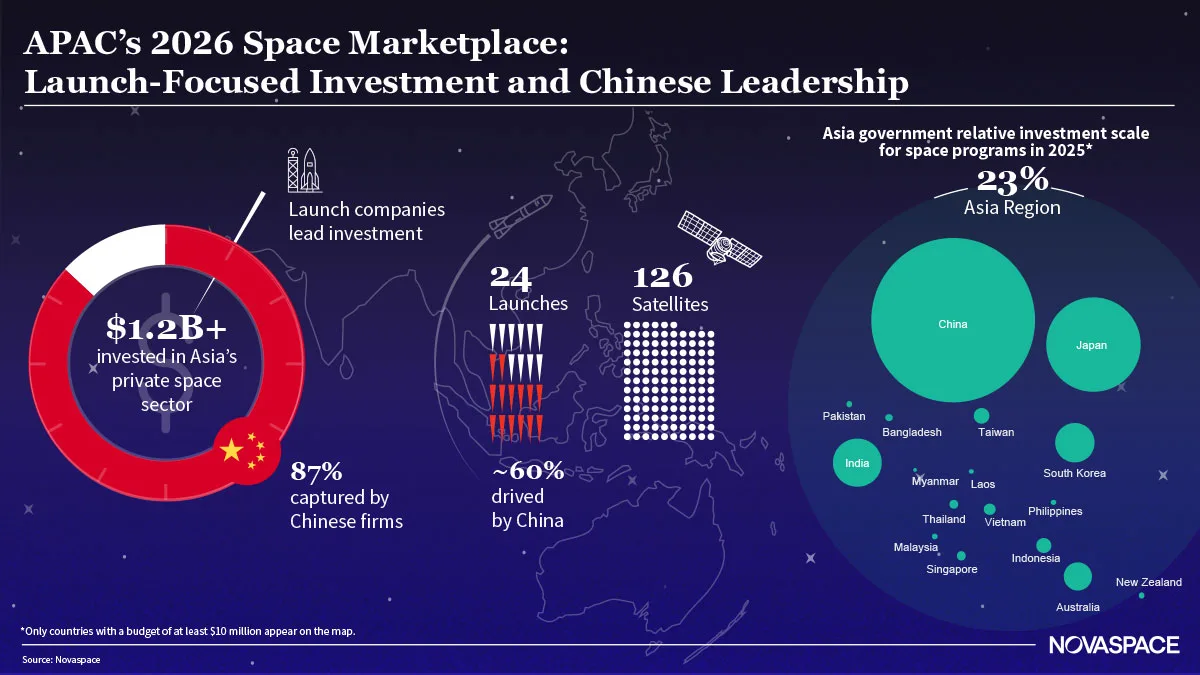
APAC’s 2026 Space Marketplace

As global LEO constellations reshape satellite economics through scale and speed, Middle Eastern operators are charting a different path rooted in sovereignty, regulatory alignment and national strategy. How regional satellite companies are leveraging close ties with governments, multi-orbit collaboration and spectrum stewardship to remain relevant and grow.

By securing Apple as a cornerstone partner, Amazon is officially launching a high-stakes challenge to Starlink’s orbital supremacy. The merger integrates Globalstar’s established spectrum with the “Amazon Leo” infrastructure to bring seamless, high-speed direct-to-device connectivity to the global market by 2028.

Advances in AI and onboard computing are gradually enabling satellites to take on more autonomous functions, particularly in processing data and managing operations in orbit. While autonomy can improve efficiency, technical constraints, connectivity limits and policy concerns mean this shift will be incremental rather than immediate.

The SpaceRise consortium—led by industry heavyweights SES, Eutelsat, and Hispasat—has finally hammered out the compromises needed to secure a multi-billion euro green light for the secure multi-orbit network. While the roadmap includes some technical concessions to hit aggressive 2030 deadlines, the deal marks a massive leap forward for Europe’s strategic autonomy in space-based communications.

Melanie Stricklan of Space Foundation examines the growing complexity of modern space operations, showing how orchestrating space, ground, and cloud systems-and tackling issues like semantic misalignment and AI-driven autonomy-is redefining how missions succeed.

Ground Segment & Telemetry

Making Gateways More Resilient

The physical attack on an SES gateway in Israel marks a turning point in how we view satellite infrastructure, shifting the focus from cyber threats to the urgent need for kinetic resilience. By adopting standards like DIFI to virtualize and distribute ground segment operations, organizations can ensure connectivity remains seamless even if a specific physical site is compromised.

Repeated GEO close approaches—led by Russia’s Luch satellites—are now seen as deliberate, not anomalous. They’re driving persistent SSA/SDA and a shift to more resilient, software-defined ground and space systems.

Operators transitioning to these software-based architectures can achieve nearly 40% in overall cost savings while significantly accelerating deployment cycles for new services. This technological shift is essential for capturing the $30 billion 5G NTN opportunity and ensuring long-term mission adaptability in a rapidly evolving orbital economy.

As low Earth orbit becomes increasingly crowded with mega-constellations, escalating collision and debris risks are pushing satellite operators to replace traditional, human-driven models with autonomous, AI-enabled space situational awareness and collision-avoidance systems embedded into mission design from the outset.

AI is accelerating malware development, vulnerability discovery, and deepfake-driven social engineering—without needing fully autonomous attacks. For commercial space, this means faster, tailored intrusions that can pivot from cloud-based enterprise networks into mission-critical ground and operations systems.

Steve Bochinger of Novaspace discusses the space sector development in the Middle East including the vision for space, investment opportunities, strategic partnerships and drive for sovereignty.

Backed by significant financing from Apple, the upcoming “C-3” network will utilize dynamic beam-forming technology to enhance mobile satellite services and expand coverage. While the company navigates manufacturing delays and regulatory hurdles in the US and France, it is proactively upgrading its ground infrastructure with 90 new antennas across 25 nations.

Germany has pledged €35 billion for military space programs through 2030, putting a national broadband constellation on the table even as Berlin remains a major Iris2 contributor. The move raises questions about duplication versus interoperability between national and EU systems and underscores the push to balance sovereignty with European cooperation.

Guest Peter Krauss of Terran Orbital talks about the importance of rapid iteration and accelerated development to build and deploy on-orbit assets more efficiently to support commercial innovation and national defense needs.

In 2024, a geomagnetic storm resulted in the largest satellite migration in history. While the effects of space weather are increasingly well-understood, the systems in place to protect satellites are still disjointed. Commercial companies, government organization, and JHPL’s recent Space Weather Tabletop Exercise are working to change that.

Virtualized, cloud-native ground systems let AI adapt quickly and secure operations through live telemetry. Standards and interoperability make training data consistent and scalable across diverse satellite and terrestrial elements.

From rising government defense budgets to a surge in constellations and direct-to-device momentum, strategy and scale will decide who thrives. Expect rapid consolidation, AI-enabled services, and a race to deliver sovereign capabilities at speed.

Eleven satellite imaging firms have formed the Remote Sensing Collective to urge ITU members to preserve the 8.025–8.4 GHz band exclusively for Earth-observation satellites. With global regulators set to decide at Shanghai’s WRC-27, opening X-Band to terrestrial 5G could undermine future military surveillance and disaster-response imaging.

As satellite operators increasingly rely on Ground Station-as-a-Service (GSaaS) models, new vulnerabilities are emerging at the intersection of cloud and space infrastructure. Strengthening GSaaS security is becoming essential to protect data integrity, prevent signal hijacking and ensure mission resilience.

Cislunar space may be the ultimate high ground, but its vast distance poses challenges in infrastructure, timing and tracking. Join our guest to explore this critical domain.

China and Russia have been developing and practicing techniques, tactics and procedures that are reshaping the operating environment in space and rapidly closing the capability gap in on-orbit maneuver warfare.

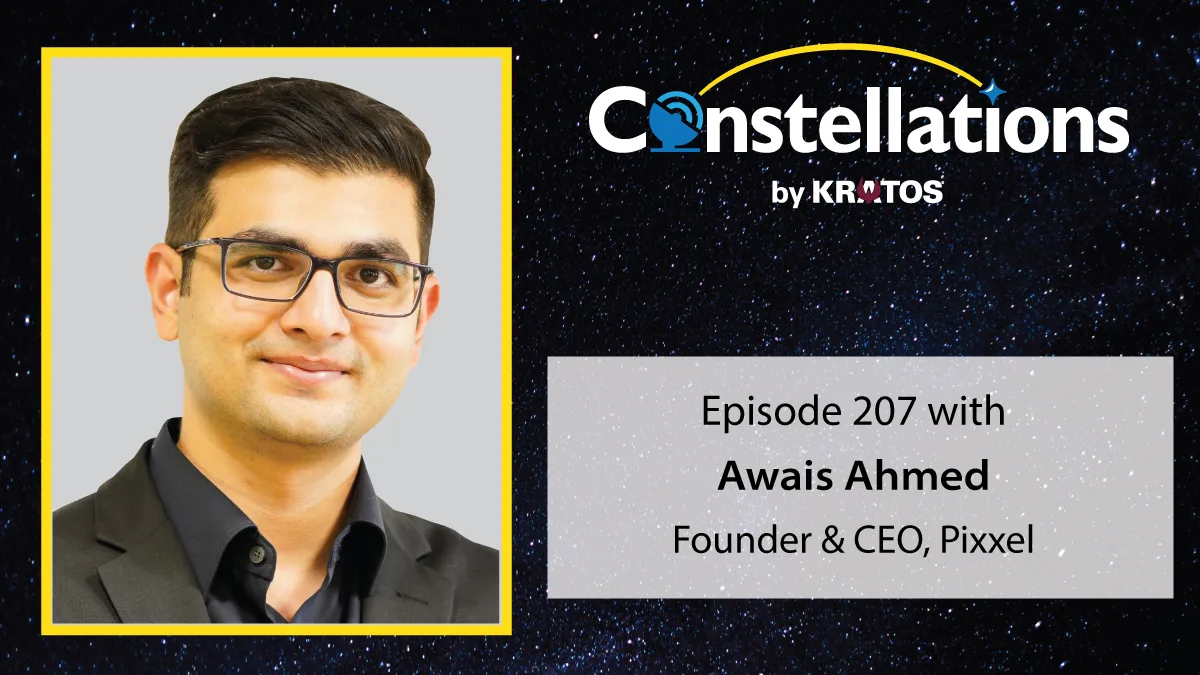
Hyperspectral imagery can give us a wealth of information about the world around us. To take advantage of this, Earth observation company Pixxel gathers a vast amount of data on environmental issues like deforestation, pollution, and oil and gas leaks. Read our top four takeaways.

In this episode, Awais Ahmed, founder and CEO of Pixxel, talks about building a constellation called Firefly, otherwise known as the "health monitor for the Earth." Join us to learn about hyperspectral imagery, how access to it can support faster responses to environmental issues and how its data can be used to provide insights on terrestrial changes that haven't even happened yet.

The number of satellites in Low Earth Orbit (LEO) is rapidly expanding due to new mega-constellations, introducing potential new threats in space. Slingshot Aerospace’s VP of Strategy and Policy, Audrey Schaffer, discusses how artificial intelligence is becoming essential for managing this complexity and improving space domain awareness.

Lluc Palerm, Research Director at Analysys Mason, shares key insights from a recent white paper on how software-ground systems can help legacy players compete. He discusses what strategies can help operators thrive in the era of space disruption.

While GEO is seemingly falling out of favor among commercial satellite operators, almost 600 essential and costly satellites currently reside in that orbit. Unfortunately, GEO is increasingly congested – filled with spacecraft and space debris – and has inherent challenges regarding space domain and situational awareness. Analyze the importance of SSA and SDA in GEO and explore how advanced AI and ML technologies could open the door to better awareness in that critically important orbit.

A considerable amount of SATCOM market share and revenues are being increasingly captured by the cheaper pricing and scalability advantages offered by NGSO operators. A new white paper published by Analysys Mason, courtesy of Kratos, explores four ways a software-defined ground architecture can provide a marketplace advantage to traditional satellite operators and service providers that would allow them to compete with the explosion of NGSO service offerings.
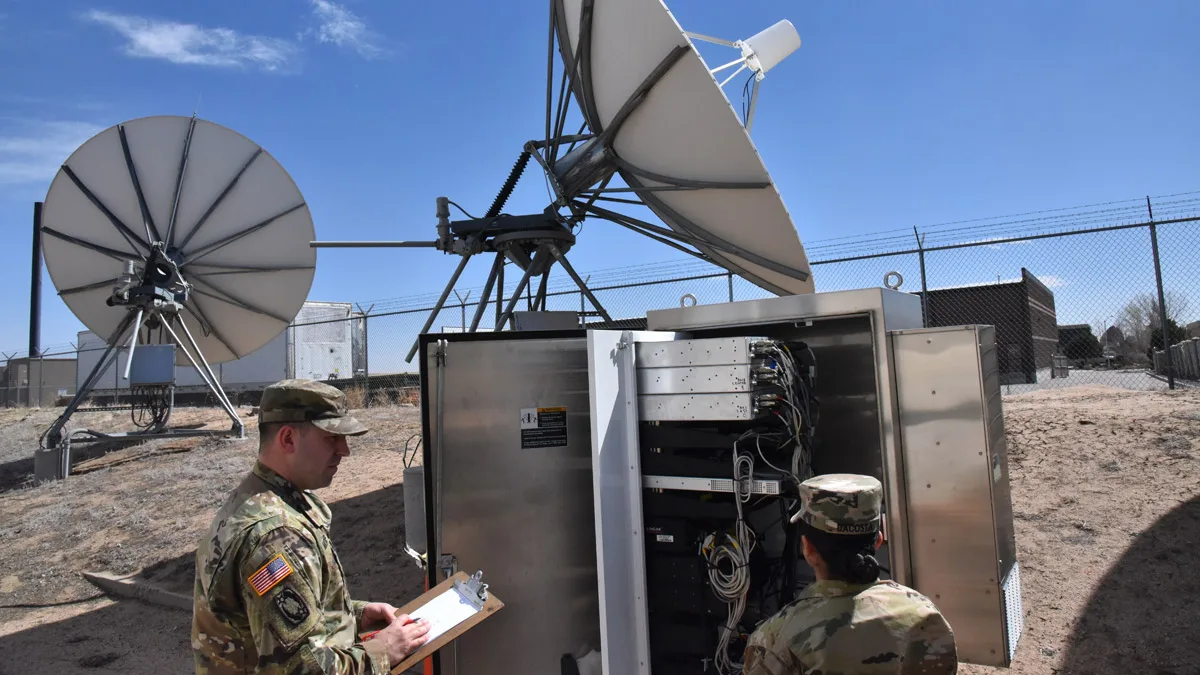
Market Competition & Strategy

Predictions for the Space Industry in 2025

From orbital refueling to the rise of multi-orbit systems, innovations are set to redefine the satellite landscape. Discover Analysys Mason's top 10 predictions for the future of space technology and infrastructure.

The recent rise of small satellites that can be produced and launched quickly, in direct contrast to a space economy that has privileged unique, complex and expensive satellites for decades. Constellations spoke to space industry veteran Dr. David Hardy from TC Space Consulting about the industry-wide shift towards small, modular satellites.

Constellations spoke with Dr. Kelly Hammett about the crucial role of the Space Rapid Capabilities Office (Space RCO), the challenge of delivering new capabilities quickly, and what the USSF is doing about the rise of adversarial threats in space. Read the major takeaways from the conversation now.

Could smarter satellites be on the horizon? How edge computing in space could generate more rapid, actionable insights from EO satellites, and deliver the autonomy needed to enable next generation space capabilities – from on-orbit transport to in-space assembly.

Constellations spoke with two experts from the International Telecommunications Union about the rapidly changing world of smallsat, including regulatory management of large constellations and the sustainable use of in-orbit resources.

OSINT, built from publicly available data, empowers timely, actionable intelligence essential in the dynamic landscape of space. With escalating satellite activity and a more contested space environment, OSINT provides crucial insights to navigate emerging challenges in space safety and security.

Two experts from the International Telecommunications Union share their insights on the role of regulation in the rapidly growing and evolving small satellite world.

TIDRONE campaign targets Taiwan’s satellite and drone industries, exposing critical vulnerabilities in the space supply chain. Trend Micro and Acronis report coordinated cyber espionage aimed at high-value military and aerospace technology. The campaign reveals an alarming overlap between drone production and space operations, underscoring the escalating cyber threat to global defense sectors.

In this episode, Al Tadros, Chief Technology Officer at Redwire discusses artificial intelligence (AI) and how it enhances Space Domain Awareness (SDA). Hear him describe datasets and simulations to train on so that characterization and intent can be determined.

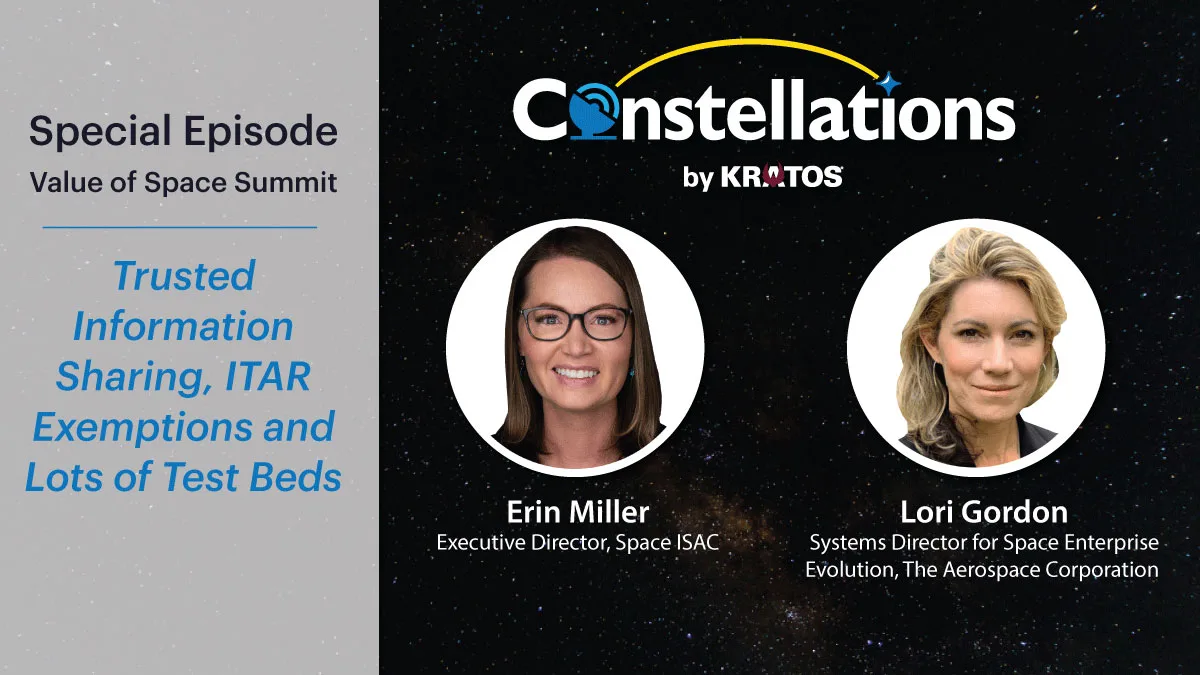
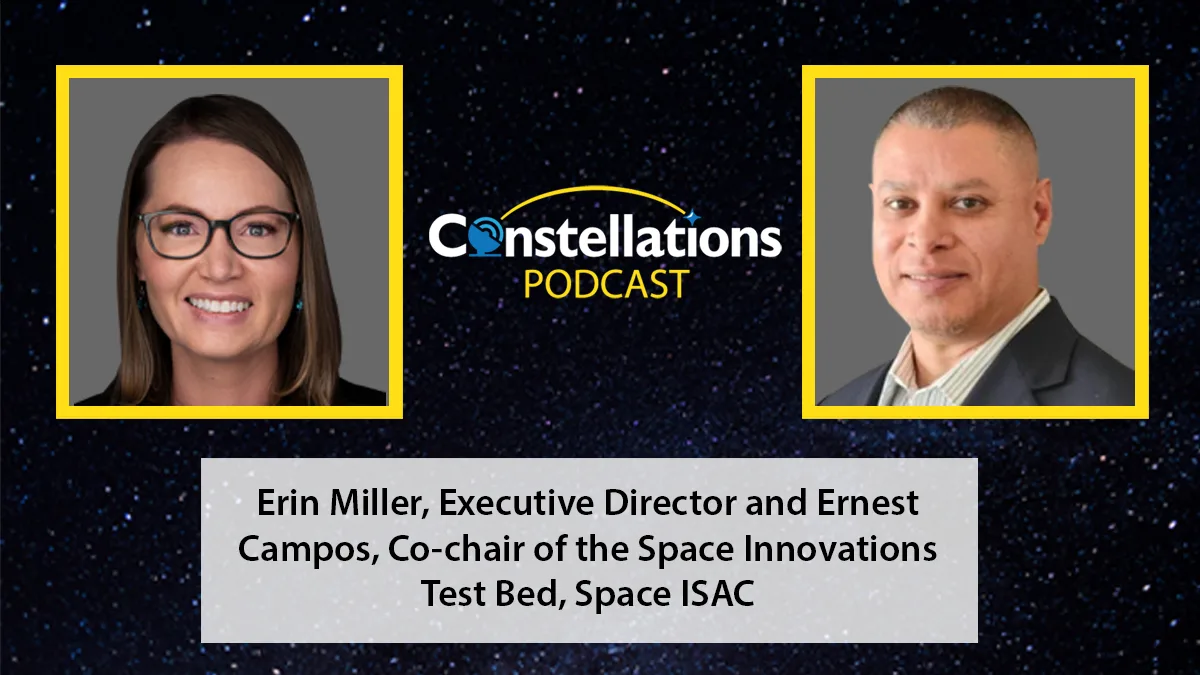
Erin Miller, Executive Director, Space ISAC, and Ernest Campos, Co-chair of the Space Innovations Test Bed (SITB) for Space ISAC and Senior Account Executive for Space Programs at AMERICAN SYSTEMS Corporation talk about the commercial industry facing an onslaught of cyber-attacks and other threats and ways that the Space ISAC is enabling a resource that can help.

With state-sponsored intrusions and open-source vulnerabilities threatening the space supply chain, cybersecurity standards must be strengthened. Collaboration among partners will be essential in mitigating risks and ensuring long-term resilience.

In this episode, Paul Graziani, CEO of COMSPOC, talks about Space Situational Awareness (SSA) and the value of data fusion in enhancing SSA. Paul describes the various data sources for SSA, such as optical data from telescopes, RF data from sensors, and radar data from ground-based or transmitter sources. He also explains how these sources differ.
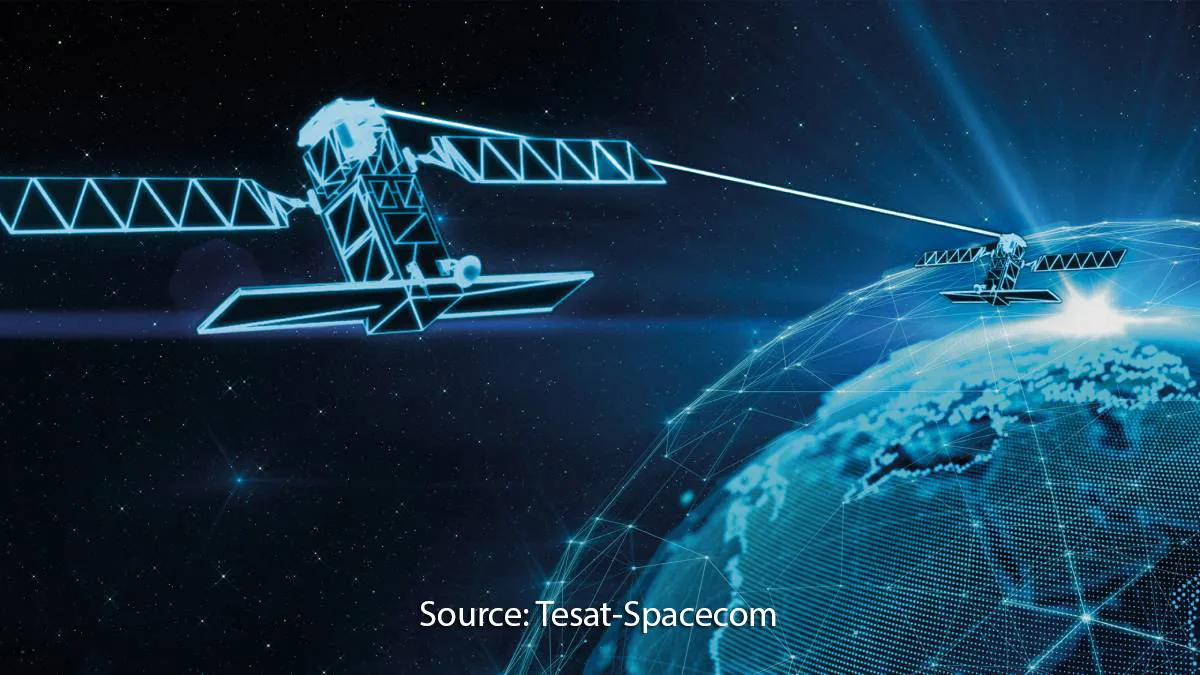

As commercial activity in low-Earth orbit (LEO) and lunar markets intensifies, the demand for in-space data centers is set to soar. These advancements will not only drive innovation in space technology but also revolutionize how data is processed and stored beyond Earth.

As the in-space economy continues to expand, the demand for the mission extension of space vehicles and on-orbit repair technologies are beginning to grow. The successful execution of Rendezvous, Proximity Operations, and Docking (RPOD) missions is essential to meet these on-orbit demands. Explore the satellite network and TT&C requirements that will enable the successful execution of RPOD missions.

Game Changers is a limited podcast series about the game-changing technologies that will be discussed at the upcoming World Space Business Week. Tune in every Tuesday leading up to the event to hear experts answer 3 quick, hard-hitting questions to explain how they are changing the game. In this episode, Robert Carlisle of Argo Space walks us through the impact of in-space transportation on the satellite and space industries.

With the shift towards smaller, more efficient satellite designs, the industry is poised for a transformative period. Emerging players and established giants alike are investing heavily in these nimble solutions, signaling a competitive and innovative future.

Participants tested a variety of devices to ensure compatibility with DIFI 1.2 standards. The event highlighted the importance of collaboration in advancing digital ground systems.

Commercially monitoring satellite signals provides valuable information about military activities, as seen in the Ukraine conflict. Changes in satellite communication patterns can predict on-the-ground movements and reveal hidden transmitter locations, enhancing our understanding of modern warfare.

While it’s easier to participate in local or regional events, the Durham University Spaceflight Society has been focused for years on one particular challenge: taking part in the world’s biggest intercollegiate rocket engineering competition, the Spaceport America Cup.

Solar weather often feels like a ghost threat—an unseen, unexpected occurrence that can result in destruction across ground infrastructure and satellite constellations. The upcoming launch of GOES-U is part of an effort by NOAA to more accurately observe and forecast solar weather.

Artificial Intelligence & Analytics

AI Underpins the Pentagon’s Space Ambitions

The U.S. Department of Defense has big ambitions for space, and making those plans a reality will depend on its ability to harness emerging data management and analysis technologies, including artificial intelligence.

Multi-orbit antennas were in the spotlight at the recent SATELLITE 2024 show. I heard much talk about them in meetings, on the floor and in panels.

Insidiously and persistently, space is being militarized. Sabre-rattling is commonplace—provocative acts are increasing, skirmishing is happening and destructive anti-satellite tests are occurring. With this escalation, the notion of conflict in space is growing.

Following weeks of anticipation, the Space Development Agency (SDA) is poised to share initial results from its groundbreaking laser-optical satellite communications experiments, marking a significant step in advancing satellite connectivity technologies.

European Commission embarks on pioneering mission to unify civil and military Earth observation across the EU. By signing study contracts with leading space companies, this initiative aims to bridge the gap between member states, fostering a new era of shared intelligence and surveillance capabilities.

The swift economic growth within the space sector is drawing attention from public and private entities eager to capitalize on its strategic and commercial prospects. The region of the Middle East and North African is no exception to this trend.

Commercial space situational awareness (SSA) capabilities, once rooted on terra firma, are expanding into space, a vantage point that proponents say will increase the currency and accuracy of information in an increasingly congested orbital environment.

Dr. Ezinne Uzo-Okoro, Assistant Director for Space Policy at the White House OSTP, discusses the U.S. vision for future space exploration, focusing on microgravity research, novel space activities like ISAM, and the evolving role of public-private partnerships in the space sector.

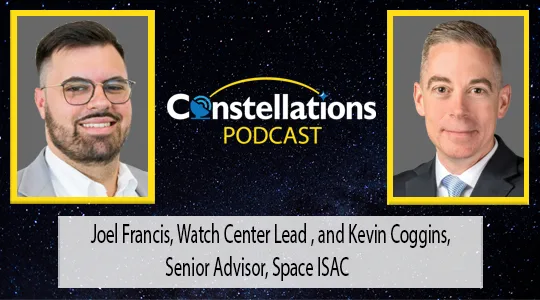
During this episode, guests Joel Francis, Watch Center lead at Space ISAC, and Kevin Coggins, Senior Advisor to Space ISAC will discuss the purpose of the Watch Center and the types of data brought into the Watch Center for analysis.

Join Steve Good, Chief Business Officer at Ramon.Space, to learn how space resilient computing infrastructure is transforming fixed satellites into flexible ones, the applications for "earth-like" computing on orbit, and how a smart satellite can leverage artificial intelligence and machine learning to contribute to humankind's knowledge of space and space operations.

Spencer Boyajian, Professional Research Assistant, Laboratory for Atmospheric and Space Physics (LASP) talks about the work and INSPIRE, an international program to train students to participate in internationally collaborative missions, and elaborates on the INSPIRE spacecraft bus being built as an open domain hardware architecture developed jointly by partner universities.

As the satellite industry becomes more integrated across verticals, investors and industry leaders are eager to understand what opportunities are real and what’s not yet ready for primetime.

NSR’s Government Spending on Space (GSoS) report sees Earth Observation as one of the highest priority interest items for new space players. Governments are interested in exploration across all regions however exploration tends to be a focus for more established space nations.

MDA Ltd. said its contract to build 198 Telesat Lightspeed broadband satellites gives its new digital beam-forming antenna and on-board processor product line immediate credibility in a broadband-LEO market the company said includes a handful of credible prospective customers.

The year 2022 was the first time in history that the private sector launched more tonnage into space than the world’s governments, and the single most important cause is SpaceX’s Starlink broadband constellation. “The growth in the [private sector] is 100% linked to the activity of Starlink, deploying an incredible amount of mass in recent years.”

The 2023 edition of the “Space Environment Report” published by the European Space Agency (ESA) shows a gradual adoption of practices including end-of-life disposal of satellites. But it also shows that far too many operators in low Earth orbit — below 2,000 kilometers — are doing either nothing or too little to remove their spacecraft from these increasingly crowded orbital highways.

In a June 20 presentation here to the Seradata Space Conference, a conference in which insurance underwriters and brokers are heavily represented, Benhamou described a situation that has been true for several years. And when he referred to “dependency,” he meant not just satellite owners, but insurers as well.

Constellations spoke with a panel of industry leaders from the World Teleport Association, AXESS Networks, and Kratos about the challenges and opportunities for growth as satellite and teleport operators deepen integration with terrestrial telecommunications providers.

In this Constellations Podcast, we are joined by Sateliot CEO Jaume Sanpera to discuss nanosatellites, the evolution of IoT over satellite, and how 5G IoT can solve big problems in the agriculture, transportation, energy industries and more all over the world.

It has been six months since Deere & Co. issued its RFP to industry to equip a portion of Deere’s 1.5 million vehicles with satcom connectivity for its farm, forestry and construction customers in the United States and Brazil. Of this number, 500,000 Deere customers already are connected, almost all of them with cellular.

Constellations spoke with Guillaume Tanier, Co-founder and CEO of Leanspace, about the evolution of satellite operations and space networks, and the transformation to more agile, lower cost digital ground systems to drive industry growth and innovation.

Artificial Intelligence & Analytics

DoD’s Increasing Demand for Data Fusion in Space

Experts examine data fusion as a powerful predictive decision-making tool for mapping a crowded space environment, and the imperative of tying it to specific requirements versus viewing it as a be-all solution.

Guillaume Tanier, CEO and Co-founder of Leanspace, joined Constellations to discuss the benefits of software for space and satellite operations. Hear Mr. Tanier discuss the digitalization of the satellite ground segment including an explanation of the concept of digital continuity, the challenges of interfaces between providers, and how it is possible for developers to build their own ground segment in weeks, rather than years.

Virtualization, software-defined networking and orchestration can enable ground networks to become much more agile to meet the new capabilities in space. Luc-Yves Pagal Vinette is an expert in networking concepts such as SDN/NFV, the edge and disaggregated networks.